18 Apr 2011
Microsoft plans to reduce the average PUE across all its datacentres to 1.25 within 24 months, according to Rick Bakken, senior director of datacentre evangelism at Microsoft, who was speaking at the Samsung-hosted CIO forum in Munich last week.
This is an ambitious statement, as Microsoft has about 100 datacentres worldwide.
The PUE is determined by dividing the amount of power entering a datacentre by the power used to run the computer infrastructure within it. PUE is expressed as a ratio, with overall efficiency improving as the quotient decreases toward 1.
A phrase often repeated at the forum, which aimed to examine how best to increase efficiency in the datacentre, was that – although a significant two per cent of carbon emissions comes from ICT – the industry can also help reduce the other 98 per cent by developing technology that can enable other verticals to perform more efficiently.
Bakken concurred with this, but also explained how Microsoft was helping reduce ICT emissions. He said the company planned to reduce its average PUE as part of the deployment of a new type of generation 4 datacentre.
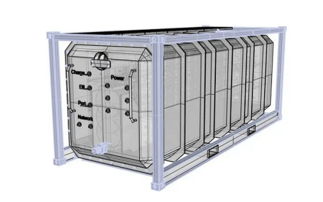
The generation 4 datacentre, of which the company has already deployed four in Ireland and Iowa, is modular.
The modular datacentres are built as IT packs and cost between $5m and $8m per megawatt – the cost of a first generation datacentre was $25m.
They comprise a steel structure, a commoditised datacentre in a box, a megawatt of power, two fibre channels and a garden hose. The hose water is only needed if temperatures go above 100 degrees. Water is then introduced to the airflow, which can reduce temperatures by about 20 degrees.
These modular datacentres can be built in 190 days, with the servers ordered and delivered within 90 days. They include four units of 2,000 servers in a pod and eight pods in a building, bringing the total to 66,000 servers.
"Generation 4 datacentres reduce the cost of adding the same capacity to the network fivefold, compared with generation 1 datacentres," said Bakken.
In addition, opex is reduced by 60 per cent, as there is no back office critical environment: it's all in the commoditised box.
As well as designing a modular datacentre, Microsoft has made the motherboard within the server more efficient by designing a common motherboard that fits into every server in collaboration with its partners.
Microsoft has reduced the components on the new motherboard by 30 per cent, and pulled off the BCI slots as well as the video mouse and DVD components. This means the board requires less cooling, and the basic motherboard can then be skewed in six ways by the product teams.
This move has reduced the cost of running servers in the datacentre by about 50 per cent, according to Bakken.
Generations 5 and 6 datacentres are now in the works: generation 5 has no spinning parts (fans or disks), and generation 6 is "completely green".
Bakken added that there are better ways of measuring efficiency in the datacentre than PUE: "One would be to measure application performance per watt; this is a much better way to look across application suites and providers.
"It means you can work closely with application developers. We need to get a discussion going within the industry regarding how best to measure efficiency."
With the drive to meet sustainability targets and drive down costs, CIOs are being tasked with significantly improving this rating and moving closer to efficiency nirvana - namely a PUE of 1.0.
Achieving a better PUE demands resource and efficient design in order to optimise energy performance and heat management. Of course, few organisations have the luxury of tearing down the existing datacentre and building a new one from scratch. The good news is that there are a number of steps that can be taken to improve the performance within the existing set-up and maximise efficiency – from considering how air comes into the datacentre to how it is cooled, how racks are arranged and where cables are run.
The evolution in datacentre design and innovation is continuing at a phenomenal pace. Capgemini’s new state-of-the-art Merlin facility, for example, takes datacentre thinking to a whole new level; indeed its innovative design and exploitation of leading-edge technology has been rated as functioning at an amazing 1.08 PUE. But before any investment is made, organisations must understand the current levels of performance.
The state-of-the-art datacentre, designed from the ground up, is not an option for the majority of organisations. Adopting datacentre power monitoring, however is essential and this can now be implemented without a complete re-fit and whilst allowing normal, uninterrupted IT operations. There is no reason not to explore opportunities for achieving the best practice objectives of a sustainable, recyclable, energy efficient, resilient, and modular datacentre – one that meets both environmental and cost containment goals.
Jason Preston
Director
2bm
Posted by: Jason Preston, Director, 2bm 26 Apr 2011
Have your say on this article
Newsletters
Latest stories from Server
Latest videos
You may also like
Server jobs
Technology Patent Wars
Case studies from large organisations across all sectors
... And rich media, and flexible working, and peaks in traffic ...
Upcoming Events
Join us for this Computing web seminar, in which the Head of BI at the Co-operative Group Nick Colebourn will be explaining just how he reigned in the Group’s sprawling database estate and how significant savings were realised and data quality improved as a result.
Date: 31 May 2012
Time: 11:00 AM
Live June 13th 11:00am: Register now. During this web seminar we will be looking at the sorts of incidents that can bring data centres grinding to a halt and what can be done about them.
Date: 13 Jun 2012
Time: 11:00 am
Receive the latest jobs direct to your inbox
Are you being paid what you are worth?