ISPs vent fury over government web policing policy

By Nicola Brittain

14 Sep 2010

Be the first to comment

A Computing logo
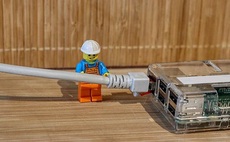
Picture of a man on a computer being illegal
ISPs will have to pay 25 per cent of the cost of policing the networks

Internet service providers (ISPs) and industry organisations have strongly criticised the UK government’s decision to make ISPs pay towards the costs of policing the web.

Andrew Heaney, executive director of strategy and regulation at TalkTalk, described as “absolutely outrageous” the government’s decision to make ISPs pay 25 per cent of the cost of enforcement action against web users who infringe copyright.

Further reading

He said: “The Digital Economy Act means many innocent customers will be falsely accused of filesharing and put on an ‘offenders register’ though they have broken no law and now they are being forced to pay for the privilege.

“Far from encouraging a more digitally inclusive nation, these measures will simply alienate web users. Moreover, they don’t tackle the root cause of the problem – the creative industry’s failure to adapt its business model to the 21st century.”

Organisations that had fed into the government’s consultation said they were disappointed with the outcome.

Malcolm Hutty, head of public affairs at the London Internet Exchange, said: “We continue to believe that it is only fair the beneficiaries of the Digital Economy Act – the copyright holders – should pay the cost of implementing it. We are therefore disappointed that the government has decided to charge 25 per cent of the costs to ISPs, which will ultimately be borne by law-abiding internet users.”

Nicholas Lansman, secretary general of the Internet Service Providers’ Association (ISPA), said: "The ISPA has consistently argued for the beneficiary pays principle and is disappointed with today's announcement. Full cost recovery for serious law enforcement cases is an established rule and ISPA sees no reason why it should not be the case here.”

The Department for Business Innovation and Skills (BIS) said ISPs and rights holders in the UK will be expected to share the cost of the notification and appeals process at a ratio of 25:75 respectively.

The department rejected calls by ISPs and consumer groups for all costs to fall on copyright owners such as music labels and publishers. Nine ISPs and associations including Orange, TalkTalk and BT raised their concerns about the cost proposals as part of BIS’s consultation earlier this year.

BT said there was “no credible basis for ISPs to subsidise copyright owners through a cost-sharing regime”.

Orange warned that if ISPs are made to pay, they may be forced to transfer costs to consumers through a pricing increase.

However, the government has now confirmed it will push ahead with its plan. Minister for Communications Ed Vaizey said: “We expect the measures will benefit our creative economy by some £200m per year and as rights holders are the main beneficiaries of the system, we believe our decision on costs is proportionate to everyone involved.”

The decision will now be introduced into Parliament as a Statutory Order. ISPs will be expected to comply with the process when Ofcom’s code comes into effect in the first half of 2011.

The Digital Economy Act, which was rushed through Parliament earlier this year, obliges ISPs to work with rights holders to take measures against infringers, including cutting off internet access in some cases.

The act has been criticised by ISPs and consumer groups as weighted in favour of copyright owners. But copyright owners such as music labels argue they are losing millions of pounds in revenue every year through infringement.

Reader comments

Have your say on this article

All fields required. Your email address will not be displayed on the site.

By submitting a comment you agree to abide by our Terms & Conditions

  • Digg
  • Tweet

Newsletters

Sign up for our FREE newsletters

Technology Patent Wars

Large companies such as Microsoft, Facebook and Google have been hoovering up technology patents recently. Is this stifling innovation?

88 %

5 %

7 %