£5.2bn UK gigafactory loses second contractor
Fresh setback raises questions over when JLR will receive British-made batteries
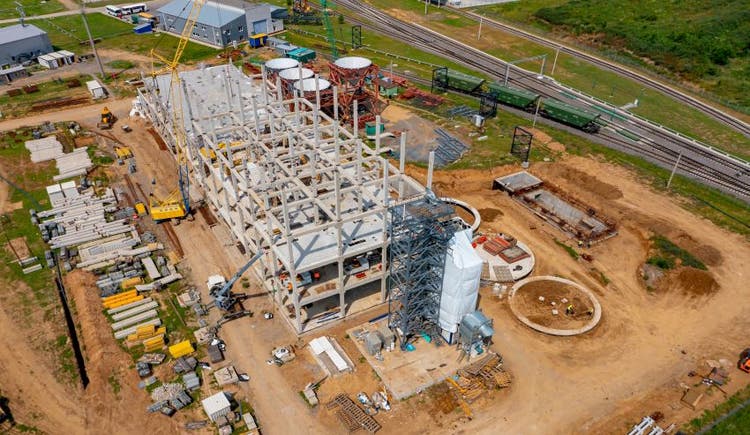
Tata’s £5.2bn UK battery gigafactory faces fresh uncertainty after losing its second construction contractor in five months.
A major UK electric vehicle battery factory project has suffered another setback after its second construction contractor in five months decided to withdraw.
The £5.2bn gigafactory, being developed by Tata-owned Agratas in Bridgwater, Somerset, is considered a crucial investment in the future of Britain's automotive industry. The facility is intended to supply batteries to JLR, Britain's largest automotive employer. Both companies are part of India's Tata Group.
The latest departure has added to concerns about delays and rising costs at the project, which has already seen its original production timetable pushed back.
Second contractor leaves Tata gigafactory
As reported by The Guardian, construction specialist TSL, formerly known as Tonroe Group, TSL decided to withdraw from the project after failing to reach a contractual agreement with Agratas.
The disagreement is understood to have centred on the project's timetable and costs.
TSL is expected to leave the Somerset site within the next two or three months, leaving Agratas without a main contractor to oversee the remaining construction work.
One possible replacement is NG Bailey, which is already working on the project as its mechanical, electrical and plumbing contractor.
The development follows Agratas's decision to remove its previous contractor, Sir Robert McAlpine (SRM), in June. Discussions over the terms of SRM's departure are also understood to be continuing.
Agratas sticks to January 2028 production target
Agratas has not yet revised its target of beginning production in January 2028.
"We are on track to meet our customer requirements," a company spokesperson told The Guardian.
The construction difficulties come as Agratas faces challenges in retaining staff. Morale within the company has reportedly been affected by plans to relocate some employees from Coventry to Somerset. Some workers are expected to choose redundancy rather than move their families approximately 120 miles to the new location, according to sources familiar with the situation.
Tata announced the gigafactory in 2023, initially targeting the start of production in 2026 and promising as many as 4,200 jobs. The timetable was subsequently revised to 2027 before the latest target of January 2028 emerged.
The project has secured a £380m funding commitment from the UK government, although not all the funding has yet been paid.
The investment is considered strategically important to the UK's transition to electric vehicles because the global supply of EV batteries is dominated by manufacturers in China, South Korea and Japan.
Despite the setbacks, some progress has been made at the Somerset site. The main building structure is largely complete, while National Grid has started work on the electricity infrastructure needed to supply the substantial power required for battery manufacturing.
JLR turns to alternative battery suppliers
The difficulties at Agratas come at a challenging time for Britain's wider battery industry.
The country's only currently operating gigafactory, AESC's facility in Sunderland, has also encountered difficulties as carmakers reassess their electric vehicle ambitions and governments delay plans to phase out petrol and diesel cars.
AESC shelved expansion plans after failing to reach a separate agreement to supply batteries to JLR.
JLR is understood to have secured batteries from other manufacturers, meaning its plans to increase sales of electric Jaguar and Land Rover models are not expected to be affected. However, the initial vehicles will not use British-made batteries.