UK charges five over alleged role in Russian Coms scam
ID spoofing service enabled more than 1.3 million malicious calls
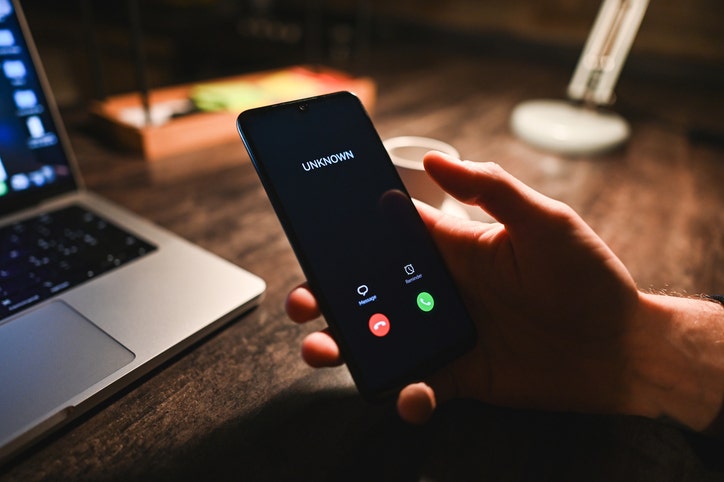
Five people have been charged in the UK following an investigation into Russian Coms, a caller ID spoofing platform that enabled fraudsters to impersonate trusted organisations and make more than 1.3 million scam calls.
The National Crime Agency (NCA) said the charges follow a long-running investigation into the service, which it dismantled in 2024 as part of a wider crackdown on organised fraud.
Those charged are Ayoub Sehailia (28), Zakkaria Sehailia (30), Usman Din (30), Denis Ozmus (29) and Fadila Salem (53), all from London.
According to the NCA, Ayoub Sehailia faces charges including conspiracy to supply articles for use in connection with fraud, transferring criminal property and converting criminal property.
Zakkaria Sehailia has been charged with conspiracy to supply articles for use in connection with fraud, converting and acquiring criminal property, as well as failing to comply with a notice requiring him to provide phone passcodes.
Usman Din and Denis Ozmus have each been charged with conspiracy to supply articles for use in connection with fraud, while Fadila Salem has been charged with transferring criminal property.
The accused are due to appear at Westminster Magistrates' Court on 14th August. The charges have not been tested in court.
Large-scale impersonation scams
Russian Coms was established in 2020, initially as a dedicated handset before expanding into a web-based application marketed to criminal users.
Investigators say the service allowed fraudsters to disguise their phone numbers so calls appeared to originate from banks, telecommunications companies or law enforcement agencies.
The accused used this ID spoofing technique to convince victims they were speaking to legitimate organisations before persuading them to hand over sensitive information or transfer money.
When the NCA dismantled Russian Coms in 2024, it said hundreds of criminals had paid between £1,200 and £1,400 in cryptocurrency for six-month subscriptions to use its services.
Authorities said the platform was promoted through Telegram, Snapchat and Instagram, offering encrypted calling, international calls, voice-changing technology, instant handset wiping and other features designed to help users conceal their activities.
Before it was shut down, investigators said Russian Coms had been used to make more than 1.3 million calls to half a million unique phone numbers across 107 countries, including the UK, the US, New Zealand, Norway and France.
Around 170,000 people in the UK are believed to have fallen victim. Average reported losses exceeded £9,400 per victim.
Part of wider fraud crackdown
The takedown followed the arrest of three men in Newham, east London, two of whom investigators believe were responsible for developing and administering the platform.
The operation formed part of Operation Henhouse, a nationwide campaign targeting organised fraud networks.
The initiative, carried out with support from international partners and Europol, resulted in 290 arrests across England, Scotland, Wales and Northern Ireland.
Earlier this year Nick Sharp, Deputy Director for Fraud at the National Economic Crime Centre, said the latest phase of Operation Henhouse had delivered its strongest results to date, making the fifth year of the nationwide enforcement campaign its most successful so far.
"Since its inception, Henhouse has contributed to thousands of arrests and the recovery of millions of pounds linked to fraud, with each successive year building on the last."
"The results achieved across five years of Henhouse reflect the commitment of UK Law Enforcement and Policing to tackling one of the most prolific and harmful crimes affecting people and businesses across the country," Sharp added.