Nvidia shares fall as investors weigh risks of Jensen Huang's return
Huang's return has attracted bipartisan criticism from US politicians
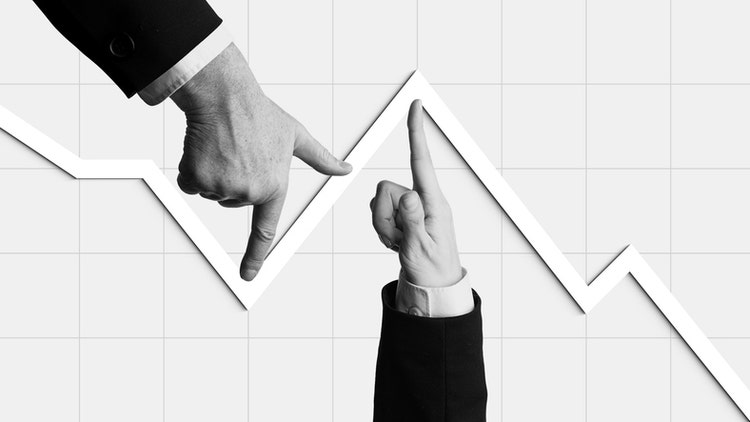
Nvidia shares have fallen sharply after an initial surge triggered by the return of co-founder Jensen Huang as chief executive, as investors reassess the political, legal and corporate governance risks surrounding his reinstatement.
The chipmaker's shares were down more than 5% in early trading on Tuesday, reversing some of Monday's gains, when they surged 31.5% and added more than $952bn to the company's market value.
The dramatic rally had followed Nvidia's decision to reinstate Huang, who stepped down just 11 days earlier following revelations about extramarital affairs, including one with an alleged Chinese spy.
However, investors appear increasingly concerned about the circumstances surrounding his return and the potential implications for the company, which plays a central role in the global AI industry.
"There are also questions about how involved the government will be in Nvidia going forward, and about governance of conduct internally given the stance the reinstatement implicitly took," said Dan Sheehan, director of portfolio management at Telos Wealth Advisors.
"Those don't get resolved by a soaring stock price."
Sheehan's comment about government involvement was likely prompted by the revelation that Donald Trump leaned on Nvidia's board to "encourage" Huang's rehiring, a move that earned him as much as $15 million.
Huang receives a welcome back from employees
Huang, 63, received a warm reception from employees when he returned to Nvidia's headquarters in Santa Clara, California, on Monday.
He was greeted with applause and chants of "welcome Jensen" as he entered the office of the company he co-founded in 1993.
"I'm going to be a better CEO the second time around," he told employees.
Nvidia's board confirmed that Huang had been reinstated with immediate effect following unanimous approval from its directors.
In a short, five-sentence letter to employees, board chairman Harvey Jones said the decision had been made "after careful consideration".
Jones will remain chairman, while Colette Kress, who served as interim chief executive during Huang's absence, will continue as chief financial officer.
The board said it had held several discussions with Huang before reaching its decision.
It also confirmed that it had received input from senior US government officials and was confident that his return posed no national security risk.
Political and legal scrutiny
Despite the initial market enthusiasm, Huang's return has attracted criticism from US lawmakers across party lines. Some have called for Congress to examine the circumstances surrounding the board's decision.
Nvidia and Huang are also still facing several state and federal investigations and reviews involving agencies including the FBI, the Justice Department and the Securities and Exchange Commission.
A public Senate hearing is scheduled for 3rd December, when Huang is expected to testify.
Meanwhile, investigations by Nvidia's board into potential foreign intelligence activities, national security concerns and export controls remain ongoing.
Peter Andersen, founder of Andersen Capital Management, said investors were beginning to examine the decision more critically as the initial excitement faded.
He argued that the board had exposed itself to considerable ethical and legal risks through its decision to bring Huang back.
Andersen also described Huang's forthcoming Senate testimony as an "enormous risk" for the company.
AI stocks retreat as market enthusiasm fades
The uncertainty surrounding Nvidia also weighed on other technology stocks, with several AI-related companies losing ground after Monday's broad rally.
European markets and US stock futures traded lower on Tuesday, despite gains across several Asian markets.
Anthropic, the developer of the Claude AI chatbot, was among the companies missing out on the wider technology rally.
Its shares fell below their $83 initial public offering price in pre-market trading, just days after a record-breaking Nasdaq debut.
Nvidia's latest surge had propelled it back into second place among the world's most valuable publicly traded companies, behind Apple. However, its shares remain almost 31% below their record high reached on 6 October.
Sheehan warned investors against interpreting Monday's gains as evidence that the uncertainty had passed.
"As incredible as Monday was, I don't take it as a sign we're out of the woods," he said.
"A market that can rise $3 trillion on one headline can fall just as fast on another."