Anthropic's $1.8tn IPO creates a new risk for CIOs
The record-breaking valuation is a strong endorsement of AI – but there's a catch
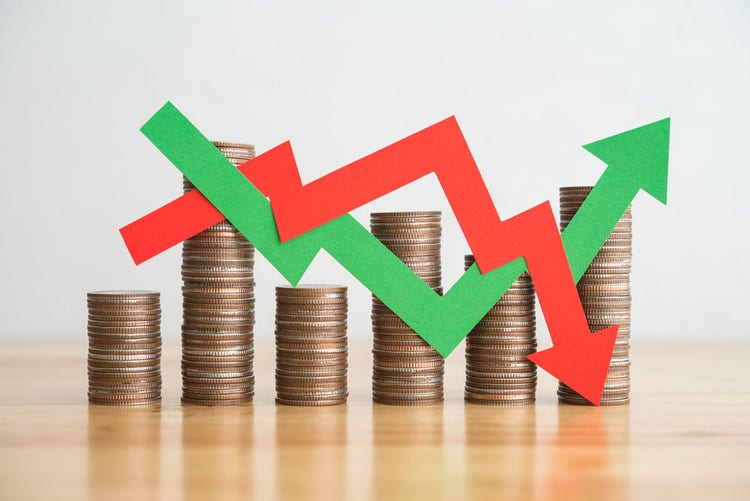
Anthropic's record-breaking IPO saw shares closing 17% above its listing price to value the company at about $1.8 trillion – the biggest public stock launch in history.
However, investors remained wary of tech stocks more generally on Thursday, with various indices falling globally.
That includes Japan's Nikkei 225, South Korea's Kospi (down 5.1%), Taiwan's Taiex (down 6.2% in a day and 17.1% over the course of the week) the USA's Nasdaq Composite Index (down 2.3%) and S&P 500 (down 2%), and the Dow Jones (down 2.1%).
Despite Anthropic now being the sixth most valuable company in the world – and all those ahead of it also being tech stocks – its debut has failed to revive flagging investor interest in AI.
Neoclouds, which tend to carry high levels of debt, fell yesterday, with CoreWeave in particular down 6%. Hyperscalers like Amazon and Alphabet, as well as chipmakers like TSMC, Micron, Broadcom and Nvidia, all fell. Only Intel beat the dip, rising 2.1% after announcing a new customer.
Ipek Ozkardeskaya, senior analyst at Swissquote, said, “Enthusiasm [from Anthropic's IPO] did not last long... The blockbuster debut couldn’t sweep those worries under the rug.”
Anthropic's numbers still don't add up
Anthropic's massive stock listing doesn't change the fundamental risk facing the company: its costs still massively exceed its revenues.
After recording a profit in Q2, Anthropic returned to a small operating loss in Q3 this year despite generating $17 billion in revenue. Its compute-related commitments exceed $900 billion, including more than $70 billion due in the next 12 months.
Compared to a valuation of almost $2 trillion this sounds like small potatoes, but that will only continue to be the case if growth continues.
Professor Richard Whittle, Professor of Artificial Intelligence and Public Policy at the University of Salford, said, "A run rate of about $81 billion supports a valuation approaching twenty times that figure only if growth continues at something like its present pace.
"Operations broadly cover themselves, while commitments can be met only through continued growth and continued access to capital."
“Among the largest commitments are those owed to Google, Amazon and Microsoft, whose cloud platforms also carry about 44% of Anthropic’s sales and whose own valuations lean on AI demand. If demand slows, Anthropic could spend years paying for capacity it can no longer sell at the price it expected.”
What Anthropic's IPO means for CIOs
Still, Professor Whittle told us that Anthropic's pre-market movement was, "on the surface...the strongest endorsement the AI boom has yet received."
But, he added, "AI valuations are a claim on a particular future," and that they fail "once investors begin to doubt [that future]."
Those investors are no longer limited to institutions like pension funds and mutual funds. With the IPO, retail investors – that is, the general public – are now involved, and they "typically respond far more quickly to news and market developments than the investors who have driven AI investment so far."
He continued, "A private valuation is revised infrequently according to detailed analysis and evaluation. A listed share is repriced every day, indeed every minute, and each quarterly report, profit announcement or scandal becomes a public test of whether the imagined AI future is still believed."
CIOs and other tech leaders need to pay attention to what Anthropic's share price – which is likely to shift with each set of quarterly results – means for their business if using Claude.
A more volatile and publicly scrutinised Anthropic could mean more fluctuations in product pricing and a roadmap subject to frequent change.