Rolls-Royce secures government backing for small nuclear reactors
The company now has access to a £599 million loan facility through the National Wealth Fund
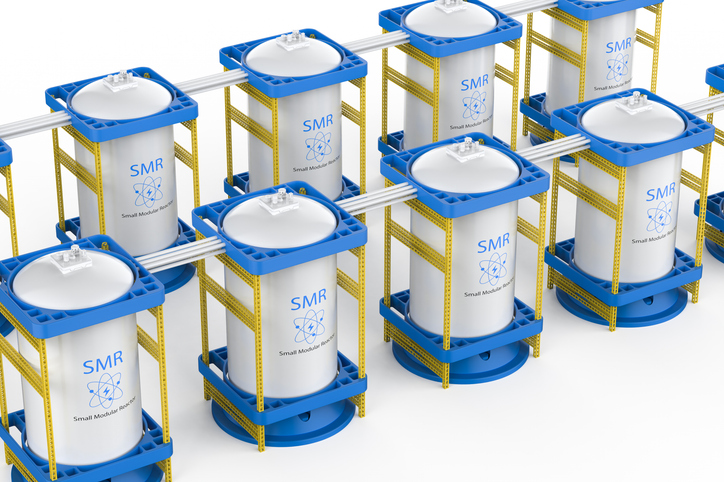
The UK government has awarded Rolls-Royce a major contract to begin designing a new generation of small nuclear reactors in a plan to meet the increased demand from datacentres and electrification.
The deal, overseen by Great British Energy – Nuclear (GBE-N), will kickstart work on small modular reactors (SMRs), compact nuclear plants intended to be cheaper and quicker to build than traditional facilities.
Although the total value of the contract has not been disclosed, Rolls-Royce has access to a £599 million loan facility through the National Wealth Fund.
The wider programme has been allocated £2.6 billion in public funding.
Despite the announcement, the reactors are still in the early design phase, meaning they are unlikely to begin generating electricity before the mid-2030s.
SMRs are designed to produce up to a third of the power of conventional nuclear plants. Their modular construction allows key components to be built in factories and assembled on-site, potentially reducing costs and delays.
Under the agreement, Rolls-Royce will work with government officials on detailed site design, regulatory approvals and planning processes ahead of a final investment decision, the timing of which remains unclear.
Focus on Wylfa site
Initial work will focus on the construction of three reactors at Wylfa, on the island of Anglesey in north Wales.
The site previously hosted a nuclear power station that operated from 1971 until its closure in 2015. Plans by Japan's Hitachi to build a new plant at Wylfa were abandoned in 2020 following funding disagreements.
GBE-N later acquired the site in 2024.
The proposed three-unit SMR project is expected to generate at least 1.4 gigawatts of electricity, enough to power around three million homes for more than six decades.
The government says the investment is aimed at strengthening energy security while supporting the transition to low-carbon power, particularly as electricity demand is expected to rise due to electric vehicles and energy-intensive datacentres.
Chancellor Rachel Reeves said the initiative would help "build a new generation of homegrown nuclear technology" and create skilled jobs across the UK.
The National Wealth Fund estimates the programme could support around 1,000 jobs within Rolls-Royce alone, with further employment expected through supply chains and local development.
Industry representatives have welcomed the move.
Tom Greatrex, chief executive of the Nuclear Industry Association, described the agreement as a "historic step" that would bring investment and employment to Wales.
"It marks the beginning of a significant and exciting new phase for the project and the people of Ynys Môn," he said.
"It allows work to begin on a project that will create thousands of jobs and attract significant investment locally and across Britain, while helping to secure the UK's long-term supply of reliable, low-carbon power."
Export ambitions
The UK government also sees SMRs as a potential export opportunity.
Rolls-Royce's reactor technology has already gained interest abroad, including a deal with Czech energy firm CEZ to develop up to 3 gigawatts of low-carbon power.
Rolls-Royce SMR chief executive Chris Cholerton said the agreement would demonstrate a new approach to nuclear construction based on standardised, factory-built systems.
"This contract unlocks the delivery of our first three units and brings certainty to the UK SMR programme. With plans for up to six further units in Czechia, this announcement makes Rolls-Royce SMR the only company with multiple commitments in Europe," he noted.