Public pressure mounts against Scottish datacentres
But developers cry misinformation

The Scottish public continue to rail against datacentres, but developers insist they have fallen for misinformation.
Public pressure is making it more likely that Holyrood will consider a moratorium on datacentre development in the country.
It's only been a week since this was last in the news, with protests at the time centring around a proposed facility in Larbert, west of Edinburgh. Now there are new objections to a datacentre a short distance away, in Fife, that would be larger than the village it is ostensibly part of.
The 600MW Cato development in Auchtertool is said to be the second-largest datacentre in the world: 35m high and spanning several square kilometres, the campus would including its own electricity substations, fencing, plant and machinery, access roads, paths and parking.
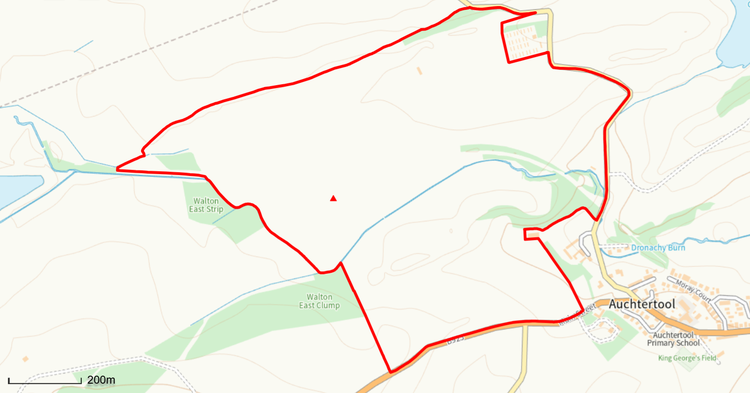
The area also covers the ruins of Hallyards Castle, which does not have statutory protections and could be destroyed if the development proceeds.
Although the proposed site is rural, it is not without its own heavy industry already, with both a Shell chemical plant and an onshore wind farm just a few kilometres away.
Scotland's largest datacentre attracts the most protests
More than 100 people protested against the Larbert development, but the Cato facility has drawn an order of magnitude more criticism: more than 1,600 objections were lodged before the consultation period closed.
These objections cover the facility's scale; impact on the local area and wildlife; power and water use; and limited long-term employment benefits.
David Torrance MSP, who represents the area, said, "The public pressure is huge... I’ve never seen this level of objection to a local plan, and I have been in politics for 25 years.”
The Scottish public appear united in their opposition to datacentres, and politicians are paying attention. Earlier this summer, the Scottish National Party passed a motion to pause all new datacentre projects without existing planning permission.
With MSPs returning to parliament next week, campaigners expect movement.
Kat Jones, director of the Action to Protect Rural Scotland charity, said, “The Scottish government is inching towards a moratorium. MSPs return to parliament next week, after a summer in their constituencies where they have been hearing the concerns of local people about proposed hyperscale datacentres. They will be expecting action.”
Activists are planning a demonstration against datacentres in Edinburgh on 3rd September, just a few days after parliament resumes.
However, the issue is a thorny one: the UK government has been trying to woo datacentre developers for months, and has billed Scotland as an ideal location.
Fintan Slye, CEO of the UK’s National Energy System Operator, told a London audience in April, “If...you have a big datacentre and you want to go to Scotland, please come talk to me, we will help you."
Scotland objects
It isn't just the Scottish public standing in the way of new datacentres. New regulations are also being passed to control development.
Hannah Mary Goodlad, Scotland's minister for public finance, this week announced two new requirements for developers. The first is that planning authorities must notify the government when they receive an application for any datacentre larger than 50MW – well below the 600MW scale of Auchtertool.
Second, certain facilities – including Auchtertool – must submit an environmental impact assessment. Developers have previously argued they were exempt from doing so, but the rules are now codified.
Torrance said the future will bring "a lot more restrictions – and stronger guidance [on datacentres in Scotland]."
Developers insist on public benefit
Developers like ILI Group, which is behind the Auchertool site, have defended their plans even in the face of public and political opposition.
CEO Mark Wilson suggested to the BBC's Scotscast this week that citizens did not have the full picture.
“There’s a lot of misinformation out there. It’s mainly coming from overseas, from America," he said.
He admitted that most datacentres going through planning right now are unlikely to be built, but said Scotland currently has a "once-in-a-lifetime opportunity" to become "a global hub for datacentres."
Talk about reading the room.