Datacentre opposition grows: Police Scotland warns of need for ‘robust security’
Datacentres now seen as ‘physical manifestation’ of AI
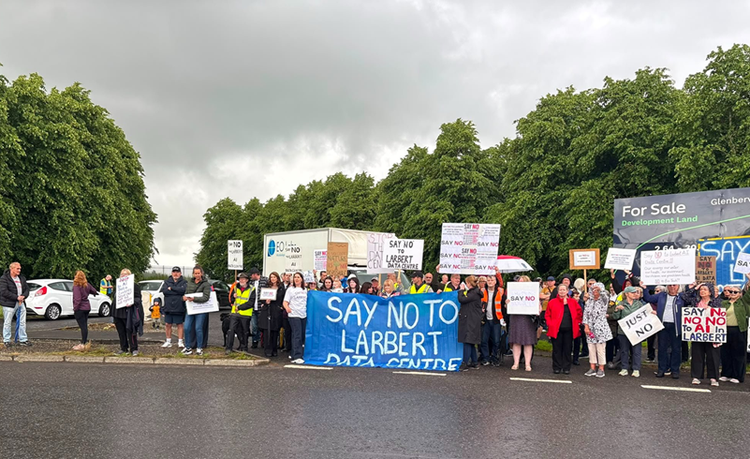
Police Scotland says a “great deal of public opposition” is likely to a planned datacentre near Edinburgh and has warned that “robust security measures” may be necessary.
Police Scotland made its statement in a planning consultation for a new datacentre planned in Larbert, about 30 miles west of Edinburgh, urging the developer to work with the police to prevent protests (aka “unplanned incursions for the purposes of disruption”).
Datacentres are prime targets for protestors who oppose AI technology, as well as those concerned about land use, water use, power use and potential for pollution.
More than 100 people protested against the proposed Larbert development last week, and nearly 7,000 have filed online objections.
Michael Maciocia, who lives in Larbert, told The Guardian that he and others are concerned about the 200 diesel generators the developer, Apatura, plans to install as a backup power supply.
“Where this datacentre is planned to be built, within 50 metres of one of the buildings is a 56-bed care home for the terminally ill… Within 400 metres, there’s the 860-bed Forth Valley Royal hospital,” he said.
“The amount of pollution and the noise created by these things will be horrendous in every direction.”
More than 20 hyperscale facilities are currently going through the planning process in Scotland, according to the charity Action to Protect Rural Scotland; but the Scottish National Party, which holds power in Holyrood, passed a motion to freeze all new datacentres in the country last month.
While datacentres have always consumed resources, the AI boom has pushed more construction, closer to population centres.
Cecilia Rikap, a professor at University College London, says datacentres are now seen as a “physical manifestation of AI,” and thus go hand-in-hand with opposition to the technology.
“Ultimately, if you want to protest against generative AI or the role of big tech, you would protest at a datacentre. That’s what you can see. All the rest is much more invisible.”