Memory crunch hits the PC market
RAMpocalyse is pushing buyers towards lower-spec devices, while making refurbished hardware increasingly attractive
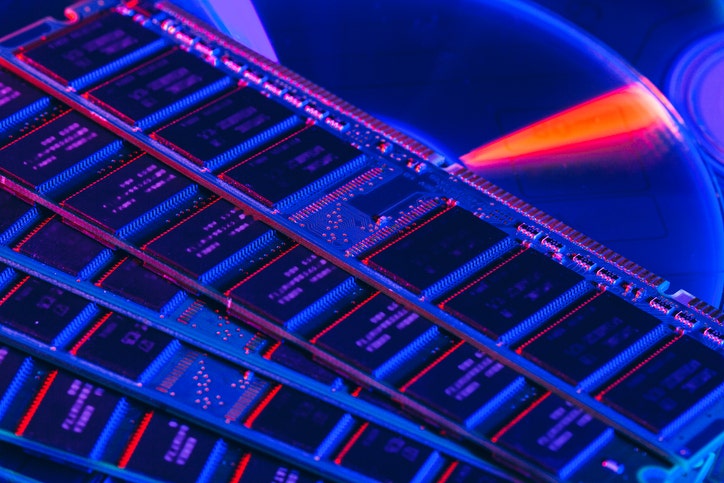
The fourfold jump in the price of memory this year is filtering down to consumer decision making when purchasing PCs and laptops.
With datacentres hoovering up memory chips to fuel the AI boom, manufacturers have been prioritising the profitable high-bandwidth memory (HBM) used in model training and inference over the more humdrum DDR chips found in end-user devices, with scarcity forcing prices to rise.
Data from CPUID, which publishes the CPU-Z freeware monitoring tool for Android and Windows, shows the share of PCs and laptops equipped with 64GB of RAM in its dataset falling 18% in a year to just 7.3%, while the proportion of devices with 32GB of memory has fallen by 2.5% to 37.3%.
The shortfall was mostly made up by 16GB configurations, which rose 12.9% to make up 33% of total devices.
This represents a historical anomaly, as RAM capacity almost always increases over time. It demonstrates the profound distortion of the supply chain by the breakneck datacentre build out.
In addition to having lower memory resources, the type of RAM installed has also been affected, with newer DDR5 modules down by 2.9% to 32.9% of the total detected, and DDR4 rising 6% year-on-year to 54.4%. This suggests that consumers are eking out usage of existing systems rather than buying new or upgrading their devices.
The rising price of RAM is also making refurbished devices a more attractive option for both consumers and businesses.
Analyst firm Mordor Intelligence estimates that the refurbished and reconditioned IT hardware market grew from $19.24 billion in 2025 to $20.86 billion in 2026, and forecasts it reaching $31.29 billion by 2031, equivalent to an 8.44% compound annual growth rate.
This rise in popularity of refurbished devices is not due to increasing prices alone, though. Sustainability drives and right-to-repair laws are also playing their part.
For example, the UK Department for Environment, Food & Rural Affairs (Defra) has stipulated that 90% of its laptops, phones and tablets will be refurbished or remanufactured under its five-year supply contract with Atos.
The diminishing performance returns for everyday usage offered by upgrading endpoints may also be playing a part.
At the top end, the memory shortage does not yet appear to be dampening enthusiasm for AI laptops among developers and enthusiasts. But prices are rising just as manufacturers are trying to persuade buyers of the advantages of running AI locally.
Higher RAM prices will likely widen the divide between machines with an “AI-PC” sticker and high-memory systems genuinely capable of running AI models, creating a dilemma for the industry which has been heavily pushing AI laptops as the next big thing.