Chinese AI squeezed as Nvidia halts Southeast Asian shipments - Asian Tech Roundup
Plus: India's AI plans include childhood aptitude profiling
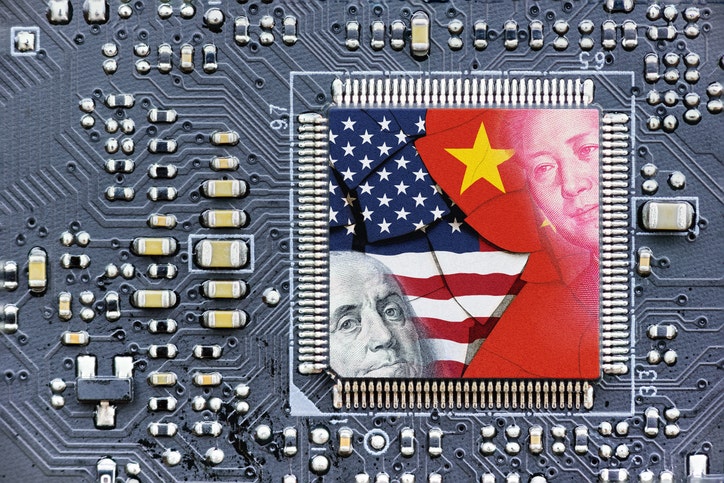
Welcome to Computing's weekly roundup of tech news in Asia. This time we look at how restrictions on Nvidia shipments to Southeast Asia and moves by US AI companies to limit distillation could affect Chinese developers. In India, moves to extend state use of AI including for aptitude tests for children cause concern, and music stars urge Australia not to water down copyright measures in favour of AI vendors.
Nvidia has told partners to stop shipments of AI servers to four Southeast Asian nations following the scandal that saw advanced AI chips apparently being made available to Chinese developers in breach of US efforts to restrict access.
Shipments to Malaysia, Singapore, Thailand and Indonesia have been suspended following new US licensing requirements aimed at closing potential routes into the burgeoning grey market.
The impact of the move, which comes as Jensen Haung returns as CEO after pressure from the US government, will likely affect not only China, some of whose advanced AI may have been trained using Nvidia chips, but also Southeast Asia’s fast-growing AI and datacentre sector.
Singapore has said it is working with the US to prevent companies rerouting American chips through the country, whose Megaspeed was at the centre of the scandal.
The hardware restrictions are part of a wider US squeeze on Chinese AI developers.
AI startups Z.AI and Moonshot are reportedly facing slower model development as US semiconductor restrictions restrict access to computing power. At the same time, measures introduced by OpenAI and Anthropic to prevent “distillation” are making it harder for Chinese developers to use the capabilities of leading US models to improve their own LLMs.
Distillation allows developers to train models using outputs from larger, more capable ones. Restrictions potentially give Washington another way to impede China’s AI ecosystem beyond simply restricting the supply of advanced US GPUs.
The developments show the increasingly multi-pronged approach by the US to maintain an AI advantage over China.
China has threatened retaliation over plans to restrict Chinese remote access to advanced semiconductors, raising the prospect of another round of tit-for-tat sanctions.
Australia
- Australia’s proposed Digital Duty of Care law would allow fines of up to 5% of global revenue for tech platforms failing to tackle harmful content and addictive features. Source
- Datacentre executives met Australian state premiers and ministers almost 120 times over three years, a sign of the industry’s efforts to influence infrastructure and energy policy. Source
- Musicians including Kate Bush and Grace Jones have joined Australian artists urging stronger copyright protection against AI companies using creative work without permission. Source
- Macquarie Dictionary chose “pervert glasses” as its 2026 word of the year, after smart glasses raised concerns over privacy and exploitation, while AI-related terms “nudify” and “AIdr” also featured. Source
- Siemens, InterContinental Energy and Mescada are developing a digital twin to optimise gigawatt-scale green hydrogen and AI computing infrastructure, targeting production cost reductions of up to 20%. Source
China
- Z.AI and Moonshot AI face slower model development as US chip restrictions and anti-distillation measures from OpenAI and Anthropic constrain access to computing power and leading models. Source
- China has extended its suspension of US-specific restrictions on gallium, germanium and antimony until 27th January 2027, but export licensing and its US military-user ban remain. Source
- China threatened retaliation over US plans to restrict Chinese remote access to advanced semiconductors, potentially reopening a cycle of tit-for-tat technology controls. Source
- Lithography leader ASML’s CEO, Christophe Fouquet, has argued that selling older chipmaking equipment to China would preserve Western technological advantage, while a complete cutoff would accelerate Chinese self-sufficiency. Source
- Cybersecurity researcher HD Moore says private links submitted to MiniMax were accessed by unidentified parties despite users requesting that their data not be retained. Source
- Chinese-linked battery projects could receive UK subsidies despite security concerns over reliance on Chinese-manufactured lithium-ion batteries and software controlling critical energy infrastructure. Source
- Huawei and Phlexing Technology have developed domestic EDA tools supporting advanced 3D packaging, as China seeks to compensate for its lag in cutting-edge semiconductor fabrication. Source
- Huawei was convicted in the US of 10 criminal counts, including bank fraud and conspiracies to steal US trade secrets and defraud the government. Source
- China’s 2026–2030 manufacturing plan prioritises shared industrial data infrastructure, industry-specific AI models and agents, alongside greater technological self-reliance and coordinated hardware and software development. Source
- Two exposed databases contained more than 3.5 billion credentials, identity numbers and documents; one held over a billion China-linked records, highlighting cybercriminal data collection at enormous scale. Source
- China launched Shenzhou 24 carrying two Chinese astronauts and Pakistan’s Muhammad Zeeshan Ali, the first foreign astronaut aboard China’s Tiangong space station. Source
- Xi Jinping used the APEC summit to attack Western “protectionism” and call for greater international cooperation on free trade and AI. Source
- The European Commission has provisionally found Temu had breached Digital Services Act obligations by failing to adequately mitigate risks from illegal products sold through its marketplace. Source
India
- India is exploring extensive government use of AI, including childhood aptitude profiling and an Uttar Pradesh AI Stack connecting government data to services, prompting privacy and oversight concerns. Source
- YouTube removed 3.44 million India-uploaded videos in April–June 2026, 30.8% of worldwide removals, with automated systems initially detecting 98.6% of removed videos globally. Source
- CERT-In warns AI-assisted attacks are abusing trusted business systems and approval processes to make unauthorised payments at Indian banks, financial firms and technology providers. Source
- Google Cloud denied reports of widespread Indian layoffs, saying about 30 roles were eliminated last week following a “small organisational change” and reprioritisation. Source
- Kalyan Krishnamurthy will step down as Flipkart CEO on 4th December; technology chief Balaji Thiagarajan takes interim control amid uncertainty over the company’s planned IPO. Source
Japan
- Japan's datacentre boom faces a growing revolt from urban residents. Around 60% of facilities are concentrated around Tokyo, where residents are challenging new projects. Source
- CyrusOne and Kansai Electric Power Company have topped out their 48MW OSK1 datacentre near Osaka, with the first phase due online in Q1 2028. Source
- Japan’s exports beat forecasts as booming AI hardware demand boosted its technology supply chain, alongside similar gains for Chinese and South Korean manufacturers. Source
- McDonald’s Japan says attackers accessed app users’ purchase histories, IP addresses and location data, although names, contact details and payment information were not exposed. Source
South Korea
- South Korea’s education minister has resigned after an AI-assisted cheating scandal engulfed university examinations, intensifying debate over how universities should police generative AI use. Source
- KEPCO says hackers breached its billing and procurement systems, exposing data covering more than 1.5 million customers, company representatives and employees. Source
Singapore
- Singapore-based Megaspeed will be added to the US Commerce Department’s Entity List while investigations continue into whether the company illegally supplied Nvidia chips to China. Source
- Singapore's government says it is working with the US to prevent companies rerouting of American chips through the country, amid investigations into possible breaches of export restrictions. Source
Elsewhere in Asia
- Nepal: India will establish an Indian Institute of Technology campus, startup incubator and innovation hub in Nepal, alongside expanded technology scholarships for Nepali students. Source
- North Korea: The threat actors linked to North Korea have been observed planting a Python loader in GitHub repositories, amid evidence that the activity may have started as far back as February 2025. Source
- Southeast Asia: Nvidia halts chip shipments to Southeast Asia: Nvidia reportedly told partners to halt AI-server shipments to Malaysia, Singapore, Thailand and Indonesia after new US licensing rules targeting potential routes to China. Source