'No longer a single system’: How agentic AI is disrupting hospitality
'Ideally, the interaction between employees and AI agents is seamless'

In this second part of our interview with Martin Kemmer of Hey Lou Hotels and Liesel Klokkers of Salesforce, we talk about the integration of agentic AI in the hotel industry; data protection; and the balance between technological progress and customer centricity. Click here to read part one.
Agentic AI is still a relatively new concept, especially outside the PoC stage. We asked Martin and Liesel, “What do you need to pay special attention to when introducing agentic AI?”
Liesel explains: "Agents no longer act exclusively within a single system, but increasingly across systems – for example in the HR system, finance system or Salesforce. In the future, agent-based cooperation between companies could also emerge.
“It is crucial to continuously monitor the activities of the agents and ensure that they are performing their tasks correctly. Transparency and functional control are essential; safety and responsibility issues play a central role here. Humans verify these aspects with the help of AI-based observability dashboards that visualise trends and make the value proposition of individual agents measurable.
“A key aspect is to demonstrate the added value of AI, for example by measuring automated processes in customer service. It is important to analyse how many cases are actually processed automatically and in which situations an agent initiates cooperation with an employee. Corresponding concepts for monitoring and controlling agents must be further developed, whereby the integration of AI into workflows remains essential.
“Ideally, the interaction between employees and AI agents is seamless: An agent first communicates with the customer, recognises when it is necessary to hand over to an employee based on defined guidelines, and provides the employee with a precise summary of the conversation so far. This allows the employee to continue efficiently without questioning the customer again. During the processing of complex requests, they will continue to be supported by AI – whether through execution plans or access to relevant knowledge databases and documents. Modern technologies even make it possible to integrate images and diagrams into the information flows.
“Once a service case is closed, the generative AI creates a summary, automatically sends an email to the customer and generates the invoice, which optimises the turnaround time in customer service.
“The close integration of human competence and AI agents is leading to a lasting change in work processes: AI takes over routine tasks such as resetting passwords, while complex problems are solved together. This results in new demands on competencies and skills for both users and developers."
Martin confirms: "It is essential to pay attention to the different roles and job profiles in the company. The tasks differ significantly — from friendly customer contact to procedural control to the development of AI bots and agents.
“First of all, it is important to carefully analyse the processes. When building AI agents, it is also important to ensure that the vector spaces between the GPT-4 model and the Llama model, for example, are not disjointed if they are to be integrated into agents. Only a few experts have in-depth knowledge in the field of vector spaces; however, a broad qualification is often not required, as these are highly specialized tasks.
“In line with Taylorism, such specialised activities should also be taken over by appropriately qualified specialists. In the context of a CRM system, I recommend using established solutions such as Salesforce instead of developing your own systems. This approach makes it possible to use existing expertise and to make technical integration and orchestration efficient. As a result, the added value is expanded on several levels, with a significant part remaining in direct customer contact.
“The future value chain will probably be even more fragmented and divided into more labour, which will give rise to both new, challenging and less demanding job profiles. Although the developments of the future cannot yet be conclusively predicted, it is certain that they will take a different course than previously assumed.”
Liesel, you mentioned the guardrails earlier and pointed out the importance of comprehensive data, even from external systems. Martin has drawn a beautiful picture: "Standing on the shoulders of giants". What other security-relevant aspects demand special attention when using agentic AI, or AI in general? What security measures are mandatory, especially when multiple systems are connected or agents interact between different systems?
Liesel begins: "As long as we are moving within Salesforce, the so-called trust layer is used. This ensures that all outgoing data – regardless of whether it is sent to an LLM or an MCP server – is adequately protected. As mentioned earlier, sensitive information is masked. When communicating with an LLM, particular care is taken to ensure that technical and contractual agreements ensure that both inquiries and responses are not stored or reused. This ensures that no confidential data is leaked.
“For additional protection, there are clear guardrails for agents: It is precisely defined which actions are permitted and which are expressly prohibited. In addition, protection mechanisms such as the avoidance of prompt injection are used to prevent manipulation of inquiries and responses. These measures are essential to ensure a high level of safety.
“Another central aspect is the traceability of all processes in the system. Audit trails can be used to check at any time which actions have been carried out, and which answers have been generated.
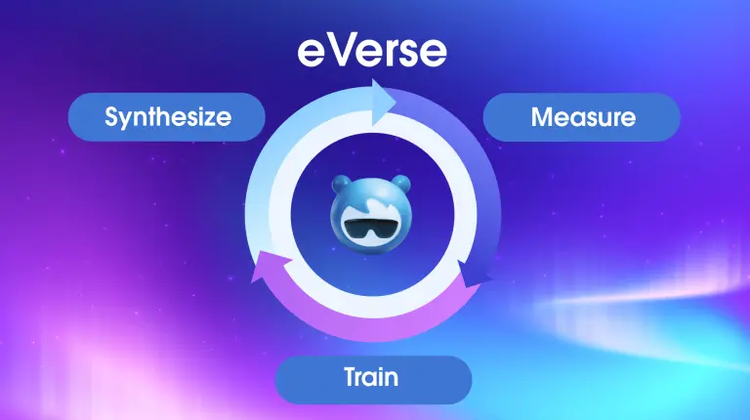
“Especially with regard to complex agent systems, Salesforce pursues the approach of developing special training environments ("eVerse"). In these training rooms, agents can be tested and simulated under various conditions, for example with synthetic data and extreme scenarios. This is all the more important as GenAI testing and validation has fundamentally changed.
“Test environments are already available today in which agents can be comprehensively tested. This is complemented by a differentiated role and rights concept: Each agent is only given access to the data he or she needs for his or her task – analogous to the principles for human employees. The principle of minimal data use also applies here, which ensures that agents can only view and process authorised information."
Martin continues, "I think it's crucial to take a frugal and thoughtful approach when working with data. In the context of our recent discussions on vector spaces, I would like to emphasise that simply collecting large amounts of data does not automatically lead to better results in the application of AI systems. The learning models in the hidden layers are based on complex mathematics and carefully designed structures – especially in the case of transformers. With such systems, the focus should therefore be less on the amount of data and more on structured processes.
“Degrees of freedom and weightings...should also be set as deterministically as possible. Salesforce currently offers a new feature where weights can be adjusted directly, which means that even small changes can have a significant impact on the model and its algorithms.
“It is essential to stay as close as possible to the systems and to rely on proven IT methods for classification tasks. Many processes within an LLM are not transparent due to the hidden layers, and a comprehensive understanding of the results generated is often not available. Ultimately, these are mathematical Markov chains; the system provides us with results that meet our expectations without actually learning in the classical sense.
“The so-called fine-tuning of LLMs is extremely computationally intensive and is usually only available to large companies. Adjustments rarely take place and take place, if at all, at longer intervals. Therefore, the following also applies here: Structured procedures and responsible handling of data are in the foreground in order to protect the customer as well as to serve their interests in the best possible way. Regulation alone cannot guarantee this – especially since the AI Act, for example, will not apply in the EU until August, whereas other regions such as California are already further along.
“Experience from events such as the German Hotel Congress or the Hotel Digital Days makes it clear that AI-based systems, where used sensibly, can achieve significant improvements in customer satisfaction and efficiency. An example from Las Vegas shows savings in personnel costs and an increase in relevant metrics, with compliance with regional data protection regulations always being prioritised.
“The ability to develop innovative solutions is there; corresponding freedom would make it possible to achieve even better results.”
Artificial intelligence offers numerous advantages, but it also comes with certain risks. An important aspect of this is the responsible handling of data. We wanted to know from Martin how the balancing act between continuous improvement and compliance is achieved.
"In a short time – within six months – we were able to put seven Hey Lou Hotels online almost simultaneously with almost identical content. As a growing company, we are constantly learning. After about 18 to 20 months of live operation, we are observing that the conditions of the individual houses differ slightly. Whether these differences will remain permanent is currently open.
“What sets us apart is our consistent focus on customer centricity. The direct feedback from our guests flows into the optimisation of our system. For example, it can happen that special events – such as an AC/DC concert in Karlsruhe – can cause temporary changes in the guest clientele. Therefore, we make sure to make the hotel offer flexible and adaptable overall.
“From a business perspective, this raises fundamental questions: What does true customer-centricity mean? Who decides, who uses, who benefits from it, and how do we create real added value for our guests? For the first time, we have the opportunity to make such considerations in a targeted manner.
“Social acceptance also plays a role here: Are these services perceived as actual added value? Personally, I am willing to share data if I get a tangible benefit in return. However, if my data is used without anything in return, I refuse to do so. It is crucial that privacy mechanisms support users, not hinder them.
“A practical example: Anja Nöll, Head of Digital Guest Experience, emphasised how important it is for mothers to be offered individual options – such as an extended check-out. Especially in stressful situations, such an offer can be very helpful; it only needs to be communicated transparently. In such cases, data protection should provide meaningful support and not appear as a hurdle. At the same time, however, unwanted advertising must also be prevented from getting out of hand.
“This is where technical solutions come into play – for example, Agentforce offers the option of individually limiting the number of guest communications per topic. To effectively manage this communication, we need reliable data."

Liesel continues: "This example illustrates very clearly the interaction between proprietary data and large language models. A current application scenario is that a customer has a conversation with an agent after prior consent, whereby personal preferences can be recorded. The customer's consent is essential here – without it, the data obtained may not be used.
“The entire conversation can be stored as unstructured data. If, for example, the conversation contains information about preferred products, such as your favourite coffee, it is possible to store this information in the CRM database, provided that the corresponding data protection regulations and consents are available. Of course, such personal details will not be transferred to the LLM; this step would not be permissible without the express permission of the customer.
“In future interactions, the stored information can be used to create customised offers and personalise customer care. The combination of CRM data, which is collected and stored with the customer's consent, and the ability of an LLM to create and summarise content, demonstrates the particular strength of solutions like Agentforce. However, an LLM alone is not sufficient for these requirements – only the integrated use of both systems creates real added value."

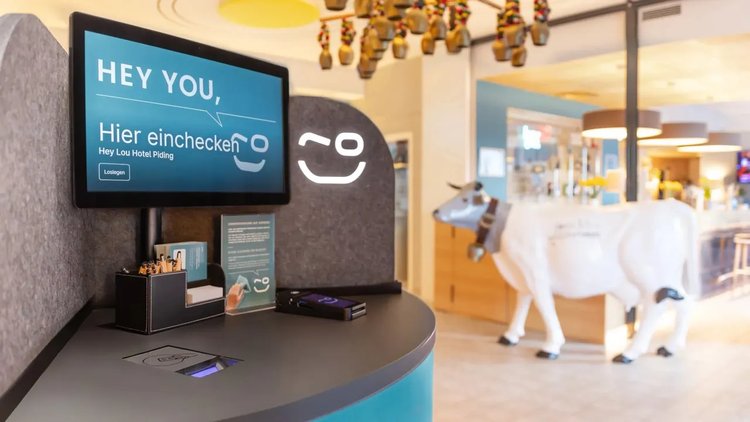
Will the check-in process and guests' perception of the process of entering different types of hotels also change in the future?
Martin is convinced: "It is foreseeable that significant changes will occur in this area. A few years ago, we developed a persona that we called Egon. Egon is 60 years old and comes from the future.
At the time, the idea of this persona we designed still seemed visionary – today it is much more realistic. In our example, for example, the system already recognises on its own that Egon is traveling to a trade fair, taking the train and has certain wishes, such as showering or changing clothes beforehand. This means that various attributes of an object must be reassessed in order to reflect individual needs.
“The personal digital assistant, i.e. the artificial intelligence, not only knows the means of transport, but also anticipates further preferences, such as the early check-in of luggage or organisational aspects related to the hotel stay. This will make interaction with the hotel much more extensive, as this type of communication has hardly been possible so far and is likely to become significantly more important in the future due to so-called agentic-to-agentic communication. It will be exciting to see how these interfaces and processes will develop."
As with all interviews, there are of course the Famous Last Words from Liesel and Martin.
Liesel begins: "In my view, AI opens up extraordinary opportunities for businesses. I recommend being open to this technology. It's not so much a question of if, but rather when and how to implement AI. Of course, all trust and compliance guidelines must be adhered to. The potential that results from this [technology] is immense and offers considerable competitive advantages. Numerous innovative approaches are opening up, especially in the area of customer service, so in my opinion, no company can afford to do without the use of AI."
Martin adds: "I am convinced that the future holds great potential. In particular, active participation and the use of artificial intelligence open up far-reaching possibilities for the first time to sustainably improve the quality of life for all. The prospect of significant productivity gains with reduced working hours is reminiscent of David Ricardo's prediction over 100 years ago, according to which people would only have to work 15 hours a week in the future. This forecast seems more realistic today than ever. I see this as an opportunity to make extraordinary progress together and look forward to the development with great optimism."
Want to learn more about the development of the hotel operating system concept, the application of Agentic AI in hotel operations, and its impact on the guest experience? Read the first part of our interview.