Gov.uk founder: Sovereignty means working together
‘There are maybe two countries that could have true technological sovereignty. The UK is not one’

The UK can't own the whole AI stack, but it can decide which dependencies it is willing to accept.
The problem with AI sovereignty is that it sounds like a demand for independence: a national stack, domestic models, local datacentres and a flag planted in the cloud.
Mike Bracken, the founder of the Government Digital Service and Gov.uk, sees it differently. He believes sovereignty is not about owning everything but about recovering the power to decide: which technologies matter enough to control or which vendor dependencies are acceptable.
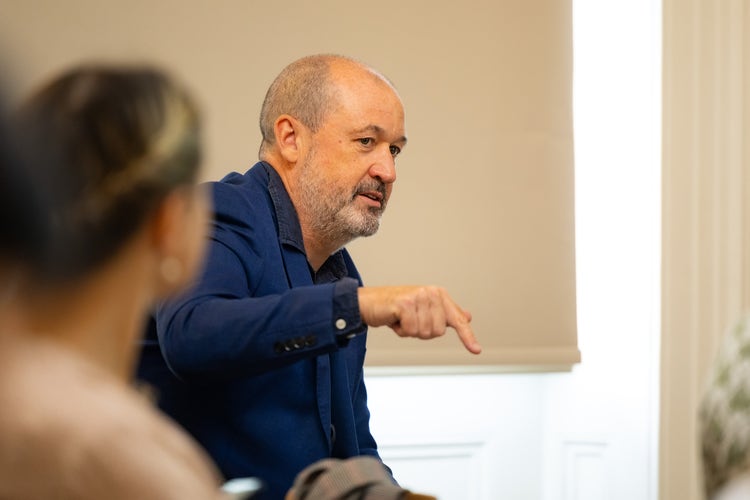
"There are, you could argue, roughly two countries, maybe three areas of the world, that could have true technological sovereignty: ownership of the stack, top and down," he says. "The UK is not one."
He adds: "Even if you have the ability [to be fully sovereign], there's a question mark over whether that's even wise."
The "paradox of digital sovereignty" is that, while independence might be desirable, it is rarely the best choice from a technical perspective.
"You're stronger when you're together, using standards and so on. Choosing to be more independent does not mean being isolated."
To a degree, every country and company is dependent on different elements of a software stack and global supply chain. Acknowledging and accepting that is part of the journey.
A few of the questions Mike believes organisations should be asking include: Do we want our own technology? Who do we use? How do we use it? What markets do we want shaping? What partners do we want? Where do we want more ownership?
"Every jurisdiction, every country, should answer them for their own needs. There's no cookie-cutter approach."
Having grasped the levers, it's time to scale
The UK has already taken strategic steps in this direction, committing funding to sovereign AI initiatives, backing domestic companies, building talent and investing in infrastructure.
Mike’s assessment is cautiously positive.
"Credit where it's due. The levers have at least been grasped."
Those levers include backing British businesses, early capital allocation and the creation of sovereign capability and capacity.
However, he argues that success ultimately depends on solving a problem that has historically held the UK back.
"We've always been great at R&D. We've always been great at early adoption. I don't think it's controversial to say we've never been good at scale."
That, he says, is what separates an interesting AI ecosystem from a genuinely sovereign one.
"If we're going to be good at AI, that means we've got to scale some stuff. Early signs are good, but let's see how we go."
Without scale, sovereign AI remains a series of disconnected announcements and pilots.
Pilots are easy, trust is hard
While governments’ sovereignty challenge is scale, the more immediate concern for IT leaders is about trust. Can an AI system be trusted enough to redesign how an organisation works?
For all the experimentation taking place today, trust remains relatively low, and it is up to CIOs, CAIOs and related functions to understand both how trustworthy a system is and how much trust the organisation is willing to place in it.
"That's where the efficiencies lie and that's where the organisational changes lie," says Mike. "If you don't see that coming early and start changing your organisation around it, then that's a problem."
At the moment, many organisations are experimenting with tools that improve individual productivity, but few are confident enough to hand over entire workflows, but that threshold is where AI begins to create structural change rather than incremental gains.
His final warning is that AI is fundamentally different from the enterprise tech that came before. It is not enough to simply release the technology into the business and leave functional leaders to figure out what happens next.
"CIOs need to go an awful lot more into the realms of organisation change and design."
The UK may never own the entire AI stack. Few countries can. But, says Mike, sovereignty was never really about owning everything - it’s about making sure we retain our ability to decide.
Mike and I were speaking around the publication of his new book, Digital Sovereignty: The Power to Decide.