Sovereign AI: Britain must rethink how it buys, not just what it builds
Smarter procurement and support for British models could help the UK reduce AI dependence without going it alone
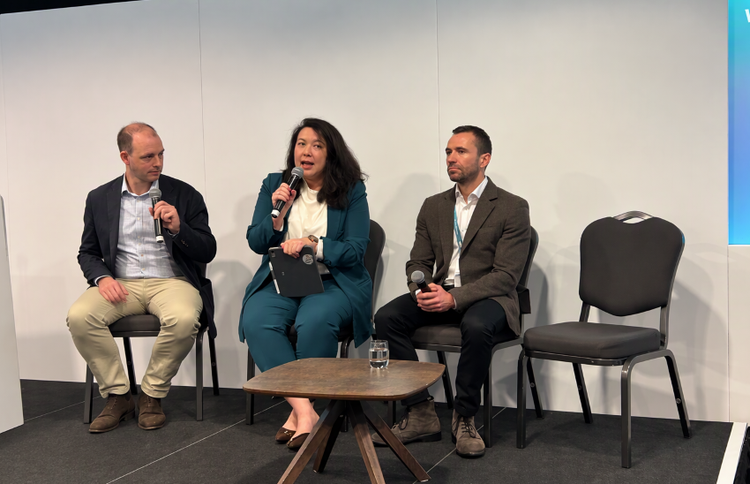
At the Sovereign AI Summit, Victoria Collins MP and Advania CTO Chris O’Brien explored how smarter procurement, clearer regulation and investment in British models could strengthen UK AI capabilities without pursuing unfeasible technological self-sufficiency.
Does sovereign AI mean homegrown models, control over data, or greater freedom to choose the technology we rely on? Beyond the'sovereign AI'slogan lies a practical challenge: how to turn British expertise and focus public spending into a stronger domestic AI industry without retreating from international collaboration.
A panel at the event, moderated by UK AI board member and former digital minister Matt Warman, began with the question of how much control can the UK retain over the technology reshaping its economy.
For Victoria Collins MP, sovereignty belongs within a wider digital strategy encompassing economic resilience, security and support for British businesses. Openness to international trade is compatible with that ambition. The objective is not technological self-sufficiency, but avoiding excessive reliance on one or two suppliers across the technology stack.
“There is an understanding we have a problem to solve,” she said. Agreement on the direction and speed of the response is, admitted Collins, rather harder to get to.
Price versus cost
Advania UK CTO Chris O'Brien questioned whether investment in research and computing capacity would alter Britain’s current dependence on mainly US companies.
“I'd like to see organisations really focused on UK data at the operational layer and building solutions around that,” he said. “A lot of the investment and initiative is directed at research and access to compute. Is that going to materially change the UK's direction and dependency? I think you have to say maybe not.”
Organisations were already choosing their AI suppliers, he warned, while government buyers would likely continue gravitating towards established providers (mainly Microsoft.)
O’Brien’s prescription was for government to become an “intelligent first customer”, supporting businesses capable of transforming public and private services rather than concentrating support on research and infrastructure.
For Collins, “price is just one element of cost”. Repeatedly buying from US suppliers might offer an attractive headline price, but what about the consequences for British jobs, skills and resilience? She advocated giving those considerations greater weight through the social value of contracts (tying in nicely with the Fairway Framework which launched at the same event) whilst accepting that backing domestic businesses would sometimes mean backing companies that fail.
Sovereignty washing
Chris O’Brien acknowledged the challenges facing organisations who wanted to consider the overall cost of AI as well as the price.
“There is a growing ecosystem of AI providers and companies that are building amazing solutions and platforms,” he said, “but it's kind of obscured, and it's very difficult for organisations to find their way. There are no official frameworks, no way of determining the good, the bad, and there's a lot of sovereign AI washing.
“I think that's where there could be more support. There could be more of a framework, and I think it should extend to things like portability and lock-in. I would like to see the UK better define some of these things that help organisations make better buying decisions.”
Adoption with agency
Warman pressed the difficult question: should Britain pursue rapid AI adoption wherever the technology comes from, or tolerate slower progress to support sovereign alternatives?
O’Brien argued that smaller businesses often lacked a realistic sovereign option to start with.
“You either choose sovereign AI because you're regulated, or there's legislation that is compelling you to do it, or you're making a choice to maybe pay that little bit extra or take a slightly less favourable outcome. That's not going to be enough. We need to find ways of supporting this, incentivising it and closing that gap.”
How to close that gap is the question every panel on sovereign AI returns to.
Collins said that regulation could help. Clearer liability rules and greater certainty around the use of AI agents in industries such as financial services could help unlock adoption, Collins argued. Her preference was for a flexible framework rather than waiting years to draw up sprawling legislation.
Where should government focus funding?
Can government help with funding? O’Brien raised the prospect of tax breaks, but it was left to the MP on the panel to discuss policy on greater depth. Collins said;
“The Sovereign AI fund is excellent, but we have to clarify the role of government, and government isn't there to replace business or VC funds. It's government who needs to give this direction. When it comes to the Sovereign AI fund is it about our capabilities? Or is it about crowding in investment?
“I think we can do both, but I do think there should be an element of supporting UK models, not only because it's about keeping that capability and leadership, but I also think the future will be lots of different models. Not every service needs frontier models. Some just need more predictable, smaller, more energy efficient models. And why can't some of those be British?”
Why indeed? Chris O’Brien agreed on the importance of the models themselves.
” I'm less certain that making big investments in GPU creation or even chip design make too much sense," he said. "I think we need a spread because it's difficult to predict six months ahead, never mind six years.
“At the same time, I think there's huge value in pushing harder on model creation in the UK and making the best of our data and our knowledge of how this country works. And I think in that, there's probably more to say about collaboration with the EU. To make it against the best funded, best established frontier labs is not going to be something the UK can do alone, and it’s the same for another EU nations. More collaboration there makes sense.
"But also, in applications above the model, things that are maybe suited to different UK industries, and some of the things where our legislation, our industry layout is different - that's the part of the stack that I believe we should focus on.”