The pick and shovel business: IT Essentials
When everyone is digging, you don't dig with them – you sell shovels
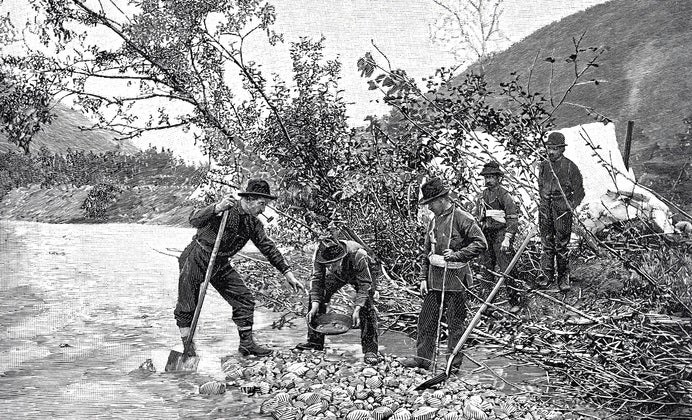
The mid-19th century saw people flooding to California to get rich in the gold rush. Hundreds of thousands travelled from as far away as Europe and China to pan, dig and blast their way to wealth.
Despite the tens of billions of dollars they generated in modern money, most miners didn't see much, if any, profit – mostly spending what they made on taxes, entertainment and gear.
It was actually the merchants who really made bank, selling supplies, jeans and negotiable affection to eager and desperate new arrivals. After all, a miner without a pick is just a guy in badly fitting overalls.
To this day California understands that whoever controls the infrastructure controls the rush, and tech companies learned this lesson well.
Google was the only name in search for decades. The datacentre business more or less keeps Nvidia solvent. AWS is Amazon's most profitable segment. Even Microsoft, up the coast in Washington, learned from its neighbours: Windows still dominates PC operating systems.
Control the tools and you control the market built on top of them. That's where we are with AI today, as the digital infrastructure supporting the technology consolidates under a small number of companies.
Just this year SpaceX has bought AI coding tool Cursor, payments company Stripe bought OpenRouter and now Hugging Face is discussing a sale for $13 billion.
It seems the industry has somewhat lost interest in attempting to make money from generative AI directly: none of these acquisitions are companies building frontier models or developing LLMs. Instead, they are the important middle layer between developer and end user: pixel picks and silicon shovels.
Like the gold rush, this is a messy business. Platforms like OpenRouter and Hugging Face are defined by and rely on their neutrality, a position that – as Kerstin Stief wrote this week – "only remains credible while no single technology company exerts overwhelming influence over the platform." Or, in other words, whose shovel are you renting, and how expensive will it become once the rush really starts?
Fortunes were made in 19th century California, but only a few people got rich; most miners barely broke even. Much bigger fortunes will be made in the AI gold rush, but it will probably be by the companies controlling access to the technology, not the ones spending their cash reserves chasing RoI.
I'll be chairing a panel about the changing AI infrastructure market on-stage at the IT Leaders Summit next month, which IT end users can attend for free. Click here to register.
Recommended Reads
It's easy to forget about other areas of IT with all the focus on AI, but they've neither gone away nor lost importance. Take South Essex Councils, a collaboration between seven different local authorities, which has rolled out an unflashy but effective IoT network to help manage everything from bin levels to library footfall. I talked to Carol Thomas, Director of Digital and IT at Southend City Council, about the on-time, under-budget project (and how often can you say that about public sector IT?).
And over at our sister site MES Computing, Samara Lynn has analysed what the $17bn ruling against Meta means for IT leaders who don't operate their own social media platforms.