Industry voice: AI Factories: The Next Industrial Revolution in Computing
The future of computing will take the form of ultra-powerful, rapidly deployed AI factories.
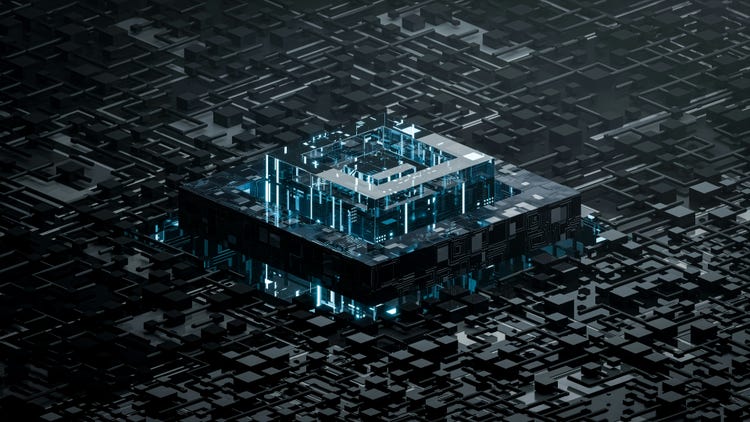
As AI moves beyond the experimental stage and into mission-critical enterprise use, new approaches are needed to deliver data-centre-scale infrastructure rapidly. Enterprise AI cloud super-factories are the solution to the challenge of speeding up enterprise-scale training and deployment of AIs. An AI factory is a facility capable of supporting trillion-parameter models and next generation workloads and built to reduce the lag (known as ‘time to first token’) between system deployment and usable AI output. Lenovo’s AI Cloud Gigafactory with NVIDIA accelerates this through ready-to-use components, expert guidance, and industrialised build processes.
In the AI era, the value of AI to enterprises is not measured by sheer compute prowess, but how fast AI deployments can deliver results. The gigafactory pushes AI factories to the gigawatt level, making it simpler to deploy cloud-scale infrastructure, in turn enabling AI intelligence to move into production faster. This enables the world’s most cutting-edge AI environments to be deployed in record time and helps organisations shift AI into the core of their business operations to realise value.
How AI factories work
With enterprise AI workloads growing in size and complexity, AI cloud providers need factories on this scale to support the cutting edge of innovation: trillion-parameter agentic AI, physical AI, and high-performance compute (HPC). AI factories deliver ultra-low-latency networking, massive compute and high-performance storage, and will fuel innovation in every sector.
So how do AI factories actually work? AI factories like Lenovo’s gigawatt-scale AI factories are scalable, purpose-built compute facilities with integrated hardware, networking, cooling and lifecycle services. Compared to traditional data centres, they accelerate progress towards monetisation by standardising the build and deployment processes for AI workloads. Lenovo’s innovation with its NVIDIA initiative is to take the AI factory concept to gigawatt scale, building facilities suitable for enterprise-grade workloads, delivering extreme performance, extremely rapidly.
What the Lenovo AI Cloud Gigafactory with NVIDIA does
The goal of the gigafactory is a simple one: cut ‘time-to-first-token’ to a matter of weeks, rather than months or years. This delivers for enterprises by slashing implementation timelines. The gigafactory also delivers in terms of simplicity, with full-stack integration combining Lenovo’s infrastructure (from Neptune liquid cooling to manufacturing to services) and NVIDIA’s advanced compute platforms. Thanks to Lenovo’s tightly integrated framework of solutions, services and manufacturing, the gigafactory enables cloud providers to move rapidly from build to deployment to monetisation.
Enterprises also enjoy long-term support in the form of lifecycle services, from design and build to long-term operation, along with support for next-generation hardware such as the Blackwell Ultra architecture and new Vera Rubin NVL72 systems.
Delivering results
Investments in AI tend to be costly. AI factories such as the gigafactory mean shorter build times, and thus quicker real world-results and return on investment (ROI). The vast scale of the gigafactory means that it can support massive AI workloads, from generative AI to high-performance computing (HPC). It’s also flexible enough to work for organisations ranging from cloud providers, enterprises, sovereign applications, and is suitable for edge deployments.
With AI set to transform every industry, companies in countries around the world will either build or rent AI factories to deliver cutting-edge intelligence faster. AI factories such as Lenovo AI Cloud Gigafactory with NVIDIA will deliver results in agentic AI systems, in environments ranging from the cloud and on-premises data centre to edge computing and even robotic systems. The future belongs to AI factories.
This article is sponsored by Lenovo.