The era of cheap AI is ending – what comes next?
AI companies can’t keep subsidising users for ever

Organisations are becoming increasingly concerned about the rising cost of AI. With many projects yet to demonstrate a positive return on investment and expenses continuing to climb, IT leaders are looking for ways to optimise their spend.
In recent Computing research among 107 UK IT leaders, 60% said they were either concerned (30%) or very concerned (30%) about rising AI subscription costs, compared with just 8% who said they were not concerned.
Cost increases were also by far respondents’ biggest beef with AI vendors - cited by 43% - with compliance and data handling issues a distant second at 25%.
Why are AI prices shooting up?
The picture is surprisingly complex. AI vendors would argue that prices are actually falling - and on a per-token basis that is true. Analysis based on Stanford’s 2025 AI Index suggests that the cost of achieving GPT-3.5-level performance fell by more than 280 times between late 2022 and late 2024, as more efficient models dramatically reduced the compute required per task.
However, that metric is of limited relevance to CFOs, who are far more concerned with the total monthly or annual AI bill - and that has been rising steadily. “Intelligence per pound” is really what companies want to maximise.
This is partly due to a surge in the use of AI tools as they spread across the enterprise and proof-of-concept projects move into production - which is exactly the stage many organisations are now reaching. In more than half of organisations surveyed AI tools are now used by most knowledge workers (37%) or organisation wide (17%).
Unfortunately (and perhaps not coincidentally), this growing demand comes at a time when AI vendors are shifting away from low-cost and freemium pricing as they seek to become profitable.
Underestimated costs
Given how quickly the landscape is evolving, it is unsurprising that cost estimates for AI rollouts can be wildly inaccurate. What appears simple and inexpensive in the pilot phase can prove far more complex and costly when scaled up in production.
Token consumption can increase dramatically as projects scale, yet most employees have little visibility into how much they are actually using. In some cases, organisations have even encouraged heavy usage - a dubious practice known as tokenmaxxing - in the hope of gaining a competitive edge. Until now, most companies have simply borne the costs of AI licenses, setting them against the promise of increased productivity, but that’s starting to change.
Organisations are starting to see return on investment for AI tools, including for customer service, classification and coding use cases.
Models are getting better - and hungrier
When most people picture a GenAI tool they think of a chatbot or copilot, which has an LLM running in the background. Typically this will be a frontier model like Claude 4 or GPT-5, and these heavyweight models are vastly more capable than they were even two years ago, hence the continued willingness to pay – for now.
However, those enhanced capabilities - including more advanced reasoning and larger context windows - come at a cost. They tend to consume more tokens per task, which increases overall expenditure even as per-token pricing falls. In other words, the same task can now cost more to execute.
And it’s not just the models. The rise of AI agents is adding another layer of complexity. Agents orchestrate workflows by calling multiple models and tools, which can significantly increase token consumption.
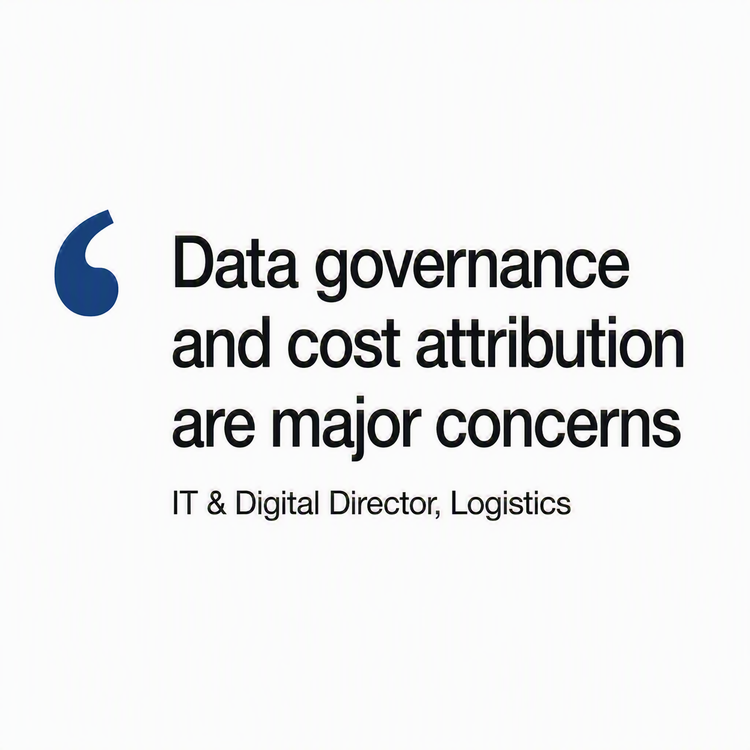
Axis Intelligence estimates that ”hidden” necessities including governance, security and support can increase project costs by two-to-four times initial projections.
Pricing models are changing
Until very recently, many generative AI tools were offered at subsidised rates as vendors sought to grab market share. That is now changing as providers shift towards sustainable, profit-driven pricing - driven in part by investor pressure and, in some cases, plans to go public.
But for pure-play AI companies, turning a profit is a big ask. The underlying costs of building and running AI infrastructure are, and will continue to be, substantial. Datacentres, GPUs and high-bandwidth memory require significant capital investment and frequent refresh cycles, while training and running models is hugely energy intensive.
As well shouldering the monster capex bill, AI companies and their investors have also been subbing the bulk of customers’ inferencing activity - which as we’re seen is also growing rapidly. They lose money every time a user types a prompt, and those losses are mounting up. Something has to give.
As they seek to turn massive operational losses into sustainable profits, it is inevitable that AI companies are going to continue raising prices. It just remains to be seen by how much, what level of pain customers are willing to bear and how easy it will be to for them to arbitrage between vendors. Certainly many are already struggling to navigate the fast-changing landscape.
As a manager at a technology company put it: “It is becoming a challenge to select single vendor as over the time different AI models are coming up with new features and speed. Older models are getting outdated in very short period. Reliance on vendor model is out of the context, and acquiring too many models adds cost.”

Organisations tend to default to incumbent providers to supply AI tools.
Most organisations consume LLMs via APIs, through cloud platforms, or via features embedded in SaaS applications. While 24% of respondents said they self-host models, only a small minority rely exclusively on this approach.
As a result, the vast majority of organisations are exposed to vendor pricing changes.
While 24% of respondents are hosting models locally, only a fifth of that number (5% of the total) rely exclusively on that approach, meaning almost all are exposed to vendor pricing changes.
Prices won’t keep rising forever
There are, however, countervailing trends pointing towards lower costs over time.
Efficiency gains have significantly reduced inference costs in recent years - in some analyses by up to three orders of magnitude - with each new generation of GPUs delivering two or three times more inference throughput per unit price.
An open source cat amongst the US proprietary pigeons, Chinese models such as DeepSeek, Kimi and most recently GLM 5.2, have demonstrated that - by aggressively pursuing inference efficiency through mixture-of-experts designs, a focus on cheaper hardware (necessity proving to be the mother of invention), low-cost training methods and distillation - models that are as capable or nearly so as the leading frontier LLMs can be accessed at a fraction of the price.
GPU prices have begun to stabilise, and alternative hardware such as TPUs and NPUs is providing greater choice for both training and inference – although high-bandwidth memory supplies remain constrained.
And controls are improving. Vendors including Microsoft, AWS and Databricks are introducing cost controls and monitoring dashboards similar to those used in cloud services, giving organisations greater visibility over their spending.
What can organisations do to get AI costs down?
Eighteen percent of respondents report that AI is already delivering value, but positive results could be threatened by rising costs. However, there are a few approaches that organisations can take to manage their AI spend more effectively.
Match the model to the use case: One of the simplest measures is to avoid defaulting to frontier models. Many common tasks - such as summarisation, classification and translation - can be handled effectively by smaller, cheaper models.
Powerful reasoning models should be restricted to where they can really add value such as legal, compliance and financial modelling use cases. And why use generative AI when a search engine or traditional machine learning is a better fit?
Practice context engineering: Context engineering means optimising tokens (the context) in order to get specifically the output you desire without the extraneous fluff. It involves managing system prompts, message history, and input from other tools. OpenAI co-founder Andrey Karpathy describes it as “the delicate art and science of filling the context window with just the right information for the next step”.
Consider smaller or specialised models: For many tasks small language models (SLMs) trained on domain specific data will be a better fit and much more cost effective than enormous LLMs, particularly if self-hosted or part of an agentic workflow.
Pick models with lower inference costs: The price differentials between broadly equivalent models can be significant.
Open source/weights reasoning models like China’s DeepSeek and Qwen are currently up to 15 times cheaper to run than equivalent proprietary models from OpenAI and Anthropic - although there may be compliance concerns as to their usage. Numerous open source LLM alternatives including from Mistral and Meta, as well as thousands of smaller models, can be found on platforms like Hugging Face.
Interestingly, Microsoft’s Satya Nadella hinted recently at a move towards becoming more of an agnostic platform provider, hosting cheaper models including DeepSeek rather than relying predominantly on OpenAI’s models, as it has up to now.
Avoid vendor lock-in: Given the pace of change, organisations should avoid becoming overly dependent on a single provider, even if a multi-vendor approach is more complex to manage.
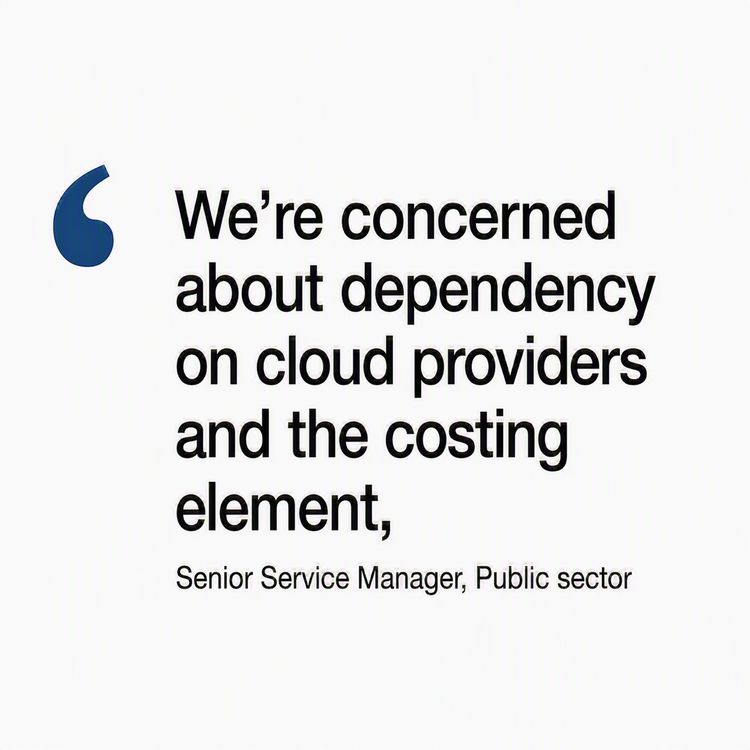
Plan for scale: Costs often increase sharply when moving from pilot to production. Organisations should model these scenarios carefully – including the hidden necessities of security and governance - and refer to emerging best practice to avoid unpleasant surprises.
Pick the right pricing model for the use case: AI pricing models vary widely from the per-seat licencing used by Microsoft Copilot and others, to usage-based pricing based on tokens or API calls, to self-hosted setups where the user pays only for the infrastructure costs.
The per-seat model only makes financial sense if the AI has very broad usage. High volume, token-heavy workloads should be moved to per-API call or hosted, where possible. A hybrid cloud-type setup with a mixture of on-premises and cloud orchestrated by an agent could be a goal to aim for.
Optimise data management: Techniques such as retrieval-augmented generation (RAG) can improve efficiency of internal document searches, while reducing duplication of data sources can lower processing costs. Over the long-term better data infrastructure will go a long way to driving efficiencies.
Educate users: Excessive prompting, using an LLM when a search engine would be better, re-running tasks unnecessarily and using large models when smaller ones would do are all adding unnecessary cost.
The era of cheap AI based on the familiar US LLMs is ending. What comes next will depend very much on how long the markets remain confident that continued investment into infrastructure will bring returns.
In the long term, the biggest savings will not come from cheaper models alone, but from better architecture, smarter model selection, and stronger governance. As with cloud computing before it, organisations that treat AI spend as an engineering discipline - rather than simply a procurement decision - will be best placed to control costs.