
Richard Corbridge
Part of the IT Leaders 100 - a list of the most influential IT leaders in the UK in 2025.
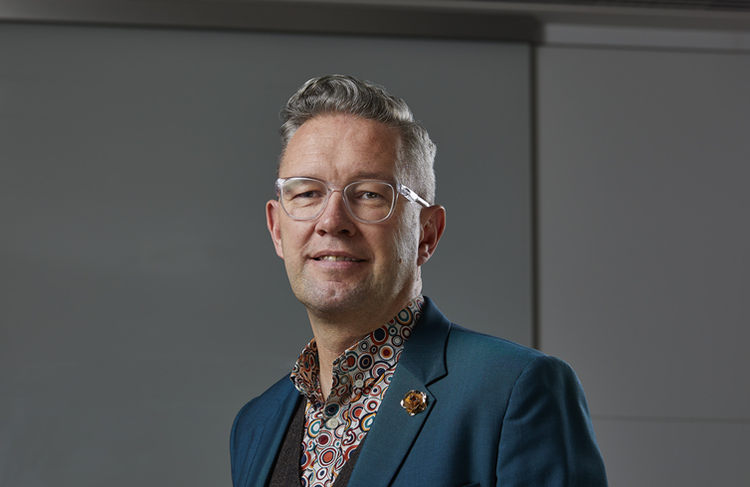
Richard is the Chief Information Officer for Segro, where he has responsibility for digital, data and the use of these to transform the organisation.
In his previous role as the Director General for Digital at the Department for Work and Pensions (DWP), Richard had responsibility for technology and data across the entire estate, including the technical capability in 850 Job Centres, and the management and analysis of all systems. He led the government adoption of generative AI in its earliest of stages and ran the UK government’s first Innovation Pitch sessions across the UK.
What's the most exciting part of your current role?
The art of the possible. I am part of an industry in the earliest of stages of a real digital transformation, many of the mistakes other industries made many moons ago can be avoided and we can take a giant leap to being a sustainable, people-focused and ethical industry that supports the needs of customers.
Building a team and changing the skills mix from largely outsourced to a balanced approach is really exciting. As a leadership team we are able to make some tangible changes to how we deliver, at a new faster pace and with the retention of a wealth of knowledge in the organisation.
New technology is starting to offer us new solutions to old problems, and we can see more clearly just how solutions can be achieved. My organisation and my leadership team have had a mindset change in the last 12 months: the acceptance to test and learn with a digital first mindset has started to become embedded in all that they do, and this gives me an opportunity unlike any I have had before to change the way we deliver and achieve the organisational goals near and longer term.
What do you consider your greatest IT achievement of the last 12 months?
This is two-fold. The release of an inhouse-designed and -built app known as SAMA to 400 asset managers across the UK and Europe is a win for us. It offers every operations colleague the ability to understand, in detail, the building assets, the nature of those assets, the customers’ needs of them now and the plan for them for the future. Our assets are so diverse that getting this into one place with a data model that can drive transparency of reporting and creates accountability possibilities for every colleague in the field has been a huge success.
Mastering the differences in every aspect of delivery of this across UK and across Europe is something we rightly celebrate. The modularisation of the solutions we deploy to create benefit that does not require huge impact on different ways of working in our organisation due to different geographical needs has been a challenge well met.
Our organisation now also has its first ever Digital Plan, a business focused (and chaired) Digital Board, and has adopted OKRs throughout the digital team. This has all been achieved with as new engagement with our business at the core and completed November to March.
What's the biggest challenge facing IT leaders today, and how are you tackling it?
The key challenge facing us all today I believe remains the engagement of our businesses. We need to find every way to persuade, cajole and harness the power of our business colleagues to help us ensure that the digital solutions we strive to create are the ones that add the most value for them at the pace of change they can manage.
Creating transparency for colleagues on the art of the possible, ensuring that we can have a collective accountability for the delivery of value to our businesses, is how I think we need to solve this. In my role we have created the first Digital Business Plan for the organisation, majoring on the fact that this is a business plan and not a digital strategy has helped created a feeling of codesign of the future and has kept the delivery focus on what our 'humans' need not what the tech can deliver.
The professionalisation of the role of digital has never been more necessary. Whether it’s Horizon or IT continuity that are the drivers being able to reassure our businesses of the roles that we do as digital leaders sits at the heart of our successful engagement in 2025.
What piece of technology could you not live without, and why?
The humble vinyl record, on a personal level. Is there anything more satisfying than hearing the needle drop make that lovely initial touch down and beautiful sounds start pouring out of the speakers?
Will we consider other technology with such affection in decades to come? I'm not sure we will see a resurgence in some of my earliest technology exposures: NT Server, X.400 Addressing and MUMPS Language sets.
My affection for vinyl though tells me another story, though. The resurgence of it as a technology, I propose, is based on the quality of how it can be engaged with as a 'user'. The perceived value of a twelve inch cover in your hand, above and beyond the small image of a digital download on your phone; the warmth of how you engage with it and the way in which it 'invades' your eco-system, demanding space and engagement, perhaps are ingredients of a secret sauce for technology and our passion for it.
What excites you most about the future of IT?
The 'consumerisation' of all that we do is key to my excitement for the future. Being able to work together with businesses on transformation and change will be the key to unlocking the potential of everything that we define as IT. The march of 'shiny things' is starting to slow and the pull for digital-led change is growing.
There is nothing more satisfying than being with a colleague or customer and working through a problem together that results in something new that drives an innovative and more positive outcome. Human-centred design can be achieved when everyone circling around a problem has clarity on the possible solutions and that can be achieved through a new width of understanding.
As well as being exciting, though, this new frontier has to be watched too. Whilst it comes with so much positivity there is a risk that without real relationships being created between the digital professional and the business colleagues this very same positive nature becomes the route to a plethora of 'grey IT' landing in the entire business. “Careful what we wish for” is to be heard as a sign of caution and celebration.
What’s the strangest job you’ve ever had?
The lost summer experiences of cheese 'factories', frozen chip packaging units, industrial laundry collection vans, teaching assistants, builders' merchants and video rental shops. These were all jobs I had when finishing A-Levels or on the summer vacations of university years. Does that rite of passage still happen where the need to earn enough cash to be able to enjoy the following term outweighs the fear of doing something new and beyond your comprehension of how?
The strangest and yet most rewarding of these experiences was one year close to the end of school term. I had finished at uni for the summer and I secured a place at my local junior school as a teaching assistant. Key to my role was to help the last year of the school put on their end of year performance. They were doing a little-known play called Queen Beryl and the Romans. A piece full of silliness, songs and dancing, being able to work with 11- and 12-year-olds as they found those first moments of adulthood, get over their stage fright and learn to enjoy the act of entertaining people.
If you could instantly master one new skill, what would it be?
Languages for me would be my new skill of choice. I am now part of an organisation with a wide colleague base stretching across many European countries and whilst English is the language of the shared business, I feel rude expecting my colleagues to come to my uneducated level because of my lack of skill in their language.
If there was an 'easier' way to simply speak not just the language but also the tone that comes with a language skill, I feel our ability to engage across the whole business would be easier. How far away are we from AI as a consumerised product being able to not just offer me direct translation but also a live, in the moment narrative to how to get a message across in many different languages in many different circumstances?