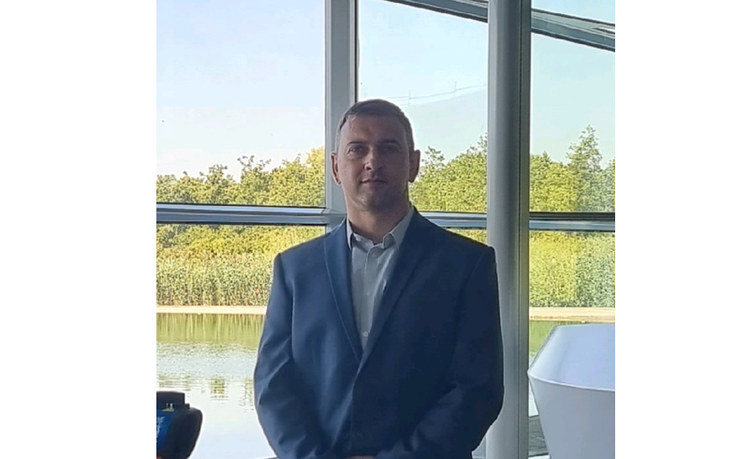
Paul Smith
Part of the IT Leaders 100 - a list of the most influential IT leaders in the UK in 2025.
Paul is a multi-global-award-winning, transformative digital leader. He is experienced in leadership, digital, data and technology as a result of a career spanning over 20 years in senior roles delivering sustainable strategic outcomes.
Paul has worked for global organisations with up to 4,000 employees, 40,000 volunteers, 10 million supporters and with revenue up to $1B, cutting across numerous and varied sectors, technical domains, cultures and geographical regions. Just a few of the sectors his varied career has covered include defence, government services, aviation solutions and global disaster relief.
What's the most exciting part of your current role?
The diversity of individuals I get to work with across the globe and the tangible impact I can see from the results of our work in information & technology at the sharp end of human rights.
What do you consider your greatest IT achievement of the last 12 months?
Being able to get recognition for, showcase and share the fantastic achievements and impact of my (usually very shy) team. Resulting in:
- Four CIO awards (Global CIO100, World CIO200, UK CIO100 (#15 and top non-profit leader, one lifetime award);
- Two 'Next CIO Awards'
- One 'Top 5' UK CISO award
What's the biggest challenge facing IT leaders today, and how are you tackling it?
The pace of technology and the (sometimes FOMO-driven) appetite to apply it ubiquitously in an unequitable environment (suffering in places from digital divide) to try and achieve competitive advantage - sometimes without clear problem statements, benefits identification/ measurement and the necessary requirements to manage enterprise-level change end to end.
We are approaching it by:
- Capacity building, in every sense
- Listening > Learning > Helping and Leading (in that order)
- Responsible, co-created experimentation (pilot > scale > sustain)
- Focusing on the intersection of technology and user to ensure equitability of understanding, improve competency, ensure adoption and benefits realisation/ sustainability
- Using our personal and professional networks to share, learn from each other and help to see the wood for the trees. Both contributing to and learning from our industry and peers.
What piece of technology could you not live without, and why?
My mobile phone! Both personally and professionally. As a father of six, grandfather to two and CIO at the world’s largest human rights non-profit, my life is always 'on' and I like to be connected and available.
What excites you most about the future of IT?
As CIO of the world's largest human rights organisation, the future of IT presents exciting opportunities to drive social impact through innovation. I am excited about:
- AI & Data Analytics: Harnessing AI and machine learning for better data analysis to amplify human rights efforts, enabling real-time monitoring of global issues, uncovering patterns of injustice, and improving decision-making.
- Blockchain: Enhancing transparency and accountability, especially in tracking aid, donations, and human rights violations, blockchain technology can create immutable records that safeguard human rights documentation.
- Cybersecurity: As the world becomes more connected, robust cybersecurity solutions will be critical to protecting sensitive data, ensuring the safety of activists, and securing communication channels.
- Cloud computing: Scalable, cost-effective cloud infrastructure allows for more efficient global collaboration and remote work, helping organisations like ours to quickly respond to emerging human rights challenges.
- Digital advocacy tools: The rise of social media and digital platforms provides an opportunity to amplify human rights campaigns, empowering individuals and communities to raise their voices and create positive change.
These innovations hold tremendous potential to enhance my organisation's mission, making the future of IT a powerful tool in advancing human rights globally.
What’s the strangest job you’ve ever had?
Cleaning public toilets! Difficult for lots of reasons in terms of what you learn, see and experience, which has taught me some valuable life lessons (I won't go into more detail here :-))
If you could instantly master one new skill, what would it be?
I am envious of those that can speak multiple languages. It's an intent of mine to make space to learn one when life allows (I studied French and German at school, but nothing since).
I have seen first-hand in my career the value of multi-lingualism; the ways it can bring people together, foster inclusion and enable diversity of thought. People are judged all too often on their ability to articulate their feelings, knowledge and competence in a language that is not their own, which I feel can be at a minimum exclusive, but also disrespectful in that it encourages judgement (that's why I love translation technology in that regard!).