
Lara Burns
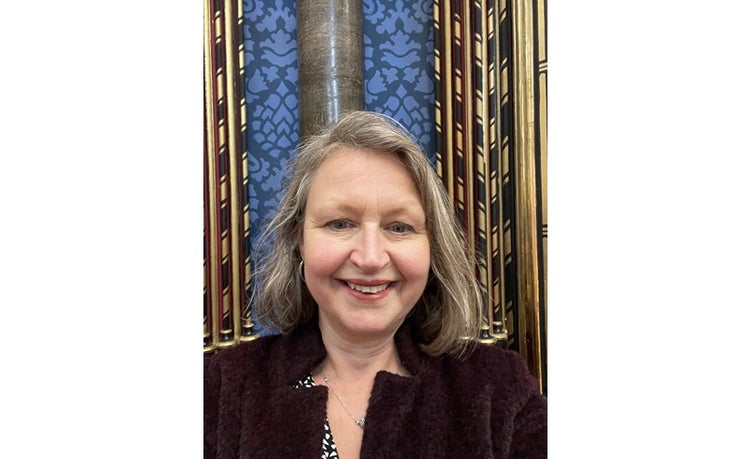
Part of the IT Leaders 100 - a list of the most influential IT leaders in the UK in 2025.
At the time of writing Lara was Chief Digital Officer at The Scouts, where she led the digital transformation strategy across an organisation of 140,000 volunteers in a network of 8,500 local groups, who deliver weekly Scouting to nearly half a million young people to help develop their Skills for Life. She left the role at the end of May 2025.
Lara has spent more than 30 years delivering digital innovation across diverse sectors. In the last 15 years she has driven digital transformation and strategic change in the charity sector, where she is passionate about using technologies to increase the effectiveness of the charities she works in.
What's the most exciting part of your current role?
Making a difference with new digital tools to the day-to-day roles of over 140,000 volunteers.
What do you consider your greatest IT achievement of the last 12 months?
I led the rollout of a volunteer transformation programme for 140,000 volunteers across the UK; the culmination of a digital programme that started four years ago. This included building and deploying an integrated platform across three technologies: a volunteer membership system and recruitment tools on Microsoft Dynamics, a SaaS learning management system, and our website.
We met deadlines for testing new systems, completing complex data migration and rolled out with a challenging go-live switch over in November and December 2024. Our team of around 100 staff and volunteers co-partnered to work across four project streams. The programme involved complicated change management, supported through a Transformation Lead in each county and a team of change champions nationwide.
This was the biggest digital transformation we have ever seen at the Scouts (and quite possibly in the charity sector). It hasn't all gone perfectly, and we've had to adapt and face challenges along the way. I'm incredibly proud of we have achieved for the long-term future of Scouting. I'm also really proud of the incredible professionalism, resilience, and solution focussed delivery that the teams I have led have exhibited through the breadth of the programme.
What's the biggest challenge facing IT leaders today, and how are you tackling it?
The pace of change and staying on top of emerging tech whilst having to deliver bread and butter work. In a charity organisation without big budgets, this is particularly challenging.
Like many other organisations, we know it is imperative to plan the way we use gen AI to our advantage, as well as considering cost, risks and ethics. The way we are tackling this is by doing things on a small, manageable level and then looking to scale up. We're talking to our Board, to ensure we continue to raise the profile of our approach to gen AI with them. We've launched a gen AI policy and guidelines, and are reviewing it every three months.
We've also conducted a survey to understand how people are currently using open source tools and what their learning needs are. We're conducting two small scale pilots in which we can measure benefits and risks before we do more.
What piece of technology could you not live without, and why?
My phone - but it isn't really " a phone" any more, is it? My personal mobile communication and life admin device - it's so much more than a phone.
I communicate both professionally and personally on multiple platforms through words, pictures, live video and voice. I take photos or videos both of occasions and personal events, as well as to record notes, things I'm interested in or want to remember. I have history's best ever encyclopedia at my fingertips, able to find out more about any topic or use AI tools to design create and design new words, art, music, videos, anything. I can relax with a variety of music or visual arts.
I can control and manage most of the daily household tasks, including managing my finances, my fridge contents, my heating, my travel, my diving skills. I can manage my health, wellbeing, nutrition, and even my heart rate.
Rather than seeing it as scary that so much of my life is lived through my phone, I see it as an incredible use of technology to enhance my life.
What excites you most about the future of IT?
We are in the midst of a technology revolution and we don't really know where it will end. There's certainly a lot of fear about the risks. But I'm truly excited about how technology can take some dramatic leaps forwards in a positive way for humanity - for instance in the medical sector, or what changes it might affect in the developing world. If we can harness the potential and guard against the risks, the opportunity is immense.
What’s the strangest job you’ve ever had?
It wasn't so strange at the time, but now seems very strange! For my first professional job, I worked on a project that created software to provide full text search of the complete published works of English Poetry on CD-ROM.
The bit that I found most fascinating (given that this was over 30 years ago) was the fact that we photocopied pages of poetry from the copyright libraries (some as old as those printed by Caxton in the fifteenth century), marked them up with SGML (precursor to HTML) and then I packaged the pages up and posted them to a company in the Philippines, where workers keyed in the pages and markup (double keying as they spoke no English, so that the copy could be parsed for errors) and sent them back to us on floppy disks.
The job taught me project management skills, but critically, demonstrated to me the amazing potential that new technology has. That has never left me throughout my career.
If you could instantly master one new skill, what would it be?
Being able to speak any language instantly and fluently so I could properly communicate with anyone wherever I go in the world.