
Cijo Joseph
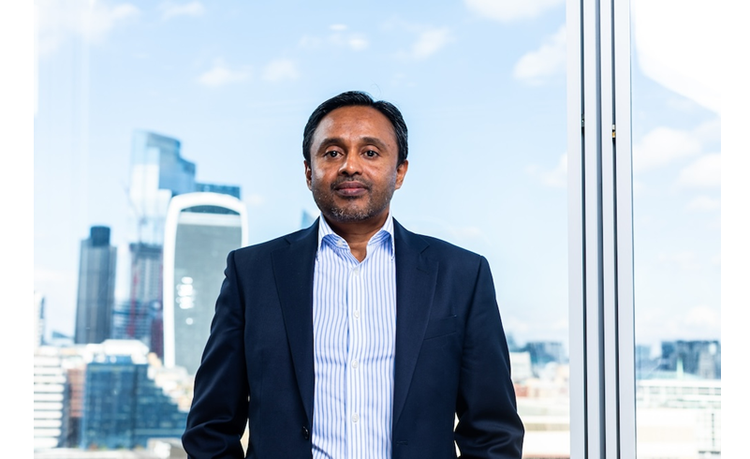
Cijo Joseph, the Chief Technology and Digital Officer at Mitie Plc, is a visionary leader based in London at The Shard. Cijo is instrumental in shaping and driving the company's technology and digital transformation strategy. With a keen focus on innovation and seamless integration, working backwards from business outcomes and how it impacts front line, Cijo collaborates closely with various teams to ensure that Mitie remains at the forefront of technological advancements and innovation. Known for strategic foresight and effective communication, Cijo plays a crucial role in driving the technology strategy enabling Mitie to deliver better places and thriving communities
What's the most exciting part of your current role?
The most exciting part of my current role is using technology to solve real problems for colleagues and customers. I get to deeply understand every aspect of our business, what works, what's challenging, and what opportunities we have to innovate.
Being on the executive team, I shape and deliver our technology strategy. Gaining board approval and seeing our plans come to life is incredibly rewarding. But the true excitement comes from witnessing the direct impact technology has on colleagues' everyday experiences. When I see innovations simplify tasks, reduce workload or significantly improve customer service, it energises me.
It's satisfying knowing that my role helps make people's daily lives easier and more productive. Every project we deliver - whether it's embedding responsible AI into services, pioneering digital twins or enhancing cybersecurity - directly benefits colleagues and customers alike. Seeing strategy translate into meaningful change motivates me every day.
What do you consider your greatest IT achievement of the last 12 months?
My greatest IT achievement over the past 12 months has been creating what is likely the UK's largest operational Digital Twin, powered by an advanced AI Task Mining tool. This innovation fundamentally changes how we operate, shifting colleagues from being information workers to intelligent workers. It provides deep, data-driven insights into our daily operations, enabling rapid identification and elimination of inefficiencies, cutting traditional three-month processes down to just one week.
Equally important is my role in developing, leading and championing our comprehensive "AI in Mitie" strategy. Gaining enthusiastic backing from the board, executive team and our top 200 leaders means AI isn't just a technical solution; it's fully embedded into our strategic approach. Seeing these leaders actively drive AI adoption within their teams confirms we've built something genuinely impactful and sustainable.
All of this innovation has been underpinned by robust cybersecurity. We've consistently maintained an external cyber rating of A(95) or higher from securityscorecard.com. Achieving industry-leading cyber standards alongside ambitious digital transformation demonstrates our ability to innovate safely, responsibly, and at scale - delivering tangible benefits to colleagues, customers, and the wider business.
What's the biggest challenge facing IT leaders today, and how are you tackling it?
The biggest challenge facing IT leaders today is adopting AI safely, effectively and quickly. AI impacts multiple aspects of technology, people, and processes. It introduces significant cybersecurity risks, including threats from AI-powered attackers. At the same time, it demands new skills from our technology teams and the broader workforce.
We're tackling this challenge proactively. Cyber resilience is our top priority. We've strengthened cybersecurity standards across the organisation, consistently maintaining an external cyber rating above A(95) from securityscorecard.com. Ongoing, targeted training and rigorous threat simulations keep colleagues alert to evolving AI-driven threats.
Beyond cybersecurity, we're reimagining our workforce to thrive in an AI-enabled environment. Our Digital Academy, in partnership with institutions like Imperial College and Microsoft, provides hundreds of colleagues - from frontline staff to office-based teams - with practical, operational AI skills.
We also focus AI adoption on tangible outcomes, particularly margin improvement. For instance, AI-driven Task Mining helps identify process inefficiencies, accelerating improvements from months to days. This boosts productivity and profitability simultaneously.
For IT leaders, AI represents the greatest opportunity for transformation - but only if embraced strategically, securely, and with the workforce at its core. Our approach ensures we maximise AI's benefits while managing its risks effectively.
What piece of technology could you not live without, and why?
The mobile phone. Mobile technology has reshaped society, influencing nearly every aspect of daily life, from how we communicate and interact to how we shop and manage basic tasks.
Today, a mobile device isn't simply for calls or messages: it's central to work, entertainment, health, finance and even our basic survival needs. It keeps us constantly connected to family, colleagues and information, enabling instant decision-making from anywhere at any time. It also empowers us with critical tools, from navigation and online banking to health tracking and immediate access to news or emergencies.
For IT leaders, mobile represents more than convenience - it embodies the seamless integration of technology into everyday life. It reflects the fundamental shift towards digital-first interactions, which is vital for businesses aiming to remain competitive and responsive to customer needs.
In essence, mobile phones have transformed human life profoundly. They've become an essential companion in navigating our increasingly complex, interconnected, and digital society. Without them, our professional effectiveness, personal productivity and even fundamental routines would be significantly disrupted, demonstrating their irreplaceable value.
What excites you most about the future of IT?
Its potential to shape smarter, more connected spaces and support stronger communities. These technologies are transforming how decisions are made, how work is done and how services are delivered: more intelligently, more efficiently and more personally.
IoT will play a key role in this future. As more devices become connected, our environments, whether offices, hospitals or public infrastructure, will respond dynamically to users' needs. That creates opportunities to design spaces that are safer, more efficient and more supportive of the people using them.
Cybersecurity is equally critical. In a world that's becoming fully digital, keeping data safe and maintaining trust is essential. Advances in cyber tech allow us to adopt innovations without compromising privacy or resilience.
What energises me most is enabling our workforce to thrive in this environment. Helping colleagues become AI-ready, guiding them through this shift, and seeing the impact of that transformation is incredibly rewarding. It's not just about deploying tech, it's about changing how we work and live.
We're building towards a digitally enabled UK, where IT isn't just a function but a force for social and economic progress!
What’s the strangest job you’ve ever had?
After studying computer science, I have always worked in the tech industry, across various sectors. One of the most unusual projects I worked on was many years ago, when I was involved in developing a dental application for surgeries.
As part of the requirement gathering process, I had to understand a wide range of dental treatments permitted in the UK, from root canals and cleanings to jaw corrections. This project required me to navigate all the NHS regulations and understand the necessary pre- and post-care for these treatments. By the end of the year-long process of gathering requirements, designing, and building the application, I felt like I had become a dentist myself!
This experience of learning the trade and automating what I learned significantly shaped my career. In every job I take, I make it a point to walk the floors and understand what it means to be on the front line. Then, I apply technology to make processes more efficient and user-friendly. I firmly believe that technology is only as good as the hands that use it.
If you could instantly master one new skill, what would it be?
Professionally, I would love to master the practical aspects of quantum computing. While I have already studied quantum physics and quantum computing theoretically, I find the application and programming of quantum computing particularly fascinating due to its immense potential to solve many real-world problems. On a personal level, I would love to master either the violin or the piano. Both instruments are incredibly soothing, creative, and complex in their expressions.