
Christopher Booth
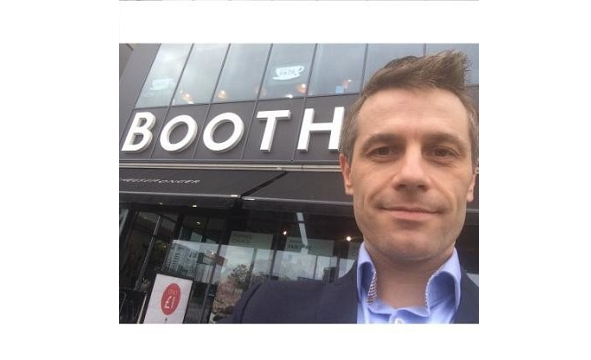
Part of the IT Leaders 100 - a list of the most influential IT leaders in the UK in 2025.
Christopher Booth is a Global Technology Leader with over 25 years of experience across private equity, recruitment, gaming, hospitality, retail, insurance, and professional services. He excels in digital transformation, AI adoption, and aligning the IT strategy to the business objectives.
A trusted advisor, Christopher has a track record of leveraging technology to drive business growth and efficiency, he thrives in high-stakes environments, ensuring technology remains a strategic enabler for business success.
What's the most exciting part of your current role?
With the explosion in the potential of AI, technology is now something that everyone is interested in. IT is no longer confined to the basement and the tech team. This invigorated interest has resulted in excitement and ideas with every department considering technical solutions to resolve their day-to-day challenges. The tech team are ideally placed to provide advice as trusted partners and whilst the number of new ideas is often overwhelming the potential is exciting. Being the experts in technology and advising the business on potential options and guiding solutions is a truly exciting part of my role.
The CTO serves as a trusted advisor to the board, playing a pivotal role in shaping strategic decisions and evaluating significant technical solutions to business challenges. With technology now at the core of most solutions - and AI influencing nearly every aspect of the business - the CTO is deeply involved across all functions. This position ensures that technology not only supports but drives innovation, efficiency and competitive advantage throughout the organisation.
What do you consider your greatest IT achievement of the last 12 months?
Over the last 12 months IT has focused on AI and sustainability. In a world where we are now reflecting more and more on our impact on the planet, we must focus our attention on reducing our carbon footprint. Over the last 12 months we have reduced our IT carbon footprint significantly by reducing the load on our data centres, decommissioning kit, moving to more efficient solutions and adjusting setting to reduce carbon consumption, whether that be through turning equipment off or distributing consumption based on global location. Our carbon footprint has been reduced significantly and we are on track to meet our sustainability targets.
In addition, I have started 'AI Labs' fostering creativity and innovation. Each team member is spending one day a week on AI projects of their choice to evaluate the market and solutions that may impact us. I am proud of this as each person explores what they are passionate about, motivating the team and embracing new technology and the potential that it may have.
What's the biggest challenge facing IT leaders today, and how are you tackling it?
The biggest challenge is also the greatest opportunity: AI. While AI is revolutionising how we operate, innovate and drive efficiency, it is also being weaponised by cybercriminals at an unprecedented pace.
As IT leaders, we must constantly adapt to a rapidly evolving landscape where both the potential and the risks of AI are escalating. One of the most pressing concerns is the use of AI by bad actors to develop more sophisticated cyber threats. AI-generated phishing attacks can convincingly impersonate senior executives through hyper-personalised emails, voice messages and even deepfake video calls. Additionally, AI enables the rapid creation of advanced malware that can bypass traditional security defences by continuously evolving its signature
To tackle this, we are leveraging AI to strengthen our cybersecurity measures, using machine learning to detect anomalies, automate threat responses and safeguard our most valuable data within highly protected environments. However, this remains a continuous battle - AI-driven cybercrime is evolving just as quickly as our defences. Staying ahead requires constant vigilance, investment in cutting-edge security solutions and a culture of cybersecurity awareness across the organisation.
What piece of technology could you not live without, and why?
There are many technologies that I use every day that I 'couldn't live without,' from my iPhone Spotify playlist to the automatic sensor on my kitchen bin that I would replace immediately if it broke. But truly 'can't live without' has to be the heart monitor on my Apple Watch. I have several members of my family who have heart conditions: my father suffered a heart attack and triple bypass, I have a relative with a pacemaker and a friend who is living with heart failure. The Apple Watch sits silently on my wrist checking my heart rate and Heart Rate Variability (HRV), and in combination with other technology can provide ECG information.
Our hearts are powerful but delicate and we only have one, so something that monitors its performance can truly be a life saver.
We spend money on things that turn lights on and off or even things to provide us with amazing entertainment, but health is something we should all think about, monitor and use the best technology to keep us working properly. Unfortunately turning us 'off and on' again is not an option.
What excites you most about the future of IT?
AI excites me. We are currently going through a technical revolution. Through the vast knowledge available on the internet and machine learning we are at a stage where we are blurring the lines between human interaction and computers. As we move forward, we will learn what roles humans are best at, which roles computers are best at and identify areas where human / computer collaboration is the ideal solution.
I don't fear that AI will take over our jobs but instead AI will help us do our jobs better. AI will open up new opportunities and new roles. The concept of 'working in technology' will possibly fade as everyone will work with technology and AI will support all aspects of our lives. Mundane roles can be improved by computers completing repetitive tasks and professional roles can be improved by digesting and understanding vast quantities of knowledge. All will need human interaction to guide the AI and ensure effective control. This transition phase will be truly exciting.
What’s the strangest job you’ve ever had?
Noted by the BBC as being the easiest job in the world, the National Lottery Adjudicator was one of the strangest jobs I have had. The role of the adjudicator was to stand next to the lottery machine on live television and click a stopwatch once to start it, and then the second time once the mix was completed. The mix needed to last a certain time to be declared a fair mix and that was the Adjudicator’s job. The task lasted one minute.
The BBC's ‘easiest job in the world’ was, unfortunately, a false title as this was the final test in a list of tests that took several hours. Every aspect of the draw, from collecting the set of balls from a random selection of sets, to loading them, to pressing the start button, is checked and double checked. It can be a tedious process but given that a small error could have a large impact there is no room for error.
Each check is in place to prevent an error that could happen or is a control following an error that has, in the past, happened! The job got me on TV every week - much to the delight of my mum!
If you could instantly master one new skill, what would it be?
If I could instantly master a skill it would be to be able to cook. Throughout the world cultures have the act of providing food as a welcoming gift that promotes friendship and togetherness. From 'breaking bread' to a welcome treat, sitting down and eating with a new contact or an old friend is a way of building and maintaining relationships.
My skills at cooking are limited and I am jealous when I see masters whip up a delicious meal from, what appears to me to be, an empty fridge. The skill to cook and create a meal would have obvious benefits in being able to make more delicious meals for myself, but a far greater benefit would be to be able to bring friends, colleagues and family together to share food together and build relationships.