
Chris Fawcett
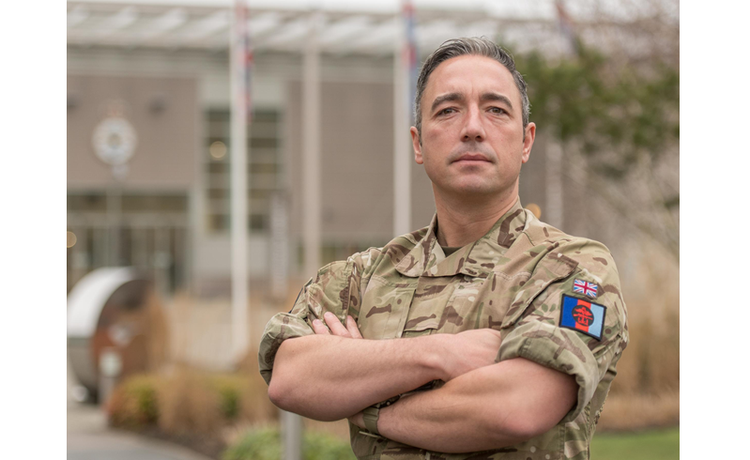
Squadron Leader Chris Fawcett is Deputy Director of the RAF's Air Cyber Information Services Operations Centre (Air CyISOC) and Officer Commanding 5 (Information Services) Squadron. With 22 years in the RAF, he has supported operations in Iraq, Afghanistan and Ukraine across avionics, expeditionary comms, cyber defence, and strategic IT planning.
A Chartered Engineer and Defence cyber leader, Chris has shaped coalition cyber interoperability and digital assurance in high - threat environments. He is also a dedicated mentor - supporting the next generation of STEM talent through national programmes - and is passionate about secure innovation, ethical leadership and delivering mission success through people and technology.
What's the most exciting part of your current role?
Leading diverse, high-performing teams to deliver assured cyber and network services for live global operations. Every day brings a unique blend of complexity, urgency, and strategic importance. As Officer Commanding 5(IS) Squadron and Deputy Director of the Air CyISOC, I help shape how the Royal Air Force and wider Defence deliver secure, agile, and mission-aligned digital capabilities - ensuring military advantage in an increasingly contested information domain.
What energises me most is the opportunity to lead through complexity: solving problems that matter, under pressure, and often with no second chance. Whether designing services for coalition interoperability, planning cyber assurance for future operations, or building the next generation of IT leadership, my role blends technical rigour, critical thinking, and people-first leadership.
I'm especially passionate about mentoring - helping junior engineers and officers develop confidence, decision-making skills and a mindset for adaptive leadership in demanding, high-consequence environments.
I believe leadership is about creating conditions where others thrive, innovate and grow. Knowing that our work supports not only national security but also individual potential makes this the most rewarding and exciting role I've held in over two decades of RAF service.
What do you consider your greatest IT achievement of the last 12 months?
Over the past 12 months, my greatest achievement has been delivering two strategic initiatives that will shape the future of Defence IT and operational capability.
The first is leading the development of the Target Operating Model (TOM) for the RAF's Air CyISOC - a cyber and network operations centre that underpins mission-critical digital services. I designed and drove the TOM to align with NIST, ITIL v4 and ISO standards, enabling us to onboard RAF operational capabilities rapidly, securely and consistently. This work ensures cyber resilience is baked into operations from the outset, not bolted on after the fact.
Concurrently, I've contributed to air normalisation planning for Ukraine, to help safely assure its airspace in the event of a ceasefire. I helped frame digital and cyber inputs to enable normalised commercial flight operations, including interoperability challenges amongst the international partners and stakeholders and airspace assurance in post-ceasefire conditions.
Both achievements reflect my core belief that IT leadership is about delivering tangible outcomes in the real world - whether that's defending digital terrain in the skies or modernising how Defence assures its most critical services under pressure. It's strategic, operational, and personal - and exactly why I love what I do.
What's the biggest challenge facing IT leaders today, and how are you tackling it?
How to build and sustain trust in digital systems within increasingly complex, contested and federated environments.
Whether it's the threat of disinformation, ransomware or supply chain compromise, public and institutional trust in digital infrastructure is being tested daily. In Defence, the stakes are even higher - systems must be secure, adaptable, and interoperable with allies under dynamic, real-world conditions.
I'm tackling this challenge by designing and implementing repeatable, standards-based onboarding processes that integrate cyber assurance and service management principles from day one. At the Air CyISOC, this means aligning to NIST, ITIL v4 and ISO 27001 to deliver services that are not only operationally effective, but verifiably trustworthy. My team enables RAF missions to scale securely and adaptively by embedding security within the digital backbone - rather than layering it on afterward.
Equally important is the human dimension. Recruiting, retaining, and developing technical talent with the judgment to lead in uncertain environments is vital. I invest heavily in mentoring and professional development - because systems don't build trust, people do. Our ability to respond ethically, decisively and resiliently in the digital age depends on both secure architectures and strong, principled leadership.
What piece of technology could you not live without, and why?
My laptop - specifically, the ecosystem of AI-powered productivity tools that now support almost every aspect of my leadership and planning responsibilities.
From intelligent summarisation and content drafting to visualisation, task automation and basic data handling, these tools have become a silent yet transformative part of my workflow. They allow me to reclaim cognitive bandwidth by reducing time spent on low-value, repetitive tasks - like formatting reports, rewriting for different audiences or digging through reference material. This in turn frees me up to focus on higher-order thinking: strategic planning, mentoring my team, building relationships and solving operationally critical problems.
I often describe these tools as a "digital staff officer" - one who's always available, responds instantly and understands the shape of a good executive summary. Used ethically and with discernment, they're not just about productivity - they're about increasing headspace for leadership.
In a high-tempo environment like Defence, where clarity and agility are essential, these technologies help bridge the gap between idea and action. They don't replace human judgment - but they do make it easier to exercise that judgment with precision and purpose, even when the tempo is relentless.
What excites you most about the future of IT?
The transformative potential of artificial intelligence in national security and Defence. We're on the cusp of a revolution in how we collect, analyse and act on information - particularly in high-pressure, high-consequence environments where timing and precision are critical.
AI has the potential to unlock new capabilities in everything from predictive maintenance and automated threat detection to real-time decision support and cyber defence at machine speed. In the battlespace of the future, where information dominance is key, these capabilities could save lives and decisively shape outcomes.
But beyond the technology itself, what excites me is the opportunity to lead its ethical, secure and responsible implementation. We need IT leaders who understand both the power and the risk of AI - who can bridge the gap between code and consequence, ensuring systems remain accountable, resilient and aligned to human intent.
At the Air CyISOC, I'm already exploring how to embed AI into operational workflows without compromising security or transparency. The future of IT isn't just smarter systems - it's smarter, more ethical leadership guiding those systems in service of people, missions and national values.
What’s the strangest job you’ve ever had?
Being in charge of a fleet of Soviet-era ZSU-23-4 anti-aircraft tanks - used not in combat, but as simulated threats to train RAF fast jet pilots. These four-barrelled, radar-guided beasts roared across training ranges to give aircrew a realistic experience of evading ground-based air defence systems.
“From trackpads to tanks" is probably not the most conventional IT career path, but it taught me adaptability, resilience and a lot about integrating old hardware into modern training ecosystems. It also gave me a healthy respect for anything that could spin up 4,000 rounds a minute while tracking you with Cold War-era sensors.
That role highlighted a theme that's run through my whole career: connecting legacy platforms with cutting-edge innovation to deliver real-world outcomes. It also gave me some of my best leadership lessons - because when your vehicle breaks down in a peat bog during a snowstorm, your people are your capability.
In hindsight, it was a surreal but brilliant introduction to systems thinking and operational problem-solving. And yes - despite the career pivot - I still occasionally miss the sound of those turrets warming up.
If you could instantly master one new skill, what would it be?
It would be AI programming. While I engage confidently with the strategic use of AI - particularly its implications for Defence and national security - I would love to get closer to the technical detail: writing models, training neural networks and building secure, mission-focused tools from the ground up.
Mastering AI at the coding level would give me greater creative and critical control over how AI is applied in operational settings. It would allow me to prototype solutions directly, stress-test assumptions faster, and better mentor the brilliant junior engineers I work with - who often bring cutting-edge technical knowledge but benefit from operational context and strategic framing.
In Defence, the fusion of technical skill and mission understanding is critical. The ability to "speak both languages" - technical and strategic - can be a force multiplier. With AI shaping everything from threat detection to decision support, there's real value in IT leaders being able to roll up their sleeves and contribute technically, not just guide conceptually.
It's a skill I plan to build incrementally - but if I could download it Matrix-style tomorrow, I'd jump at the chance.