Dave Coplin
‘Progress comes when AI is framed not as cost-cutting or threat, but as a way to elevate human judgement, creativity and effectiveness.’
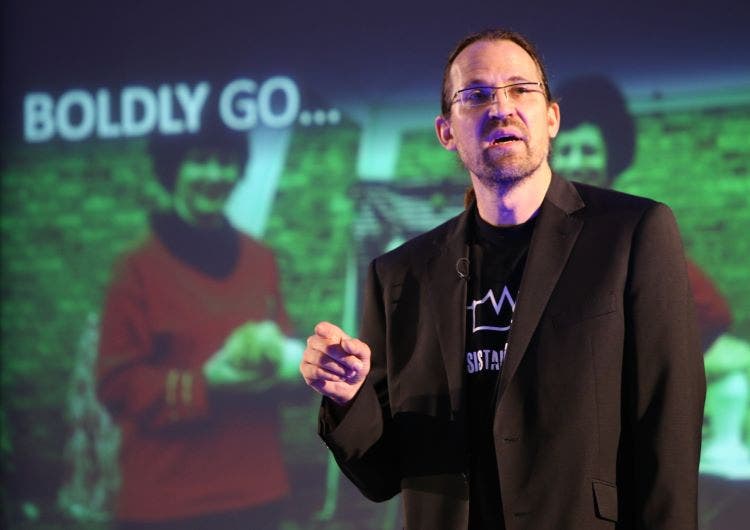
Part of the AI Leadership Index – a curated list of the most inspirational figures shaping the AI revolution.
Dave Coplin is a globally recognised authority on the human and organisational impact of transformational technologies, with over 30 years' experience working at the intersection of technology, leadership, and societal change. Formerly Microsoft UK's Chief Envisioning Officer, Dave spent more than a decade advising organisations and governments on how emerging technologies - including artificial intelligence - could be applied to deliver meaningful, sustainable outcomes.
Now independent, Dave works with senior leaders across the public and private sectors to help them navigate the opportunities and challenges of AI adoption, focusing not on the technology itself, but on how it reshapes work, culture, skills, and value creation. His clients have included global organisations such as Microsoft, Barclays, HP, Vodafone, and Ernst & Young, alongside leading public institutions including the UK and EU Parliaments and major universities.
Dave is the bestselling author of Business Reimagined and The Rise of the Humans, in which he advocates a human-first approach to AI - one that elevates human capability rather than replacing it. Known for his optimistic, provocative style, Dave is a trusted voice for leaders seeking to move beyond hype and build a future where humans and intelligent machines thrive together.
Please share a case study of how you have you innovated with AI over the last year?
Over the past 12 months, I’ve worked with senior leaders across industries to use AI not just to optimise processes, but to elevate human value at work.
A clear example is my role as an Independent Non-Executive Director at Mitchells & Butlers. Amid rising costs and rapid technological change, I presented to the Board and 100+ senior leaders on what generative AI means for a highly human, experience-led business. Rather than focusing on automation, I demonstrated, using live examples, how large language models could enhance creativity, judgement and experience across menu design, marketing, procurement, and guest and employee engagement.
This led to the creation of an internal AI Advisory Board, designed not only to provide governance but to act as a sustainable innovation engine, keeping AI human-centred, ethical and aligned to long-term value, not short-term cost cutting.
Since then, the business has applied AI to support menu innovation, personalise customer interactions and strengthen internal knowledge and decision-making – whilst preserving the human connection at the heart of hospitality. My role has been to mentor digital leaders, shape the AI roadmap and ensure AI elevates, rather than replaces, human capability.
What is the biggest challenge you have faced with AI innovation and how you have overcome it?
The biggest challenge in AI innovation is the human and cultural shift required to use it well. Most organisations default to efficiency - doing the same things faster or cheaper. The real opportunity is effectiveness: creating more value for customers, employees and society.
A core part of my work is challenging this mindset at board and executive level. I help leaders move beyond process-led thinking to an outside-in view of value, starting with what they want to achieve, then reimagining how AI can expand what’s possible. This includes creating structured space to explore future scenarios, supported by practical demonstrations that make AI’s potential tangible.
Inertia is another barrier. Teams are already stretched, and pausing to learn new tools can feel unrealistic. I address this by encouraging leaders to prioritise learning, modelling curiosity, and showcasing small behaviour changes that unlock disproportionate impact.
There are no shortcuts. Progress comes when AI is framed not as cost-cutting or threat, but as a way to elevate human judgement, creativity and effectiveness. When leaders consistently reinforce that message, adoption and innovation follow.
How do you balance innovation with ethical safeguards?
Balancing innovation with ethical safeguards begins by recognising that AI is a leadership responsibility, not just a technical capability. My approach helps leaders identify and actively manage risk, rather than avoid innovation or attempt to eliminate risk entirely.
A key principle is “solve for the problem, not the technology.” These shifts focus from what AI can do to what it should do in service of human, organisational and societal value. When framed around outcomes, ethical considerations become explicit.
I often invoke the “Jurassic Park Principle”: just because we can do something doesn’t mean we should. It’s a practical prompt to assess unintended consequences and weigh value against risk.
Equally important is keeping humans meaningfully in the loop. AI should augment judgement, not replace it, Clear accountability, transparency, and escalation paths are essential as systems become more capable. Ultimately, responsible AI innovation is about being responsibly optimistic - deliberately planning for positive outcomes, while putting in place the governance, culture, and leadership discipline needed to reduce the likelihood and impact of harm.
How do you believe the artificial intelligence space will change over the next 12-24 months?
Predicting exactly how artificial intelligence will evolve over the next 12-24 months is largely guesswork - and not the most important question leaders should be asking.
It's inevitable that model capabilities will improve, tools will proliferate, and new use cases will emerge, but the defining factor of success will not be the technology itself. What will matter far more is how humans and organisations adapt to use it.
The next phase of the AI journey will be shaped by skills, mindset, and behaviour - particularly an organisation's ability to learn continuously, challenge existing assumptions, and integrate new capabilities into everyday work. Leaders who focus solely on tools will struggle; those who invest in adaptability, resilience, and human judgement will thrive.
Over the next two years, the most successful organisations will treat AI as a catalyst for rethinking how value is created. This means reimagining roles, elevating decision-making, and empowering people to work alongside intelligent systems with confidence. In that sense, the future of AI is less about machines becoming more capable, and more about humans becoming better equipped to use them.