Dan Sutch
‘Guided by Dan’s leadership, CAST remains focused on equipping charities with the skills and confidence to use AI in ethical, inclusive and mission-driven ways.’
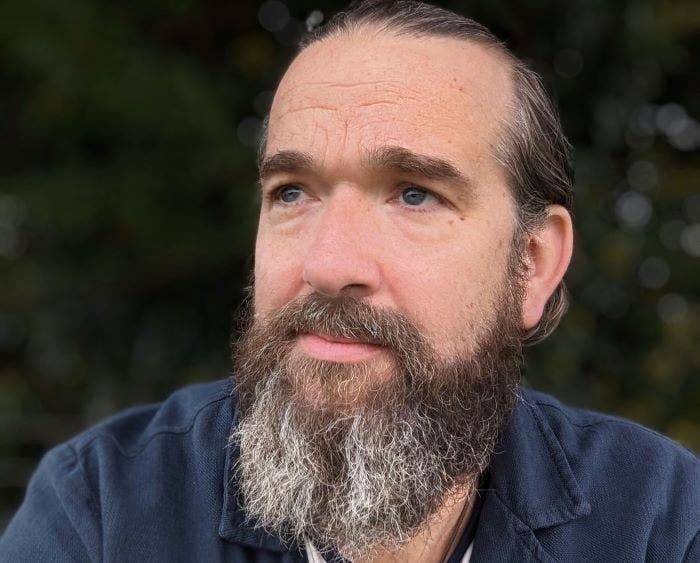
Part of the AI Leadership Index – a curated list of the most inspirational figures shaping the AI revolution.
Dan Sutch has more than 20 years' experience in the Tech for Good space, working with charities, funders, sector leaders and mission-driven organisations to use digital and AI technologies to address pressing social challenges.
Before leading CAST, Dan was part of the senior team at Nominet Trust and prior to that was head of development and a senior researcher at edtech innovator Futurelab. He is a former trustee of NCVO and recently acted as AI Innovator in Residence for The National Lottery Community Fund.
He is passionate about supporting social organisations to respond to the changing context in which we operate - using, creating and adapting digital and AI tools to deliver high-value, user-led services. As well as leading activity at CAST, Dan leads and facilitates the AI for Grantmakers peer group and co-chairs the Charity AI Task Force.
Please share a case study of how you have you innovated with AI over the last year?
To help social sector organisations explore AI safely, funders must understand charities’ evolving needs. To support this, Dan founded AI for Grantmakers, a UK peer network that has grown 200% in a year to 400+ members from 300+ trusts and foundations, collectively distributing £4.5bn annually.
Dan convenes regular online sessions featuring sector leaders and focused deep dives, alongside in-person events to align funding approaches. The group has produced practical tools, including an experiments canvas, use case library and the Worthwhile AI framework, and is piloting the Worthwhile Chat tool ahead of launch.
Insights are shared with the Digital Leads Network (450+ charity leaders) and the Charity AI Task Force (60 organisations, co-chaired by Dan) to ensure coordinated action. By aligning funders, the group has unlocked new investment in AI capability and shifted the conversation from technology-first to mission-first—keeping community needs central.
As Brian Yim Lim of Barts Charity noted, the group provides “unrivalled thought-leadership… and reassurance that we’re all in this together.”
What is the biggest challenge you have faced with AI innovation and how you have overcome it?
At CAST, we see a major barrier to equitable AI innovation in the lack of social sector representation in government and tech policy discussions. Without access to learning, experimentation and networks, charities risk falling behind, and this impacting the communities they serve.
To address this, Dan has built peer learning and advocacy spaces, including the Digital Leads Network, Charity AI Task Force and AI for Grantmakers. With Zoe Amar, he co-authored the Charity AI Task Force response to the government’s AI Opportunities Action Plan, calling for VCSE engagement. This led to ongoing dialogue with the Department for Science, Innovation and Technology, ensuring charities are now included in national AI conversations.
Dan also develops accessible AI courses, guides and workshops, reaching thousands of organisations (CAST engaged 60,000 people last year), and served as AI Innovator in Residence for The National Lottery Community Fund.
As a result, more social sector organisations are actively adopting AI and shaping policy -moving from passive recipients to active contributors in the UK’s AI landscape.
How do you balance innovation with ethical safeguards?
Dan's work is grounded in the belief that ethical safeguards should work to ensure AI helps charities to serve their mission. He champions the principle that ethical safeguards enable innovation, not impede it. This approach - which underpins all CAST's AI work - has been developed by Dan into a practical framework, articulated as 'Worthwhile AI'.
The framework centres around two key questions: 'What is a worthwhile use of AI?' and 'How do we help bring about worthwhile AI for all?' This thought process helps balance the benefits of AI against possible consequences before implementation, and centres charities' values in decision-making.
Dan has created a wealth of resources that help charities integrate Worthwhile AI into their everyday approaches: CAST's experiments canvas helps charities embed safety review into innovation processes, whilst peer groups such as the Digital Leads Network and AI for Grantmakers provide safe learning spaces, with insights shared across groups to improve collaboration.
Dan has also led the development of the pioneering sector-owned Worthwhile Chat AI tool, due for release later this year. In wider terms, the Charity AI Task Force - co-created and co-chaired by Dan - helps ensure responsible, ethical and inclusive AI practices sector-wide.
How do you believe the artificial intelligence space will change over the next 12-24 months?
With momentum from CAST and other support bodies, we expect VCSE organisations to rapidly strengthen their AI literacy. Funders are likely to demand clearer AI-enabled impact measurement and efficiency, alongside the development of sector-specific standards such as Worthwhile AI.
Following the Charity AI Task Force’s engagement, government consultation with the sector on AI policy and deployment should increase, with greater accountability for AI’s impact on underserved communities.
As charities connect policymakers and tech firms to real-world needs, AI governance may shift from industry-led to multi-stakeholder models. Peer-learning approaches like AI for Grantmakers could become standard practice across the sector.
Guided by Dan’s leadership, CAST remains focused on equipping charities with the skills and confidence to use AI in ethical, inclusive and mission-driven ways.