Ajay Pancholi
‘The most serious risks in AI lie not only within the models themselves, but in the infrastructure, security and governance layers that surround them’
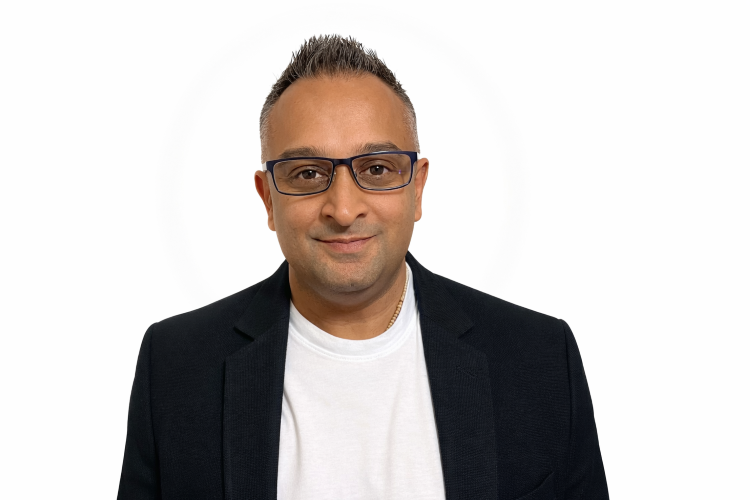
Part of the AI Leadership Index – a curated list of the most inspirational figures shaping the AI revolution.
Ajay Pancholi is an IT Infrastructure & Network Transformation Leader and the founder of the "AI Security, Ethics & Governance UK" community, a rapidly growing national forum dedicated to strengthening the safety, resilience and accountability of AI adoption.
With more than two decades of experience architecting, implementing and operating secure, high performance enterprise IT networks and systems environments, Ajay brings a holistic and technical perspective to AI championing the critical infrastructure, cybersecurity and governance foundations that are often overlooked in mainstream AI conversations. His work focuses on helping his organisation build and manage the underground pipelines of IT, identity driven access controls, operational safeguards and lifecycle governance aligned with emerging standards such as ISO/IEC 42001 and ISO/IEC 38507.
Ajay advances the dialogue around AI safety from a technical and operational standpoint, bridging the gap between IT, security, risk and AI strategy. Through thought leadership, community building and hands-on innovation, he continues to drive awareness and best practice across the UK's AI governance landscape with the aim that AI systems are deployed responsibly, securely and with long-term resilience in mind.
Please share a case study of how you have you innovated with AI over the last year?
I have focused on advancing a critical but often overlooked dimension of artificial intelligence: the IT infrastructure, security and governance foundations required for safe and scalable AI adoption. While many organisations concentrate on models and data, my public evangelism has centred on raising awareness that AI systems should be built on resilient architectures that can withstand real world threats, regulatory scrutiny and operational complexity - particularly with enterprise application of AI in mind.
Although yet to create innovation, the longer-term goal is to attempt to get IT infrastructure practices applied and integrated into AI governance including those in enterprise supply chains. To extend this impact beyond my organisation, I founded and now lead the AI Security, Ethics & Governance UK LinkedIn community. This group has become a national hub for practitioners exploring the intersection of AI, infrastructure and governance.
In its infancy, it has still gathered a collection of over 130 individuals (and growing) that range from data practitioners through to CIOs and other decisions makers. The group is the first of its kind on LinkedIn to focus on the UK.
I have also published thought leadership content on securing AI systems and applying systems thinking to AI governance, helping organisations and professionals adopt safer, more resilient AI practices and continue to regularly share the latest trends and thoughts on a fast-changing arena.
What is the biggest challenge you have faced with AI innovation and how you have overcome it?
The biggest challenge I've faced in AI innovation has been persuading system designers, business stakeholders and buyers of third-party AI solutions to recognise that the most serious risks in AI lie not only within the models themselves, but in the infrastructure, security and governance layers that surround them.
Because I don't come from the traditional coding or data science space, I've often had to bridge a gap in understanding: many assume that strong model performance equates to safety. The reality is that closed model architectures, opaque vendor pipelines and weak access controls create vulnerabilities that can compromise entire organisations.
To overcome this, I reframed the conversation and suggested forums that form a part of the governance of new systems within the business such as an AI CoE and Governance forum where solutions must be assessed. I have I founded the AI Security, Ethics & Governance UK community to scale awareness nationally. By sharing insights and best practice, I'm helping shift the narrative from "AI is a model problem" to "AI is a systems problem."
How do you balance innovation with ethical safeguards?
I believe the trick to balancing innovation with ethical safeguards starts by creating a controlled "safe space" for experimentation, where teams can prototype, test and stress test AI systems without exposing the organisation or the public to risk. In this environment, models can be explored freely, but always within secure sandboxes, isolated data pipelines and clearly defined access controls.
How do you believe the artificial intelligence space will change over the next 12-24 months?
The AI landscape will shift from rapid experimentation to structured, accountable deployment. Regulation will accelerate, particularly in the UK, EU and US with organisations moving closer to ratified best practice frameworks such as ISO/IEC 42001, NIST AI RMF and sector specific governance standards. This will push AI teams to adopt clearer lifecycle controls, stronger documentation and more transparent risk management practices.
We'll also see a growing recognition that AI cannot be treated as a standalone model problem. Infrastructure, cybersecurity and supply chain risks especially around closed model architectures and opaque vendor ecosystems will become mainstream concerns. Organisations will increasingly demand secure data pipelines, identity driven access, auditability and continuous monitoring as baseline requirements for AI adoption.
At the same time, digital twinning will mature, enabling safer experimentation by allowing organisations to simulate AI behaviour, stress test scenarios and validate governance controls before real world deployment. This will support a shift toward "safe space innovation" followed by structured governance gates. Finally, AI buyers will become more discerning, expecting vendors to demonstrate robustness, transparency and compliance not just performance. The result will be a more mature, regulated and security aware AI ecosystem where innovation continues, but within clearer guardrails.