Renata Vincoletto
“Renata's ability to combine technical execution, strategic leadership and opportunity for others best defines her career”
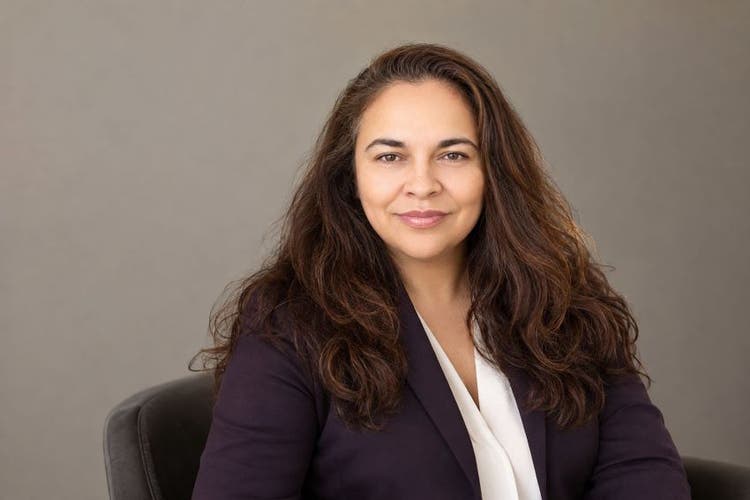
Part of the Tech Women Celebration 50, a curated list of some of the most inspirational women working at all levels of tech
Renata Vincoletto, MSc, CISSP, is Chief Information Security Officer at Civica. She designed and established the company's Global Cyber Security Department, bringing governance, architecture, cyber defence and offensive security into one operating model and building a team of approximately 60 professionals. She has more than 25 years' international experience across Microsoft, AVEVA, Abcam and Camfed, spanning hands-on engineering, incident response, cloud security, governance and executive leadership.
Renata is a Trustee of the ISC2 Center for Cyber Safety and Education, a Board Member at Step8Up and Head Tutor for IMD's Cyber Security and Risk Programme. A former Computing IT Professional of the Year finalist, she is recognised for combining technical depth with inclusive leadership and using technology to strengthen organisations, develop future leaders and expand opportunity.
Tell us about the nominee's biggest achievement to date
Renata's biggest achievement is building security capabilities that create lasting organisational and social impact. At Civica, she established a unified Global Cyber Security Department of approximately 60 professionals, consolidating fragmented governance, architecture, defensive and offensive security functions. The resulting operating model gives a complex international GovTech business clearer accountability, stronger oversight and a coordinated approach to protecting the public services and sensitive data its technology supports.
This continues a pattern established at Camfed, where Renata helped deliver an innovative technology centre in a remote Zambian community. Using low-powered, open-source technology, it provided computer and business training to 150 young women, many of whom had never used a computer. Advanced participants became IT Ambassadors, while four women were trained to manage the centre and extend learning into the community. Renata co-authored the published paper "Empowering Young Women through Technology in Zambia" about the initiative.
Her ability to combine technical execution, strategic leadership and opportunity for others best defines her career.
What is the most significant challenge the nominee has overcome?
Renata's most significant challenge was establishing herself in UK technology after moving from Brazil in 2005 with a four-year-old child, while managing a serious long-term autoimmune condition and later a high-risk pregnancy. English was not her first language, she had left her professional network behind, and her health made a conventional commute into London unsustainable.
She therefore forged a different path. Starting within smaller organisations and nonprofits around Cambridge, she repeatedly took on difficult technology environments, built infrastructure and security capabilities, and expanded her responsibilities. She progressed from hands-on technical work to global leadership at AVEVA, advising Fortune 100 CISOs and leading security operations at Microsoft, before becoming CISO at Civica.
The experience shaped her inclusive, practical leadership. Renata understands that capability is not determined by accent, health, background or a conventional career path. She now uses her influence as a CISO, tutor, trustee, board member and mentor to make the profession more accessible.
Tell us something about the nominee people would find surprising
People are often surprised that Renata's journey into cybersecurity began with physics rather than a conventional computing degree, and that she worked in security before cybersecurity was widely recognised as a profession.
One project captures the combination of technical curiosity and social purpose that has shaped her career. In rural Zambia, Renata helped implement an 18-terminal computer facility using Ubuntu, thin-client technology and low-powered computers. Together, the servers, terminals, projector, printer and satellite modem consumed less electricity than a typical kettle, an essential consideration in a community with an unreliable power supply. The facility introduced 150 young women to computing and business skills and became a resource for the wider community.
More than 25 years later, despite operating at C-suite and board level, she remains fascinated by the engineering detail: how systems work, how they fail and how technology can give people new opportunities.