Melissa Fogwill
“I built my career without the connections or established pathways many people take for granted”
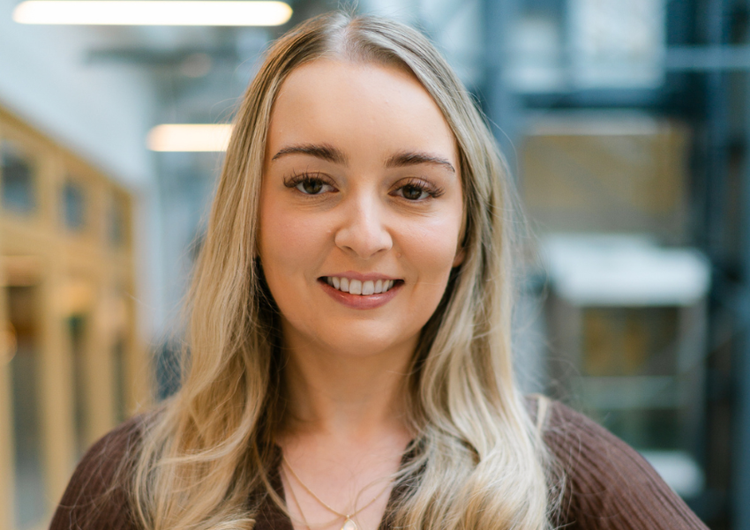
Part of the Tech Women Celebration 50 – a curated list of some of the most inspirational women working at all levels of tech
Melissa Fogwill is a technology leader, published author and advocate for making opportunity more accessible than she found it.
As Chief Technology Officer at Henderson Loggie, she helps organisations navigate the intersection of technology, cyber security, AI and business transformation. Her work has gained recognition across the profession, leading to appointments as the Institute of Directors' Regional Technology Ambassador and a member of the Alternative Accountancy Tech Advisory Board, as well as opportunities to contribute to industry discussions on the future of AI in professional services.
Growing up in one of Scotland's most deprived communities and becoming the first in her family to attend university profoundly shaped her leadership philosophy. Alongside her executive career, Melissa is a mentor, STEM Ambassador, Non-Executive Director and European award winner, with published work in advanced data analytics. She is passionate about proving that leadership in technology does not have to look, sound or start in one particular way.
Tell us about your biggest achievement to date
My biggest achievement has been transforming Henderson Loggie's technology function from an operational support service into a strategic business enabler while serving as the firm's first Chief Technology Officer.
In my first year, I independently re-established Cyber Essentials certification after it had lapsed, protecting eligibility for £750,000 of NHS framework revenue and creating a new baseline for cyber security governance across the firm. I also reduced phishing susceptibility from 66% to 8% through an education-led security programme and delivered more than £40,000 in technology cost savings.
Alongside this, I led a structured AI adoption programme that is saving participating teams an average of 38 minutes per person each day, creating measurable capacity for higher-value client work. The success of this approach led ICAS to invite me to contribute to AI policy discussions and industry panels, and I was appointed to the UK-wide Alternative Accountancy Tech Advisory Board.
What is the most significant challenge you have overcome?
The most significant challenge I have overcome is learning to succeed in environments where I was often the unexpected person in the room. I grew up in one of Scotland's most deprived communities, became the first in my family to attend university and built my career without the connections or established pathways many people take for granted.
Throughout my career, I have often found myself in situations where I was younger than expected, came from a different background or did not fit someone's preconceived idea of what a technology leader should look or sound like. Early on, I spent a lot of energy trying to prove I belonged. Over time, I realised the real challenge was overcoming my belief that I needed permission to be there.
That shift in mindset transformed both my career and my leadership style. It gave me the confidence to step into executive leadership, become a Chief Technology Officer at 30, contribute to industry discussions and use my voice to advocate for others who may also feel like outsiders. Today, I no longer see being different as something to overcome. I see it as one of my greatest strengths.
Tell us something about you people would find surprising
One thing people often find surprising is that, while I am seen as a confident leader, speaker, mentor and Chief Technology Officer, I live with a rare neurological condition that very few people know about. I was diagnosed while studying for a postgraduate degree at the University of St Andrews and working full-time. The diagnosis led to hospitalisation and changed my life in ways I never expected. There were moments of uncertainty, fear and frustration as I tried to understand what the future might look like.
What many people don't realise is that the condition hasn't gone away. It is something I continue to navigate, often quietly and largely out of sight. Even some of those closest to me are unaware of how it affects my day-to-day life. The experience changed how I view success. I no longer measure it by titles, awards or achievements alone. Success is having the courage to keep moving forward when nobody sees the battles you're fighting.
Perhaps that's why I care so deeply about helping others. You never truly know what someone is carrying, and sometimes the strongest people in the room are overcoming challenges nobody else can see.