Maryam Mehrnezhad
“People are often surprised that I am an ethical hacker who uses a feminist computing lens to break into systems for social good”
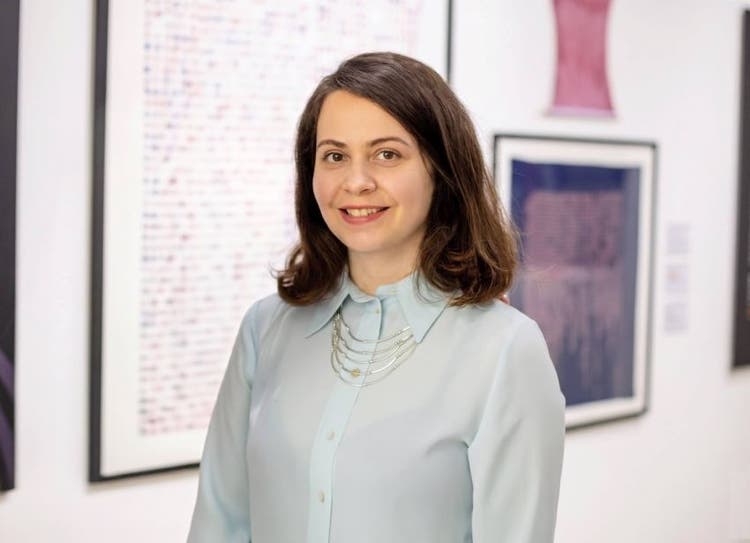
Part of the Tech Women Celebration 50 – a curated list of some of the most inspirational women working at all levels of tech
Dr Maryam Mehrnezhad is a Reader (Associate Professor) and Co-Director of Research in Royal Holloway University of London’s Information Security Department. She directs the Usable Security and Privacy Lab and is a member of the University Research Ethics Committee. Her research advances cyber safety, security and privacy in emerging technology, focusing on women, people with disabilities and survivors of tech abuse.
Her work has changed international W3C standards and prompted fixes to vulnerabilities in Apple Safari and Mozilla Firefox. An advocate for women in technology, she was named among the 2026 Top 50 Women by UK Women's Engineering Society (WES), and 2024 Tech Academic of the Year by the UK Women in IT Awards.
Dr Mehrnezhad holds a PhD in Computing Science from Newcastle University and leads UKRI and international research grants.
Tell us about your biggest achievement to date
My biggest achievement is pioneering sub-fields of “Cybersafety Engineering for Social Good”: translating complex hardware, software and IoT security research into practical protections for vulnerable people.
I recently led two landmark initiatives:
- The Tech Abuse Handbook (2025–present): In partnership with Surrey Domestic Abuse Partnership, I developed a digital-safety toolkit that turns complex privacy concepts into practical guidance for domestic abuse survivors.
- FemTech Security and Privacy (2020–present): I led the first comprehensive technical evaluations of FemTech IoT devices and apps, uncovering critical privacy flaws.
My work has influenced W3C sensor standards, helped fix vulnerabilities in Apple Safari and Mozilla Firefox, and informed POST, the ICO, UK police, charities and NGOs.
I also run a free global LinkedIn mentoring programme for underrepresented women in STEM.
What is the most significant challenge you have overcome?
My greatest challenge has been overcoming systemic, geopolitical and physical barriers to establish myself in the male-dominated fields of computing and engineering.
Growing up in Iran, I witnessed state-sponsored tech abuse, censorship and severe gender oppression. I navigated a patriarchal system as a female computing engineer and later moved to the UK as an international scholar. As an immigrant mother, I rebuilt my support network while developing a competitive academic career.
Rather than diminish my ambition, these experiences fuelled it: witnessing state tech abuse inspired my research protecting vulnerable people and domestic abuse survivors from digital harm.
My experiences also bring empathy and personal insight to my work as a global STEM mentor for underrepresented women facing similar barriers.
Tell us something about you people would find surprising
People are often surprised that I am a “white hat” ethical hacker who uses a feminist computing lens to break into systems for social good. I look beyond the industry’s “default user” — typically young, male and able-bodied — and test everyday technologies to protect overlooked groups.
My lab’s discoveries include showing that AI could identify passwords with 95% accuracy by analysing keyboard sounds captured during a Zoom call. We also found that only three of 50 popular pet-tracking apps complied with privacy laws, potentially exposing owners’ home data. We test systems safely in isolated environments so companies can patch vulnerabilities before criminals exploit them.