Charlene McDonald
“For Charlene, leadership is not only about delivery and results, but also about helping make the path into tech more visible for others”
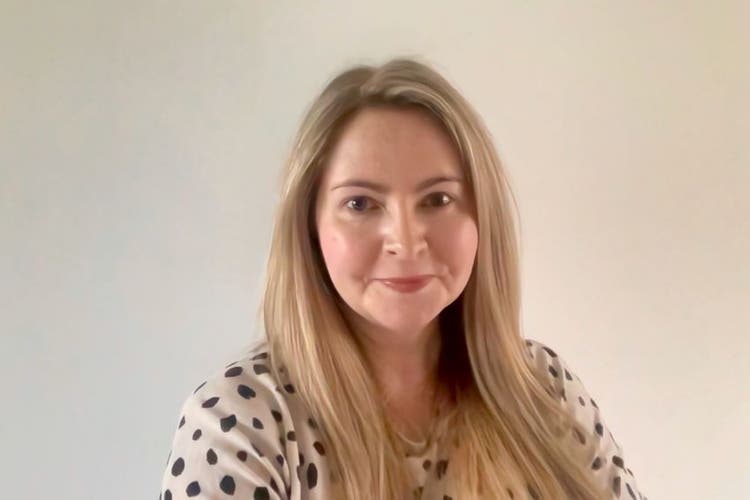
Part of the Tech Women Celebration 50 – a curated list of some of the most inspirational women working at all levels of tech
Charlene McDonald is a senior strategy and transformation leader who has spent 20+ years modernising services used every day across the UK public sector, healthcare and higher education. Her work spans organisations including NHS, HM Land Registry, Companies House, DEFRA, and The Open University, combining enterprise-scale transformation, executive advisory leadership and responsible AI in highly regulated environments.
As Account Director for Higher Education at Kainos, she leads major university transformation programmes, including The Open University. She also co-founded Kainos Studio, an AI-powered no-code platform that enables teams to turn plain-English briefs into compliant, production-ready digital services in days rather than months, and which has won three national awards: Best Automation Project, Best Digital Transformation, and Best Lo-Code/No-Code Tool.
Alongside this, she is defining Kainos' future AI-native delivery model, while preserving human accountability, trust and assurance. She chairs techUK's Education Council and supports women in STEM through speaking, mentoring and outreach.
Tell us about the nominee's biggest achievement to date
Helping change not just what digital transformation delivers, but how it is delivered. After years leading complex transformation across public sector healthcare and higher education, she recognised that traditional delivery models were becoming slower, more expensive and harder to scale well. In response, she co-founded Kainos Studio and, separately, helped define Kainos' future AI-native delivery model.
Kainos Studio proved that compliant digital services could be designed and built dramatically faster, including creating usable services with users in five hours and reducing development effort by around 70 percent. It has since won three national awards for innovation and impact.
At the same time, Charlene's work on the AI-native delivery model extends that thinking beyond a single product. It redesigns delivery around AI, trust, guardrails and evidence, rather than simply layering new tools onto old ways of working. That work is helping shape how Kainos delivers in future and how clients can adopt AI in a safer, more practical and more effective way.
What makes this her biggest achievement is that it combines practical innovation with real public value, showing how faster, safer and more responsible digital delivery can work.
What is the most significant challenge the nominee has overcome?
Early in Charlene’s career, leadership often did not look or sound like her, and credibility had to be built repeatedly through clear judgement, delivery discipline and consistent outcomes. Rather than allowing that to limit her, she developed a leadership style that is direct, grounded and focused on making change real rather than theoretical.
That challenge was made harder by the environments she worked in. Much of Charlene's career has been spent leading transformation in complex, highly regulated organisations where there is little room for error, confidence can be fragile, and new approaches are often met with understandable scepticism.
Recently, that challenge has extended to responsible AI, where she has had to move teams and stakeholders beyond curiosity and hype towards practical, governed adoption.
Tell us something about the nominee people would find surprising
What often surprises people about Charlene is that her route into leadership has not been linear. She began her career as a trainee software engineer and has since worked across engineering, business analysis, consulting, product leadership and large-scale transformation.
That range gives her unusual breadth and is why she operates credibly across strategy, governance and delivery. People are also often surprised that one of her earliest roles after university effectively made her the whole IT function for a business. It was not glamorous, but it required her to take ownership quickly, solve problems independently and make decisions without ideal conditions.
That experience shaped her pragmatism, resilience and bias for action. Another side of Charlene that people do not always expect is how strongly she cares about widening access to the industry.
Alongside her day job, she actively supports women in tech and STEM through speaking, mentoring and outreach, including events such as the launch of the Women in High-Performance Computing Ireland chapter.
For Charlene, leadership is not only about delivery and results, but also about helping make the path into tech more visible for others.