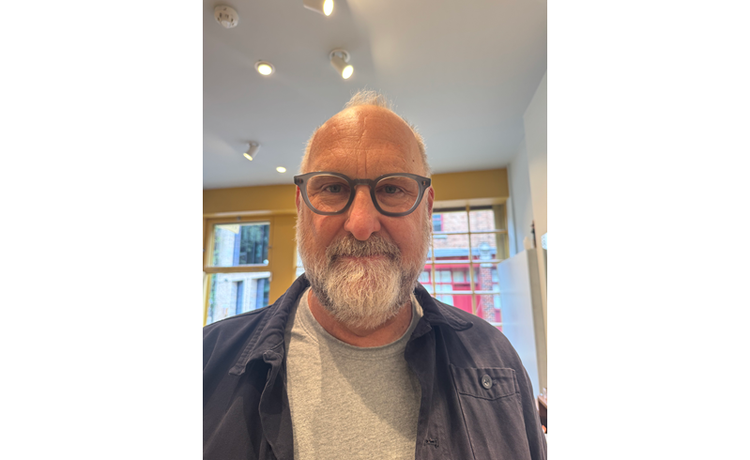
Trevor Gordon
Part of the IT Leaders 100 - a list of the most influential IT leaders in the UK in 2026.
Trevor Gordon is an experienced digital and technology leader with a strong track record of delivering transformation, operational change and accelerated delivery across organisations including Diageo, Vodafone, Sodexo, Vue Entertainment, Selfridges and Auto Trader. He specialises in building modern digital, data and AI capabilities that improve performance and support long‑term growth.
Trevor is currently CIO at Exchange for Change and was previously Chief Digital and Technology Officer at Save the Children, where he led a major global digital, data and AI transformation. He is known for building high performing teams and aligning technology with purpose and customer value.
What's the most exciting part of your current role?
The sheer uniqueness of what we're building. We are creating what will be the world's largest Deposit Return Scheme, entirely from the ground up. There is no legacy technology, no inherited operating model and no pre-defined culture. Everything is greenfield, and that is incredibly rare.
I get to design the digital, data and technology foundations from first principles, making deliberate choices about how we scale nationally, how we stay secure and resilient, and how we build systems that will last for decades. At the same time, I'm helping shape the culture. Building teams, setting expectations, and creating an environment where people feel trusted, accountable and proud of what they are delivering.
What really motivates me is the purpose. This is complex delivery at national scale, but it directly supports environmental change and real behaviour shift. Seeing ideas turn into live systems, and those systems make a tangible difference, is extremely rewarding. It's the combination of scale, impact and freedom to build properly that makes this role so special.
What do you do in week one of a new project to avoid pain in month six?
In week one of any project at Exchange for Change, my focus is on doing the hard thinking up front so we don't pay for it six months later. I spend time getting absolute clarity on the problem we are trying to solve, the outcomes we need to deliver, and what success really looks like. That means aligning leadership, partners and teams on a shared vision, an agreed scope, and the critical non negotiables early on.
I'm deliberate about setting direction and principles, not just plans. We align on priorities, decision rights, ways of working, and how we will handle trade offs before pressure builds. I also focus heavily on establishing a one-team mentality from the start. No silos, no "us and them," and no hidden agendas between delivery partners or internal teams.
That early investment creates trust, pace and clarity. It reduces rework, prevents scope drift, and avoids the slow erosion of confidence that happens when teams are pulling in different directions. It's not glamorous, but it is the difference between controlled delivery and unnecessary pain later on.
What’s the part of your estate you most want to simplify in 2026?
For me, 2026 at EfC is about simplifying before complexity sets in. Starting from a greenfield gives us one huge advantage and that's the chance to make deliberate choices early rather than fixing problems later.
The first thing I want to simplify is decision making. Clear owners, clear decision rights and fewer forums. If it's hard to decide things now, it will be unworkable at scale. I also want a simple, consistent operating model. One way of working across EfC and partners, not layers of interim fixes that we have to unwind later.
Scope discipline is another big one. Being ruthless about what we actually need for launch and early BAU, and consciously parking everything else. Over ambition is how complexity sneaks in.
On the technology side, it's about fewer platforms, strong standards and reusable patterns. Build for scale, yes, but not for theoretical futures.
Finally, culture. One team, open conversations, no silos. If we keep things clear and simple now, EfC will move faster, with more confidence, when it really matters.
Excluding smartphones, what piece of technology could you not live without and why?
I use AI tools every day in my role as CIO at Exchange for Change, and in a small, lean organisation they've become absolutely essential. When you're building something at national scale with limited capacity, you don't have the luxury of wasted time or unnecessary friction.
I use AI to accelerate thinking, not replace it. It helps me quickly structure ideas, pressure test plans, draft and refine documents, and get an early pass at complex problems so I can focus my time on judgement, decision making and leadership. It's like having a second brain that helps me move faster without lowering the bar.
In a startup style environment like EfC, where there is a lot to do and not many people to do it, pace really matters. AI lets me absorb information quickly, switch context safely, and keep momentum across multiple workstreams without dropping quality.
Used well, it's a productivity multiplier. It gives me more time to think strategically, engage with people properly, and focus on the decisions that really move things forward.
What excites you most about the future of IT?
Technology has enormous potential to accelerate ESG impact and the transition to a circular economy when it's applied at scale and with purpose. Digital platforms, data and automation bring visibility and trust into complex systems, allowing materials, incentives and outcomes to be tracked accurately and in near real time. That visibility changes behaviour.
Used well, technology reduces friction. It makes sustainable choices easier for consumers, retailers and producers, rather than something they have to think hard about. It also allows organisations to measure impact properly, learn quickly, and adjust what isn't working.
The real opportunity lies in combining the right technology with strong policy and business models. When data, incentives and operations align, circular systems become not just viable, but efficient and scalable. That's when technology moves beyond good intentions and starts delivering meaningful, measurable environmental and social change.
What talent are you quietly proud of that would never show up on LinkedIn?
As a Canadian living in the UK, aiming for the perfect BBQ is a lifelong ambition that will never be fulfilled...but the fun is in the journey.
Always charcoal, never gas!
What’s your most-used keyboard shortcut or command that you wish everyone knew?
Ctrl (or Cmd) + F - Find. Instantly locating information in documents, emails or web pages saves minutes that quickly turn into hours. I know from personal experience, and had a fantastic EA many years ago that showed me this great command after watching me waste too much time!