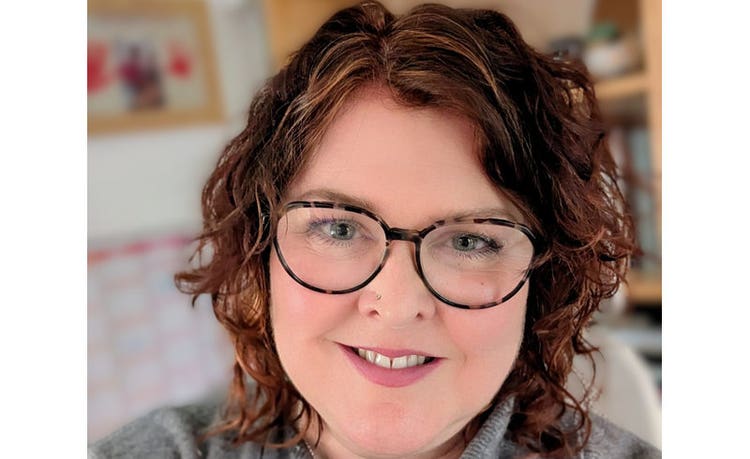
Tree Hall
Part of the IT Leaders 100 - a list of the most influential IT leaders in the UK in 2026.
Tree Hall is CEO of Charity IT Leaders, the UK's leading professional network for charity technology, digital and data leaders. Working at a sector level, she supports and amplifies CIOs and emerging leaders across charities of all sizes, helping them use technology more effectively to deliver impact.
A late‑diagnosed AuDHD leader, Tree is a committed advocate for neurodivergent inclusion, drawing on lived experience to promote accessible, sustainable ways of working. She is also a coach, consultant, speaker and host of the podcast Neuro Nibbles, exploring neurodivergent life and leadership.
What's the most exciting part of your current role?
The ability to create impact at scale by enabling others to lead more effectively. As CEO of Charity IT Leaders (CITL), the UK's leading professional network for charity technology leaders, I work at a sector level to support, convene and amplify CIOs, digital, data and IT leaders across charities of all sizes.
While I'm not a technologist by background, I am a tech leader through influence - helping organisations use technology more confidently to deliver services, manage risk and drive meaningful change.
The role gives me a platform to shape priorities, encourage innovation and strengthen leadership capability across the charity tech community, working with both established and emerging leaders.
Equally exciting is the opportunity to use that platform to champion equity in tech. As a late diagnosed AuDHD leader, I advocate for neuroinclusive ways of working that enable disabled and neurodivergent professionals to thrive. This helps the sector attract and retain talent and better harness the creativity and problem-solving strengths within its workforce.
What motivates me most is the combination of influence and purpose: helping the sector do more through technology, digital and data, while visibly representing neurodivergent leadership at a senior level.
What do you do in week one of a new project to avoid pain in month six?
In week one of any new project, my priority is to slow things down enough to ask the right questions, especially 'why'. Before scopes, timelines or solutions are locked in, I focus on clarifying why we are doing the work, and what problem we are trying to solve. How do we know this is the right problem, not a symptom or convenient proxy?
I spend time interrogating the challenge from multiple angles, testing assumptions and encouraging uncomfortable honesty. What happens if we don't do this project? Who asked for it, and what success would look like for the organisation and our beneficiaries?
If we can't clearly articulate the benefit, the risk of drift, rework and frustration later is high. I look for misalignment: competing priorities, unspoken constraints, or differing definitions of success. These rarely cause pain in month one, but they almost always surface in month six if ignored.
By the end of the first week, I want to be confident that we're solving the right problem, for the right reasons, and that the work will deliver meaningful value. Investing time upfront in clarity, purpose and challenge avoids unnecessary complexity, wasted effort and disappointment later on.
What’s the part of your estate you most want to simplify in 2026?
For a small charity like ours, the estate is already relatively lean, so simplification isn't the primary challenge. We don't have layers of legacy systems to strip back or unnecessary complexity to remove. What matters more for us in 2026 is optimisation - making sure the tools we already rely on are used as effectively, coherently and intentionally as possible.
The area I most want to focus on is how well our systems work together to support our staff, members and decision-making. That means reducing friction in everyday processes, improving data consistency, and ensuring that the effort people put into systems translates into real operational and strategic value.
In a small organisation, inefficiency doesn't hide - it shows up as wasted time, manual workarounds and cognitive load.
Rather than replacing platforms or pursuing change for its own sake, the goal is to fine tune what we have: clearer workflows, better use of automation, and more confidence in the information we use to guide decisions.
For us, optimisation is about enabling people to spend less time managing systems and more time delivering impact. Simplification is part of that journey, but only where it genuinely supports focus, resilience and effectiveness.
Excluding smartphones, what piece of technology could you not live without and why?
My Fitbit watch. It plays a central role in helping me understand and manage my health on a day-to-day basis. I use it to track key metrics such as activity levels, heart rate, sleep patterns and recovery, which gives me a clearer, more objective picture of how my body is actually doing, rather than how I think it's doing.
As a neurodivergent person with long-term health conditions, that visibility is crucial. It helps me spot patterns early - for example, when poor sleep or elevated stress is likely to impact my energy, focus or resilience - and make informed adjustments before things escalate. The mindfulness tools and prompts are equally valuable, encouraging me to pause, breathe and consciously reset during the day.
What I value most is how it supports proactive self-management. Instead of reacting when I'm already depleted, the data helps me pace myself, build sustainable routines and protect my wellbeing over the long term. It's a small piece of technology, but it makes a meaningful difference to how I function, work and look after myself.
What excites you most about the future of IT?
What excites me most about the future of tech is its potential to enable people, rather than simply scale systems. Increasingly, technology is moving away from being something organisations struggle to keep up with, and towards something that actively supports better decision-making, inclusion and impact when used well.
Working across the sector, I see how tech, digital and data can level the playing field. Cloud platforms, automation and accessible analytics mean organisations of all sizes can operate with confidence, manage risk more effectively and focus resources where they matter most.
The real shift is not the tools themselves, but how much easier it's becoming for nonspecialists to engage with tech and use it to deliver change.
I am also excited by the growing recognition that good technology design must centre people. Neuroinclusive ways of working, flexible tools and data-driven insight can support wellbeing, sustainability and long-term performance, not just productivity. This is critical if the sector is to attract and retain diverse talent and benefit from different ways of thinking.
The future of IT feels less about control and complexity, and more about empowerment. When tech helps people work with greater clarity and purpose, its impact extends far beyond systems.
What talent are you quietly proud of that would never show up on LinkedIn?
One talent I'm quietly proud of, and which would never survive LinkedIn optimisation, is my ability to chair conferences and large-scale events while being a deeply introverted autistic, ADHDer with an extremely limited social battery.
Most people assume I'm an extrovert. I am not. I am performing a very specific and carefully managed version of myself.
Put me on a stage with a clear role, a running order, a purpose and a microphone, and I can hyperfocus my way through hours of facilitation, panel-wrangling and calm crisis management. I can read a room, hold a thread, make speakers feel at ease and keep things moving. Take that structure away and ask me to "network casually" and I will immediately need a quiet room, a glass of water and probably a lie down.
It's a skill born of pattern recognition, preparation and a strong sense of responsibility, rather than charisma. I'm proud of it because it lets me create space for others to shine, even when it quietly costs me everything. And because, when the audience leaves energised, almost no one realises I'm about to go home and not speak to another human being for at least 48 hours.
What’s your most-used keyboard shortcut or command that you wish everyone knew?
I use two keyboard shortcuts so often that they feel like muscle memory, and I wish everyone knew both of them.
The first is Ctrl + Y, which repeats your last action in Word, Excel and most Office apps.
Formatting a heading, resizing a column, applying a style, adjusting a shape, then doing it again and again manually is unnecessary pain. Ctrl + Y just repeats what you just did. Once you start using it, watching people not use it becomes mildly distressing.
The second is the shortcut to insert a carriage return inside an Excel cell: Alt + Enter. Instead of cramming everything into one unreadable line or creating unnecessary extra columns, this lets you structure text properly within a single cell. It is transformational for notes, lists, labels and anything vaguely human-readable.
Both shortcuts save tiny amounts of time, but more importantly they reduce friction and cognitive load. They let you stay in flow instead of fighting the tool. That, for me, is the difference between technology being quietly supportive and actively annoying.