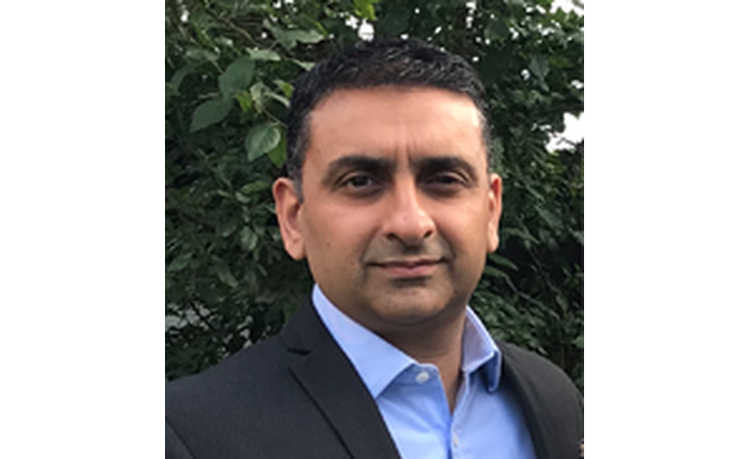
Tazeem Wafa
Part of the IT Leaders 100 - a list of the most influential IT leaders in the UK in 2026.
Tazeem is a Principal Architect recognised for shaping clear, pragmatic technology strategy in complex, regulated environments.
Tazeem specialises in aligning architecture to business outcomes, and enabling change at scale without sacrificing control or resilience. He is deeply committed to developing other leaders, strengthening architectural judgement, confidence, and decision‑making across teams.
Tazeem's impact is measured not just in better systems, but in organisations that can move faster, think more clearly, and sustain change over time.
What's the most exciting part of your current role?
The most exciting part of my role as a Principal Architect at the Bank of England is the opportunity to shape direction at scale, turning complex business ambition into coherent, actionable technology strategy. I sit at the intersection of strategy, delivery, and governance, I get to influence decisions that genuinely matter: which capabilities we invest in, how we modernise, and how we design systems that will be robust years from now.
What makes the role particularly energising is the breadth. One moment I'm helping senior leaders frame a clear architectural vision; the next, I'm helping delivery teams by resolving tricky design tradeoffs or aligning domains around a shared outcome. That constant movement between the "why" and the "how" keeps the work intellectually demanding and highly relevant.
There's also real satisfaction in development, setting standards, guiding other architects, and embedding good architectural thinking without becoming a bottleneck. Helping the next generation be the best by empowering rather than constraining them.
Ultimately, the excitement comes from variety, trust, and leverage: being trusted to think systemically, to challenge assumptions, and to leave the organisation with clearer structure, better options, and a stronger foundation for the future.
What do you do in week one of a new project to avoid pain in month six?
I focus on creating clarity before momentum makes change expensive. My priority is to highlight the real problem being solved and align everyone on it; business sponsors, delivery teams, and platform owners. That means validating outcomes, success measures, and constraints early, rather than assuming they are shared or stable.
I invest time in understanding the landscape: existing systems, dependencies, funding boundaries, regulatory obligations, and organisational sensitivities. Hidden constraints uncovered in week one are nearly always the root cause of pain in month six. I also identify key nonfunctional requirements - resilience, scalability, security, data integrity - because these are hardest to retrofit later.
Another critical activity is decision logging. I clarify which architectural decisions must be made now, which can be deferred, and who has authority to make them. This prevents silent assumptions turning into late-stage conflict. Where tradeoffs are inevitable, these are made and documented, not implicit and forgotten.
Finally, I establish the right architectural guardrails and ways of working that enable teams to move fast safely. By frontloading alignment, constraints, and intent, week one becomes an investment that reduces rework, friction, and escalation later.
What’s the part of your estate you most want to simplify in 2026?
I want to simplify the central services "shared services" layer, because this is my domain and it is where complexity can accumulate.
What I'd simplify:
- Knowledge management
- Service offerings and processes
Why does this matter? Easier navigation for everyone. Standardised processes and services. Faster change.
A streamlined estate means upgrades, security fixes, and policy changes become routine.
Excluding smartphones, what piece of technology could you not live without and why?
A laptop, because it is the most complete creation and decision tool that I have.
Why is a laptop essential? It's where I think and learn and produce various diagrams, documents, models, and structured notes. A laptop gives me the screen space and precision to map complexity into something readable and actionable, far beyond what's comfortable on a phone.
It's my coordination hub. From email and calendars to Teams, whiteboards, and shared docs, the laptop is where alignment happens efficiently, especially when juggling multiple stakeholders, streams, and decisions.
It's how I turn ambiguity into delivery. I can rapidly prototype approaches, assess trade-offs, review designs, and produce clear artifacts (principles, roadmaps, standards) that keep delivery teams unblocked.
It supports deep work. Long-form writing, analysis, and careful decision-making. A laptop enables uninterrupted, high-quality output, without the friction and distraction of smaller devices.
It's portable power. I can work securely from different locations while staying connected to enterprise tools, repositories, and knowledge bases.
Ultimately, a laptop isn't just a device, it is the place where strategy becomes something tangible.
What excites you most about the future of IT?
The shift from technology being a constraint to becoming a genuine force multiplier for decision-making, change, and value creation. We're moving away from a world where progress is limited by infrastructure and bespoke engineering, toward one where platforms, automation, and intelligent tooling will handle the heavy lifting. That frees people to focus on judgment, design, and outcomes rather than mechanics.
The rise of AI assisted development, tooling, and operations is especially exciting, not because it replaces expertise, but because it amplifies it, making good decisions cheaper and bad decisions harder to hide.
I'm also excited by the growing maturity around deeper learning: clearer development ownership, better learning products, and event-driven learning. This makes specialist learning accessible and learnable at pace.
Equally important is the cultural shift. IT is becoming less about running systems and more about shaping capabilities, working alongside the business to continuously evolve how value is delivered, measured, and governed.
The future of IT is exciting because it's becoming more strategic, more humane, and more leverage-rich: fewer brittle systems, clearer choices, and technology that works with organisations rather than holding them back.
What talent are you quietly proud of that would never show up on LinkedIn?
My ability to develop other leaders. I spend a lot of time helping people think more clearly, frame problems better, and grow into authority rather than wait for permission. It is rarely formal mentoring, and I deliberately step back so someone else can step forward.
I help people see the system they're operating in, not just the task in front of them. What I'm most proud of is helping emerging leaders build judgement. I challenge assumptions safely, surface tradeoffs early, and encourage them to act with intent rather than react to pressure.
I give context, not instructions. Feedback, not control. Confidence, not dependency.
Often, the outcome isn't visible to me at all. Someone runs a meeting more effectively. Makes a braver call. Pushes back in the right way. Takes ownership where they might previously have deferred. Those moments don't translate into metrics or titles, but they compound over time.
Seeing people I've supported operate with greater clarity, courage, and influence - without needing my input anymore - is the clearest signal to me that the work mattered.
What’s your most-used keyboard shortcut or command that you wish everyone knew?
Ctrl + K: the universal command/search launcher that now exists across so many tools. In browsers, it jumps straight to the address bar, letting me navigate, search, or open tools without touching the mouse.
What makes it powerful isn't convenience, it is intent. Ctrl + K forces you to think in outcomes, not menus. You type what you want to do and let the tool meet you there.
I wish everyone used it because it subtly changes behaviour. People move faster, stay in flow longer, and are less distracted by incidental choices. Meetings run better because information is retrieved instantly. Decisions happen with facts to hand. Friction disappears almost invisibly.
For me, Ctrl + K represents a broader principle: reduce overhead, preserve attention, and optimise for clarity.