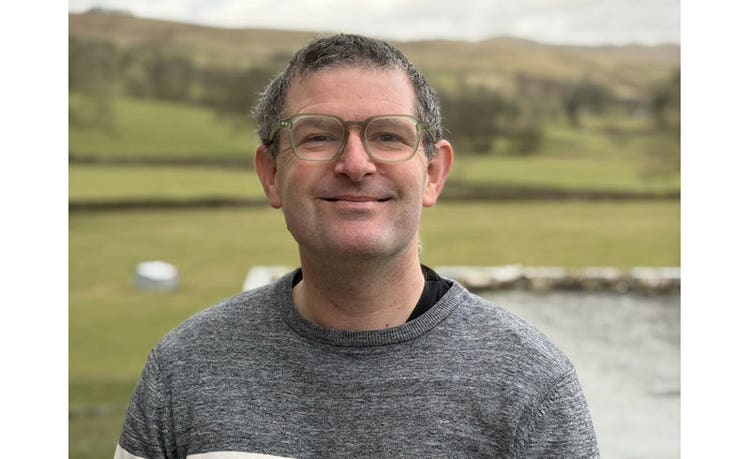
Stuart Main
Part of the IT Leaders 100 - a list of the most influential IT leaders in the UK in 2026.
Stuart is based in the northeast of England, and loves the fact that he can see the sea from his house. After 15 years in petrochemicals, he entered the charity sector and is now Director of People, Systems and Solutions at a UK not-for-profit.
Alongside a team of 15 he leads digital and organisational transformation with a focus on people, purpose, and practical impact. He is currently driving a post-merger replatforming programme, simplifying systems and building a strong data and AI-ready foundation.
Passionate about aligning technology with mission, Stuart works closely with teams and external partners to create solutions that enable better decisions and deeper connection.
What's the most exciting part of your current role?
The most exciting part of my role right now is leading our replatforming transformation following a merger; because it's not just about systems, it's about uniting people, purpose, and possibility.
We inherited complexity: multiple platforms, fragmented data, and different ways of working. But rather than seeing that as a constraint, we've treated it as an opportunity to build something better, together. Our focus has been on creating a single, coherent digital foundation that enables mission focussed clarity, connection, and scalability across the organisation.
What makes this work energising is the sense of shared hope. Teams that were once separate are now co-designing solutions, alongside key partners who bring expertise, challenge, and fresh perspective. At the same time, the team is not just building new systems, they are learning new skills, growing in confidence, and actively shaping how technology serves our mission.
We've chosen a pragmatic, intentional path: simplifying architecture, strengthening data integrity, and embedding AI-ready capabilities into the core. But the real transformation is cultural. Trust is growing. There's a renewed belief that change can be done with people, not to them.
This is what excites me most: building a platform and a culture that reflects who we now are.
What do you do in week one of a new project to avoid pain in month six?
Get clarity on what we want to achieve and by when - what will success look like? That will often involve defining what we are not going to do as well as what we are. Alignment at this stage prevents costly course correction later.
Next, in our transformation it's been important to understand the reality we're inheriting. Having key people from both pre-merger organisations around the table has been key. Go beyond documentation to uncover hidden complexity: workarounds, dependencies, and assumed knowledge that is baked in.
Establish clear decision-making early. Who owns which decisions, how quickly they are made, and how trade-offs are handled. Weak governance creates bottlenecks that only become visible under pressure.
Engage the people who will deliver and live with the change. Involving staff and key partners from the outset builds shared ownership and surfaces risks early, when they are easier to address. It also creates momentum around learning new skills, not just implementing new systems.
Finally, set strong delivery rhythms: visible milestones, regular check-ins, and a culture where risks can be raised early.
Week 1 is not about moving fast. It's about building the alignment and trust that make sustainable progress possible.
What’s the part of your estate you most want to simplify in 2026?
We are on a journey to simplify, but also massively enhance, our data reporting capabilities. We have a web-based reporting platform that we built in house over the last ten years. It's web pages that pull out data from a database, crunch and display it. With the help of key new partners Astrato and Motherduck, we are replatforming into a modern data warehouse, semantic and analytics layer.
Right now, the reporting is where complexity quietly accumulates. We have inconsistent definitions and too much manual effort to turn information into insight.
Our ambition is to simplify how data flows, bring in multiple sources of data, establish clear ownership of key metrics, and reduce duplication across systems. It's not just a technical challenge; it's about creating confidence. When people don't trust the data, they create workarounds - and complexity grows.
We're focusing on building a single source of truth that is accessible, well-governed, and designed for real use, enabling self-service BI that empowers teams without overwhelming them.
Excluding smartphones, what piece of technology could you not live without and why?
It has to be the laptop! In a largely remote role, it's become the key place of connection for me with team. It's the place where my wondering becomes tangible.
In a role that spans people, systems, and transformation, the laptop allows me to move between strategy and delivery seamlessly; whether that's designing elements of our replatforming approach, analysing data, or collaborating with colleagues and partners across different contexts. The ability to hold multiple threads at once, and bring them into a coherent direction, depends on that environment.
What sets it apart is depth. Unlike other tools, it creates space for sustained attention - writing, modelling, building, refining. That's where clarity emerges, and where better decisions are made alongside and together with others.
What excites you most about the future of IT?
The scale of possibility that AI unlocks, particularly in how it can remove friction, surface insight, and accelerate decision-making. We're moving into a space where technology doesn't just support work, it actively enhances how organisations think and operate.
But the real opportunity isn't automation for its own sake. It's thoughtful implementation. AI gives us the ability to streamline processes, augment human judgement, and create more responsive, adaptive systems. Done well, it frees people to focus on what matters most - relationships, connection, creativity, and complex problem-solving.
That said, the future has to remain people-centred. Just because we can automate something doesn't mean we should. There's a risk of losing the human connection that underpins trust, culture, and meaningful impact, especially in organisations like ours where we are focused on people and communities.
What excites me is the balance: using AI to enable, not replace; to simplify, not distance. The organisations that get this right will be those that combine technical capability with strong values, where decisions are guided not just by efficiency, but by purpose.
If we hold that line, AI becomes less about disruption and more about amplification.
What talent are you quietly proud of that would never show up on LinkedIn?
My parenting? I am immensely proud of two amazing children who are making the world a better place. Seeing them grow into adulthood and making their own choices well is a joy. We have a great network of people around us and so the children have been fortunate to have great opportunities and inspirations at many points.
What’s your most-used keyboard shortcut or command that you wish everyone knew?
Ctrl and Z for undo! I'm also a big advocate of Ctrl and F for when you know that reference is in there somewhere!