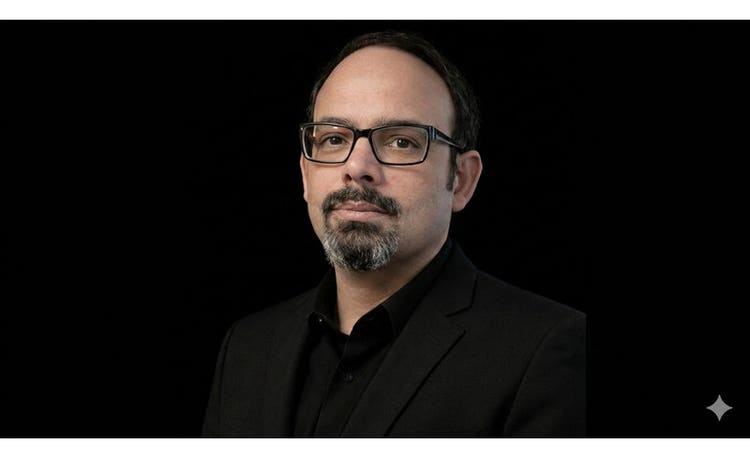
Sanjay Singh
Part of the IT Leaders 100 - a list of the most influential IT leaders in the UK in 2026.
Senior technology leader at British Telecom, Sanjay Singh drives large-scale digital transformation across mission-critical platforms supporting 25,000+ engineers and national fibre rollout. He has led award-winning programmes like ORION, accelerating delivery to 20M+ premises while improving efficiency and sustainability.
With nearly two decades of experience, Sanjay combines deep technical expertise with strategic leadership to deliver measurable business outcomes. A passionate STEM ambassador and mentor, he is committed to building inclusive teams and shaping future-ready digital ecosystems.
What's the most exciting part of your current role?
The most rewarding part of my role is driving digital transformation at a scale that directly impacts national infrastructure and customer outcomes. I lead strategy and delivery for critical platforms that support over 25,000 field engineers and enable the execution of around 300,000 jobs weekly, positioning technology as a core enabler of the UK's full-fibre ambitions .
What I find particularly exciting is simplifying complex, legacy-heavy ecosystems into integrated, data-led solutions that deliver measurable business and environmental value. Through programmes like ORION, I have helped digitise network planning and survey processes, accelerating fibre rollout to more than 20 million premises, reducing planning cycle times by 60%, and contributing to a ~40% reduction in carbon footprint.
In parallel, mobility and workforce transformation initiatives have improved engineer productivity by saving approximately 40 minutes per day, translating into millions of additional productive hours and enhanced customer service outcomes.
Equally motivating is the opportunity to shape future-ready workforce platforms—leveraging AI, automation, and resilient architectures to deliver multi-million-pound efficiencies while improving employee experience.
The blend of scale, innovation, and real-world societal impact is what makes this role truly exciting.
What do you do in week one of a new project to avoid pain in month six?
In week one of any new programme, I focus on establishing clarity, alignment, and architectural integrity—because most delivery risks in month six originate from early ambiguity. I start by aligning stakeholders on clear business outcomes, success metrics, and value realisation, ensuring everyone agrees not just on what we are delivering, but why it matters.
Next, I prioritise deep discovery and system understanding—reviewing existing architecture, data flows, dependencies, and constraints. In complex environments supporting 25,000+ engineers and high-volume operations, hidden dependencies can become major failure points if not surfaced early.
I complement this with early risk identification and mitigation planning, including technology, integration, and operational risks.
A critical step is defining a robust architectural blueprint and guardrails, ensuring scalability, resilience, and security are designed in—not retrofitted. I also establish ways of working: governance, Agile cadence, DevOps practices, and clear ownership models to avoid fragmentation later.
Finally, I invest in data readiness and adoption planning—including user journeys, training, and change management—so solutions are not just built, but successfully embedded.
This structured first week creates a strong foundation, significantly reducing rework, delays, and operational pain as the programme scales.
What’s the part of your estate you most want to simplify in 2026?
The part of my estate I most want to simplify in 2026 is the workforce scheduling and operational platform landscape, which underpins service delivery across Openreach.
Today, this environment still carries complexity from multiple legacy instances, fragmented interfaces, and duplicated capabilities across regions and business units. At the scale of 25,000+ engineers and ~300,000 jobs per week, even small inefficiencies amplify into significant operational and cost challenges.
My focus is to transition toward a unified, single-instance scheduling ecosystem with standardised data models, simplified integrations, and a consistent user experience. This includes consolidating multiple regional deployments into fewer resilient instances, reducing interface overhead, and eliminating technical debt through modern, cloud-aligned architectures.
Simplification here unlocks disproportionate value: improved system resilience (faster recovery and higher availability), reduced operational overhead, and better decision-making through a single source of truth. It also enables more advanced capabilities such as AI-driven scheduling, real-time optimisation, and seamless cross-business workforce mobility.
Ultimately, this transformation is about moving from a complex, fragmented estate to a lean, scalable, and intelligent platform—one that not only reduces cost but materially improves engineer experience, customer outcomes, and speed of service delivery across the UK.
Excluding smartphones, what piece of technology could you not live without and why?
Excluding smartphones, the one piece of technology I rely on most is my laptop/workstation, as it is the primary interface through which I lead, design, and deliver large-scale digital transformation. My role involves overseeing mission-critical platforms supporting 25,000+ engineers and complex, high-volume operations, and the laptop is where strategy translates into execution .
It enables me to seamlessly integrate multiple dimensions of leadership—architecture reviews, data-driven decision-making, programme governance, and real-time collaboration with globally distributed teams. Whether I am analysing system performance dashboards, reviewing solution designs, or driving stakeholder alignment, the ability to access and synthesise information quickly is essential.
More importantly, it acts as a control tower for transformation—bringing together engineering, operations, and business insights into a single, actionable view. Through this, I can identify risks early, optimise delivery, and ensure alignment with long-term strategic goals.
In a world where digital ecosystems are increasingly complex and interconnected, the laptop is not just a productivity tool—it is an enabler of scalable leadership and informed decision-making. Without it, the speed, precision, and impact required to deliver at this scale would simply not be achievable.
What excites you most about the future of IT?
What excites me most about the future of IT is the convergence of AI, data, and platform engineering to create intelligent, self-optimising ecosystems that operate at scale with minimal friction. We are moving beyond traditional system delivery into an era where technology continuously learns, adapts, and drives proactive decision-making.
In large-scale environments like those supporting 25,000+ engineers and high-volume service operations, the potential of AI-driven automation and real-time optimisation is transformative. The shift toward predictive systems—whether in workforce scheduling, network planning, or service assurance—will enable organisations to anticipate demand, dynamically allocate resources, and significantly enhance customer experience.
Equally exciting is the evolution toward simplified, composable architectures—API-driven, cloud-native, and resilient by design. These will reduce legacy complexity and unlock faster innovation cycles, allowing organisations to respond rapidly to changing business needs.
Another key dimension is sustainable IT. Technology is increasingly being designed not just for performance but for environmental impact, with smarter systems reducing waste, energy consumption, and carbon footprint—an area where digital transformation is already demonstrating measurable benefits.
Ultimately, the future of IT lies in its ability to seamlessly integrate technology, people, and purpose—driving smarter decisions, better experiences, and meaningful societal impact at scale.
What talent are you quietly proud of that would never show up on LinkedIn?
My ability to navigate ambiguity and bring clarity in highly complex, high-pressure environments. In large-scale transformation programmes, challenges are often not purely technical but rooted in conflicting priorities, legacy mindsets, and unclear problem definitions. I've developed a strong instinct for cutting through that noise—quickly synthesising information, identifying the real problem, and aligning diverse stakeholders toward a common goal.
I manifested the skill in my previous mobility programme which improved efficiency of 25k+ engineers. I used the same skill used in Openreach’s Network Plan and Survey for enabling fast fibre rollout; and current field workforce optimisation.
It's a blend of systems thinking, active listening, and pragmatic decision-making that helps turn complexity into actionable outcomes.
I also take pride in building trust across teams—creating an environment where people feel heard, supported, and empowered to contribute. This human aspect of leadership is rarely documented but is critical in delivering sustained success, especially at the scale of operations involving thousands of engineers and multiple stakeholder groups. While it may not be a formal "skill" on paper, this ability to bring clarity, calm, and direction is something I deeply value and consistently rely on.
What’s your most-used keyboard shortcut or command that you wish everyone knew?
My most-used—and most underrated—keyboard shortcut is "Ctrl + Shift + V" (paste without formatting). It sounds simple, but in a role that involves constant movement between documents, presentations, dashboards, and collaboration tools, it is a huge productivity enabler.
In large-scale programme environments, I'm often consolidating inputs from multiple sources—emails, reports, architecture documents, and data extracts. Pasting content without carrying over inconsistent fonts, styles, or embedded formatting keeps everything clean, structured, and immediately usable. It removes friction, saves time on rework, and ensures communication remains professional and consistent.
Beyond efficiency, it also supports clarity of thinking. Clean, well-structured content is easier to review, align on, and make decisions from—especially when working across diverse stakeholder groups and fast-paced delivery cycles. At scale, small habits like this compound.
When you're operating across complex systems and high-volume interactions, even minor optimisations can translate into meaningful productivity gains over time.
It's a simple command, but one I wish more people used consistently—because it quietly improves quality, speed, and effectiveness in everyday work without requiring any additional effort or tools.