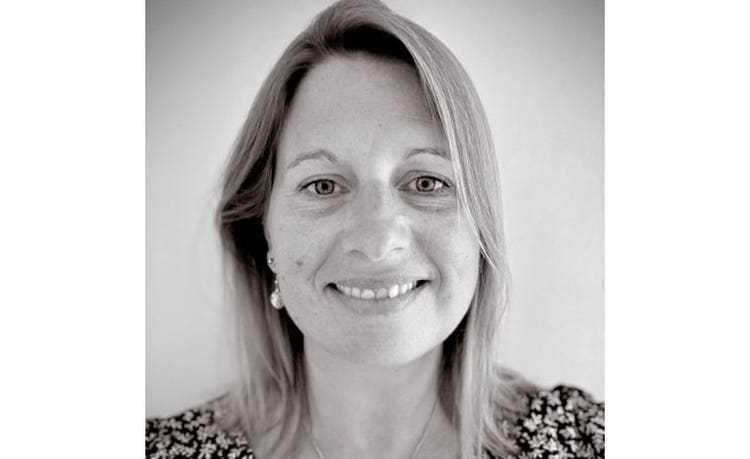
Rebecca Reynolds Jones
Part of the IT Leaders 100 - a list of the most influential IT leaders in the UK in 2026.
I'm a senior technology leader with a strong focus on business transformation and organisational impact. As Head of Technology, I work at the intersection of people, processes and platforms to enable better decision-making, operational excellence and sustainable growth.
I'm known for an empathetic but decisive leadership style, with a strong emphasis on strengthening data driven insight, cyber security, responsible use of emerging technologies and inclusive ways of working.
I'm passionate about enabling change that delivers meaningful outcomes for customers, colleagues and the wider organisation.
What's the most exciting part of your current role?
The most exciting part of my role is the difference technology can genuinely make to the organisation's impact and performance when it's applied with purpose.
At its best, technology enables us to maximise engagement and revenue through meaningful data insights, while connecting the critical triangle of people, processes and technology. That connection is where real value is created — not in systems alone, but in how they empower better decisions and better outcomes.
I'm a passionate people person, and I firmly believe that successful technology leadership is built on trust and collaboration. No transformation delivers results unless colleagues are engaged, supported and brought on the journey. I'm fortunate to work with a dedicated workforce who care deeply about what we're trying to achieve, and that shared commitment is what makes progress possible.
Being able to combine strategic technology leadership with a strong, people centred culture is what continually motivates me and makes this role so rewarding.
What do you do in week one of a new project to avoid pain in month six?
In week one of any new project, my focus is on doing the foundational work that prevents avoidable pain later on. That starts with assembling the right people. Everyone brings different strengths, and getting the right blend of skills, experience and perspectives at the outset is essential to setting the project up for success.
We then agree our delivery approach early, defining clear objectives, key milestones and an engagement strategy that keeps stakeholders aligned and informed. Diverse perspectives at this stage help surface assumptions, challenge thinking and improve the quality of planning.
Key risks and success factors are identified from the outset and actively managed throughout delivery, rather than treated as a one-off exercise. This helps reduce the likelihood of misalignment, scope drift or avoidable rework later in the lifecycle.
Finally, we take time to reflect on lessons learned from similar initiatives — being honest about what worked well and what should be avoided. Investing time in this early thinking really pays off by month six, when momentum and trust really matter.
What’s the part of your estate you most want to simplify in 2026?
In 2026, the part of our estate I most want to simplify is the operational backbone that underpins how our services are delivered and experienced by customers and colleagues. As organisations grow and evolve, complexity naturally builds across applications, integrations and operational tooling. While this supports innovation, it can also introduce friction into day-to-day operations and slow down decision-making.
My focus is on simplifying this landscape so services can be run more consistently, issues can be resolved more quickly, and change can be delivered with greater confidence. This simplification is directly linked to customer and colleague outcomes. Clearer system ownership, more coherent operational insight and information, and fewer handoffs between teams all contribute to more reliable services and a more consistent end-to-end experience.
Ultimately, this isn't about doing less. It's about creating a more resilient, understandable and customer centred technology foundation that allows teams to focus their energy on delivering value rather than managing complexity.
Excluding smartphones, what piece of technology could you not live without and why?
At a time when most leaders are time pressured, the challenge is often how to work smarter rather than harder. My generative AI assistant helps remove some of the friction from day-to-day work — drafting, summarising, and structuring information — allowing me to focus my cognitive energy on judgement, priorities and decision-making rather than mechanics.
Used responsibly, it acts as an accelerator, not a crutch. It supports my creativity and thinking at pace while still leaving space for reflection and challenge. Human oversight, critical thinking and accountability remain essential — the responsibility for the outcome always sits with the individual, not the tool.
This approach aligns with the Institute of Directors' 12 principles for responsible AI adoption, particularly around governance, transparency and maintaining trust. When applied well, a generative AI assistant becomes a practical enabler, helping teams and leaders make better use of time while delivering better outcomes for customers.
What excites you most about the future of IT?
What excites me most about the future of technology is how much more closely it is becoming embedded in organisational capability — not as a separate function, but as part of how people make decisions, deliver services and create value every day.
We're moving away from technology sitting in the background, towards it being something colleagues actively engage with and use with confidence.
That only works when it's underpinned by strong cyber security, clear governance and a shared understanding of risk, alongside tools that are intuitive and genuinely helpful rather than complex for complexity's sake.
As technology continues to mature, so does the leadership challenge. The focus shifts to building resilient foundations, simplifying where possible, and investing in people — developing the skills, confidence and judgement needed to use technology well.
Responsible use of emerging capabilities, including AI, should enhance how people work, not distract from accountability or decision-making. I'm excited by a future where people, processes and technology work together seamlessly — enabling organisations to operate with greater clarity, adaptability and trust, while delivering meaningful outcomes for customers and communities.
What talent are you quietly proud of that would never show up on LinkedIn?
This is always a tough question to answer, as I'm not someone who naturally overexpresses my talents. In this instance, however, it's my ability to lead with empathy while still holding firm on direction and standards. I'm naturally people oriented, which means I place a high value on fairness, trust and understanding different perspectives.
That doesn't mean avoiding difficult conversations. In practice, it often means being prepared to be clear and firm - particularly when ensuring the technology agenda is consistently represented in strategic decision-making, and that the people delivering it are properly supported to succeed.
I also have ADHD characteristics, which enable me to think quickly, connect ideas under pressure and remain effective in high stakes or ambiguous situations. Combined with my sporting background, this has shaped a collaborative but competitive mindset: staying calm, thinking critically and keeping the success of the organisation at the centre of my efforts.
What’s your most-used keyboard shortcut or command that you wish everyone knew?
Ctrl-K to enter a URL - game changer!