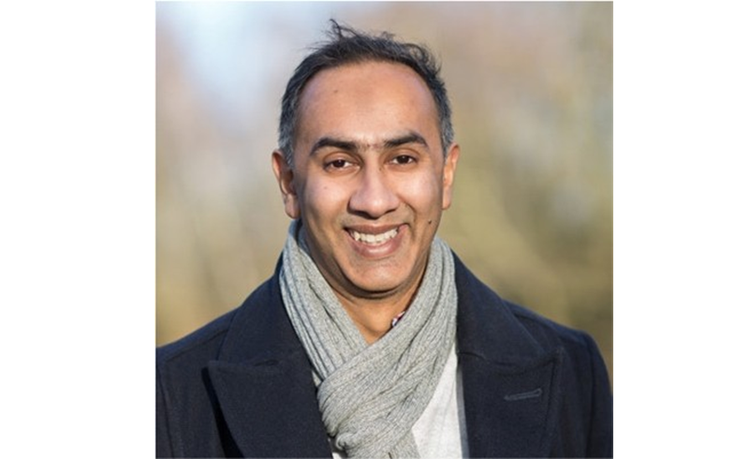
Rana Bhattacharya
Part of the IT Leaders 100 - a list of the most influential IT leaders in the UK in 2026.
Recognised by Computing as a top 100 IT leader and in the CIO 100 list in 2025, Rana has over 20 years of experience in leading digital and IT transformation within the financial and professional services sector.
Currently the Chief Digital and Information Officer at Cynergy Bank, Rana has held senior technology leadership roles at Atom Bank, Tesco Bank, Nationwide Building Society and Accenture.
Rana is the deputy chair for the Employer Board at TechSkills.org where he chairs the software engineering accreditation group, supporting the growth of technology skills in the UK. He is also a co-opted member of the Board Audit and Risk committee at Brunel University.
What's the most exciting part of your current role?
Leading the Bank's digital transformation means realising our vision of being a human digital bank. I am leveraging technology to amplify the relationship between our customers and colleagues, moving beyond mere automation to create a unique blend of personalised service and innovation.
This journey is delivering a flexible IT architecture that enables us to deploy differentiating customer-facing changes at pace and unlock new revenue streams. By utilising AI, we are simultaneously enhancing colleague productivity and the customer experience, all while underpinning strategic growth and operational resilience.
Crucially, this isn't just a technical shift; it's a total evolution of our culture and operating model. We've forged innovative partnerships and supported our colleagues in embracing roles augmented by AI. This allows technology to handle the everyday tasks, freeing our people to focus entirely on value-creation activities.
In essence, the role has offered me the opportunity to be at the forefront of digital innovation in the banking sector within an ambitious and fast-paced organisation, with a focus on creating a unique blend of technology and personalised service to our customers whilst enabling internal efficiency and growth for the Bank.
What do you do in week one of a new project to avoid pain in month six?
I would establish project foundations in the first week to combat pain in month six where original goals often fade. By focusing on four key pillars, we can maintain momentum and clarity throughout the delivery journey.
- Scope Definition: Defining high-level outcomes and principles early baselines the project. This prevents scope creep, protects timelines, and ensures the team avoids the unplanned work that frequently inflates costs.
- Stakeholder Mapping: I identify every relevant stakeholder immediately to avoid the silent stakeholder trap—those with veto power who emerge late in the game. Gathering requirements from everyone who matters, not just the most vocal, prevents late-stage derailment.
- Incremental Milestones: Establishing planning principles centred on incremental wins allows the project to consolidate progress. This builds stakeholder confidence and eliminates the late surprises that plague mid to long-term project.
- Governance Model: Clear governance establishes decision-making hierarchies, risk management and escalation paths before emotions run high. When a crisis hits, time is saved by knowing exactly who authorises budget or scope changes, ensuring efficiency rather than debate.
What’s the part of your estate you most want to simplify in 2026?
This year, the most critical part of the bank's estate I am looking to simplify is our reliance on terrestrial data centres. I'll be looking to move away from physical infrastructure to Google Cloud Platform (GCP), which isn't just a technical upgrade; it is a fundamental shift towards a more resilient and agile bank.
By moving to the public cloud, we eliminate the rigid constraints of hardware procurement and physical maintenance, which addresses capacity and failure issues, which is obtained through leveraging GCP's global, scalable and resilient infrastructure - something terrestrial datacentres simply cannot match. This allows for colleagues with my team to focus more on value added activities rather than spending effort on maintaining elements of the infrastructure.
To unlock this resilience, we will also modernise several applications as "Lifting and shifting" isn't enough. By adopting services such as cloud-native databases, we replace fragile, legacy systems with high-availability architectures that provide a seamless, always-on experience for customers and colleagues.
Excluding smartphones, what piece of technology could you not live without and why?
AI assistants have shifted from a luxury to an absolute necessity; I simply can't imagine going back. In my professional life, they serve as my personal analyst, filtering unmanageable volumes of data. By summarising papers, flagging production anomalies in real-time, and drafting board reports, AI bridges the gap between high-level strategy and technical execution.
This cognitive heavy lifting frees me to focus on high-value work: enhancing digital customer journeys, building IT resilience, and driving business growth. The benefits extend equally to my personal life. The cognitive offloading AI provides is my survival mechanism for a high-pressure role. It's more than a calendar; it's a tool for fast-tracking life, from remembering personal commitments to building complex holiday itineraries.
Ultimately, this technology has fundamentally scaled my productivity. Having experienced this level of efficiency and clarity, I am fully committed, and couldn't go back to a world where it is not available - AI is now an integral part of how I navigate the world.
What excites you most about the future of IT?
We're living in a period of unparalleled innovation that is being brought to the hands of businesses and everyday people at a faster pace than ever seen before, which is dramatically changing our everyday lives.
I believe the combination of artificial intelligence and quantum computing will revolutionise how we work and live - enabling us to solve complex problems that can help transform our society and break through known barriers. Whilst being a force for good, I am sure there will be malicious uses of this technology as well as potential negative impacts at a socioeconomic level, which in turn will require the industry as a whole, consumers and governments to come together to manage these concerns.
What talent are you quietly proud of that would never show up on LinkedIn?
In my younger years, I mastered a legendary party trick which won me many a bet: extracting a cork from inside an empty wine bottle using nothing but a simple cloth napkin. By feeding the fabric into the neck, shaking the cork into position, I could pull the trapped cork out.
This was certainly a memorable talent for others to observe and remember me for and remains for me an ultimate ice breaker and can still demonstrate this on request.
What’s your most-used keyboard shortcut or command that you wish everyone knew?
The $Win + Shift + S$ shortcut is for me a power tool I use on Windows. Instead of needing multiple tools and going through multiple actions, this command instantly freezes your screen and opens the Snipping Tool overlay, allowing me to capture what I need in seconds. This allows me to perform high end screen grabs:
- Dynamic sizing: I'm not locked into capturing the whole screen. You can choose between a rectangular, free-form, window, or full-screen snip, which means less editing after the capture.
- Text Manipulation: I can highlight text, crop images, or use the Text Actions feature to copy text directly out of the image or redact sensitive info.
- Usability: This command eliminates the having to save dozens of screen grab files to your desktop, keeping your workspace clean while ensuring your communication is visual and clear given the integration of this tool with the clipboard and its history.