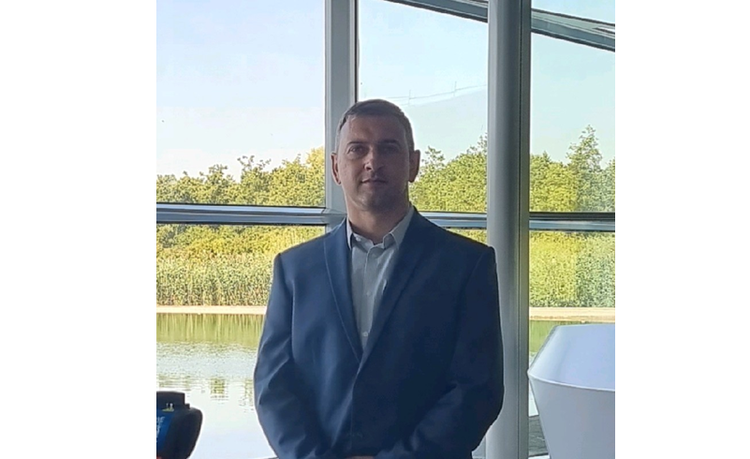
Paul Smith
Part of the IT Leaders 100 - a list of the most influential IT leaders in the UK in 2026.
Paul Smith is the Chief Information Officer at Amnesty International, leading global technology, cybersecurity, and digital transformation for the world's largest and most influential human rights organisations. Recognised in the Global CIO100, World CIO200 and UK CIO100, he is known for ethical, people first leadership shaped by experience across defence, automotive, humanitarian operations, and global nonprofits.
Paul champions responsible AI, digital sovereignty, and cyber resilience, and actively supports the industry as a BCS Foundation Trustee, Global CIO Forum Ambassador, advisor, mentor, and regular speaker. His work focuses on building inclusive pathways into technology and driving mission led impact at global scale.
What's the most exciting part of your current role?
The most exciting part of being Amnesty International's Global CIO is knowing that every piece of technology we deliver directly strengthens the fight for human rights. I get to work at the intersection of innovation and impact—turning complex digital challenges into tools that help activists, investigators, and campaigners protect people at risk around the world.
What energises me most is seeing technology open doors: enabling secure communication for those in dangerous environments, giving researchers the data they need to expose abuses, and building digital platforms that amplify the voices of people who are too often silenced.
It's a rare privilege to lead a global technology function where the mission isn't efficiency or profit - it's justice, dignity, and freedom. Every day brings a new challenge, a new ethical question, and a new opportunity to make our digital foundations stronger, safer (from nation-state actors with unlimited resources), more equitable and more inclusive. That sense of purpose is unmatched
What do you do in week one of a new project to avoid pain in month six?
In week one, I focus on creating the foundations that prevent the painful surprises that usually surface in month six.
First, I align everyone (especially the business sponsor) on the problem we're actually solving and for who - a shared, written definition of scope, success - definitions of 'good' and 'done'.
Then I map stakeholders and clarify who decides what; unresolved governance and decision ambiguity is the source of most later friction. I also insist on a lightweight architecture and data review up front so we understand constraints, dependencies, and risks before we start building momentum in the wrong direction. Alongside that, I set clear rhythms - standups, steering forums, and decision logs - so communication doesn't degrade as complexity grows.
Finally, I get the team to surface early warning signs: what could derail us, what assumptions we're making, allocation of resources, and what we need to validate in the next 30 days. Week one is all about clarity, alignment, and structural foundations (brilliant basics) so month six isn't about firefighting.
What’s the part of your estate you most want to simplify in 2026?
In 2026, the part of my estate I most want to simplify is our fragmented integration and operational automation layer - the messy web of point-to-point connections, legacy plugins, and bespoke scripts that quietly consume time, create fragility, and make every new project harder than it needs to be. It's not glamorous, but it's the foundation that determines how fast we can innovate.
When integrations and operational automations are inconsistent, undocumented, or dependent on one or two people, the entire organisation feels it in slow delivery, hidden costs, and operational risk.
My goal is to streamline this into a cleaner, standards-based ecosystem: fewer moving parts, clearer patterns, stronger governance, and reusable components that teams can trust. By reducing complexity at the core, we free ourselves to focus on higher value work - like focus on data insights, sovereignty, reducing our dependence on US 'Big Tech', and mission critical tooling, rather than wrestling with brittle plumbing. Simplifying this layer will make Amnesty faster, safer, and more resilient.
Excluding smartphones, what piece of technology could you not live without and why?
Excluding smartphones, the piece of technology I couldn't live without is my laptop. It's the centre of gravity for almost everything I do: shaping strategy, analysing problems, making decisions, collaborating with teams across time zones, and keeping complex programmes moving. It's the one device that lets me think, build, write, design, decide, and communicate - often all within the same hour.
More importantly, it's the place where ideas actually become real for me. Whether I'm drafting a vision, reviewing architecture, or troubleshooting something urgent, my laptop is the environment where clarity happens. It gives me the flexibility to work anywhere, such as on a train, in a crisis, or in a quiet moment before a board meeting - without being constrained by small screens or limited functionality.
For a CIO, it's less a piece of hardware and more an essential workspace. Without it, my ability to lead, plan, and support the organisation would slow to a crawl.
What excites you most about the future of IT?
What excites me most about the future of IT is the way emerging technology is reshaping what's possible for human rights work. We're entering a decade where secure, privacy preserving tools will allow people at risk to document abuses safely, communicate without fear, and organise in ways that were unimaginable before.
I'm energised by the shift toward digital sovereignty - open standards, decentralised architectures, and transparent AI systems that give organisations like Amnesty far more control over our data, our risk, and our independence. The more we can move away from opaque, monolithic platforms, the more resilient we become.
And of course, responsible AI offers extraordinary potential: accelerating research, analysing evidence at scale, and freeing teams to focus on the human, creative, strategic work that truly drives impact. When used ethically, it becomes an amplifier for justice; not a replacement for people, but a multiplier of their capability.
The future of IT isn't just faster systems or smarter tools - it's the opportunity to give people power, protection, and voice and to holistically re-wire organisations. That's what makes it exciting.
What talent are you quietly proud of that would never show up on LinkedIn?
A talent I'm quietly proud of, one that would never show up on LinkedIn, is my ability to stay completely calm in chaotic situations.
When everything around me is noisy, emotional, or urgent, I'm somehow able to slow the moment down, strip the problem back to its essentials, and make a clear decision without the drama. It's not something you can list as a skill or certification, but it's invaluable because it helps teams feel steady, keeps conversations constructive, and turns crises into solvable puzzles rather than spirals.
It's a quiet talent, but one I'm genuinely proud of and that comes in quite handy at a global organisation like Amnesty!
What’s your most-used keyboard shortcut or command that you wish everyone knew?
'Control'+Z = Undo previous action! This is invaluable on web pages or in apps where the 'undo' options (for example and accidental delete) is not obvious. It's saved my sanity on so many occasions!