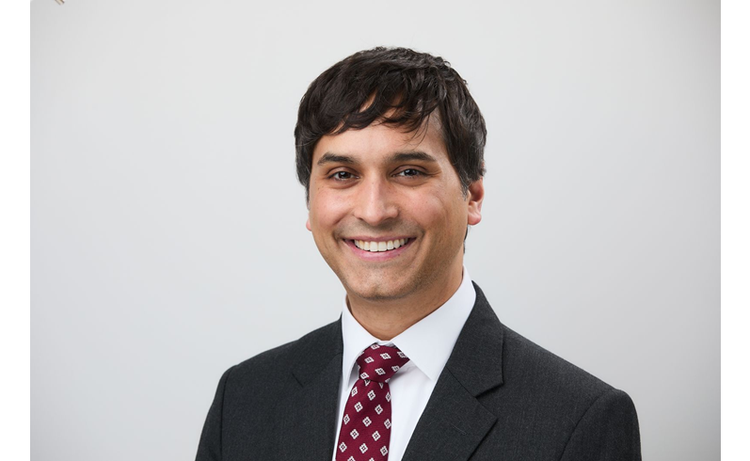
Patrick Rickles
Part of the IT Leaders 100 - a list of the most influential IT leaders in the UK in 2026.
Patrick Rickles is a senior digital and data leader with over 20 years' experience spanning public sector, academia and industry. He specialises in digital transformation, data strategy, geospatial systems and responsible innovation, helping organisations turn complex technology into practical impact.
Patrick currently leads digital innovation at the North Sea Transition Authority and plays national leadership roles as Director for Education and Skills at the Association for Geographic Information and Deputy Head of Digital Strategy for the Government Geography Profession.
What's the most exciting part of your current role?
The most exciting aspect of my role is the opportunity to shape how a complex, mission-critical public organisation uses digital, data and emerging technologies to deliver real-world impact at pace.
NSTA sits at the intersection of energy security, economic value and the UK's transition to Net Zero. My role allows me to translate that strategic context into practical digital change, embedding modern ways of working across corporate and operational services. What excites me most is enabling people to confidently adopt technology and use it well.
I lead initiatives that balance innovation with governance, ensuring we can experiment safely while protecting sensitive data and maintaining public trust. I have built foundations that allow innovation to happen sustainably: a secure sandbox for rapid prototyping, clear governance for Power Platform and AI, and organisation-wide engagement through digital awareness and ambassador programmes.
This means digital change is no longer something "done to" teams, but something they actively participate in and shape. The role is also exciting because it is constantly evolving. From improving Finance and HR systems to exploring AI and advanced analytics, I am trusted to operate at both strategic and delivery levels, which makes the role genuinely energising.
What do you do in week one of a new project to avoid pain in month six?
In week one of a new project, my priority is to remove ambiguity and surface risk early, because unresolved uncertainty is what causes pain later.
I start by spending time with the people closest to the work to understand the real problem we are trying to solve, not just the stated requirements. I look for misalignment between strategy, expectations and capability, and I am deliberate about naming trade-offs early. If something cannot be delivered within time, budget or risk constraints, I make that visible immediately rather than allowing optimism to mask it.
I also focus on ownership and decision-making. I ensure there is clarity on who owns outcomes, who makes decisions, and how escalation will work. Many projects fail not because of technology, but because accountability is diffuse.
From a delivery perspective, I agree standards up front: data quality expectations, security constraints, ways of working, and how success will be measured. I insist on early proof points, even small ones, to validate assumptions before momentum builds in the wrong direction.
Finally, I invest early in relationships. Trust built in week one makes difficult conversations possible in month six. Without that trust, even well-designed projects struggle to recover when reality intervenes.
What’s the part of your estate you most want to simplify in 2026?
In 2026 I most want to simplify how people access, use and trust digital capability across the organisation.
Over time, complexity tends to creep in not through technology choices alone, but through fragmented ownership, inconsistent adoption and uneven confidence. My focus is therefore on simplifying the experience for users while strengthening the foundations underneath.
That means maturing our Power Platform estate so automation, low-code solutions and analytics are used consistently, securely and in ways that genuinely reduce manual effort rather than create hidden technical debt. It also means strengthening the human networks that make technology stick. Our Digital Ambassadors and Sandbox programmes are key to this, creating clear routes for experimentation, feedback and shared learning, rather than one-off solutions.
From an operational perspective, simplifying our device estate, including a planned iPhone refresh, is about improving security, resilience and user experience at the same time. Standardisation here reduces risk and support overhead while enabling more modern ways of working.
Finally, I want to simplify how we measure impact. Improving web accessibility and analytics ensures we can clearly see who our services work for, where they don't, and how we continuously improve. Simplification, for me, is about clarity, confidence and sustained value.
Excluding smartphones, what piece of technology could you not live without and why?
For me, it would be my laptop as a secure, flexible gateway to thinking, creating and connecting — rather than a single piece of software or device in isolation.
My work sits at the intersection of strategy, data, people and delivery. I need a tool that lets me move seamlessly between deep technical work, writing and sense-making, collaboration, and leadership. My laptop is where I design strategies, analyse data, prototype ideas, review code, write policies, and turn complex thinking into something others can act on. It's also how I stay connected to teams, partners and communities across government, academia and industry.
What matters most is not the hardware itself, but what it enables: the ability to iterate quickly, test ideas safely, and move between big-picture thinking and detailed execution in the same day. Whether I'm shaping a digital roadmap, exploring data in Python or Power BI, preparing a board paper, or mentoring a colleague, it's the one constant that supports all of that work.
As a digital leader, I value technology that amplifies human capability rather than distracts from it. My laptop does exactly that — it's the platform through which curiosity, clarity and impact come together.
What excites you most about the future of IT?
What excites me most about the future of IT is the shift from technology being something organisations use to something they think with.
We're moving into an era where data platforms, AI and automation can genuinely augment human judgement, not just speed up existing processes. When IT is done well, it reduces cognitive load, surfaces insight at the right moment, and frees people to focus on complex, creative and ethical decisions. That's a profound change from IT as a back-office function to IT as a strategic partner in how organisations operate.
I'm particularly excited by responsible, well-governed AI. When underpinned by strong data foundations, transparency and human-in-the-loop design, AI can unlock value across policy, operations and research without eroding trust. I see this already in sandboxed experimentation, low-code platforms and analytics environments where people can safely test ideas and learn quickly.
What energises me most is the cultural shift this enables. IT has the opportunity to build confidence, curiosity and agency across organisations — helping people who don't see themselves as "technical" still shape and benefit from digital change. The future of IT isn't just smarter systems; it's more capable, empowered organisations using technology thoughtfully and responsibly.
What talent are you quietly proud of that would never show up on LinkedIn?
One talent I'm quietly proud of is my ability to sit with ambiguity and make people feel safe while we work things out together.
It doesn't show up on LinkedIn because it's not a certification or a delivery milestone, but it's something I use every day. Whether it's a team nervous about new technology, a senior leader unsure about risk, or a stakeholder who feels left behind by change, I'm good at creating calm, constructive spaces where people can ask "naïve" questions, challenge ideas, and admit uncertainty without feeling exposed.
That ability has helped me bridge gaps between technical and non-technical colleagues, academia and government, policy and delivery. It's why I'm often trusted with difficult transformations, early-stage innovation, or programmes that have lost confidence. I listen carefully, reflect what I'm hearing, and help people move from anxiety or resistance to clarity and ownership.
It's not flashy, and it rarely gets written down, but it's foundational to how I lead. Without psychological safety, you don't get good data, good decisions or good digital outcomes — and that's something I care deeply about.
What’s your most-used keyboard shortcut or command that you wish everyone knew?
My most-used "shortcut superpower" is actually a small set of Microsoft Word functions that make writing faster, cleaner and far less frustrating.
I use Ctrl + Shift + > / < constantly to quickly increase or decrease font size without breaking flow and Shift + F3 is invaluable for instantly fixing capitalisation — sentence case, ALL CAPS, or lowercase — without rewriting anything. They sound minor, but as I write a lot of strategy and policy papers as well as award submissions, those seconds add up and help keep my thinking moving.
The one I really wish everyone knew, though, is Show All (¶). It's not technically a shortcut, but it's a lifesaver. When formatting goes wrong, nine times out of ten it's because of a hidden paragraph marker, rogue line break or inherited style you can't see. Turning Show All on makes the invisible visible and saves huge amounts of time and frustration.
For me, these aren't just productivity hacks. They're about reducing friction between thinking and writing, so ideas come through clearly without fighting the tool.