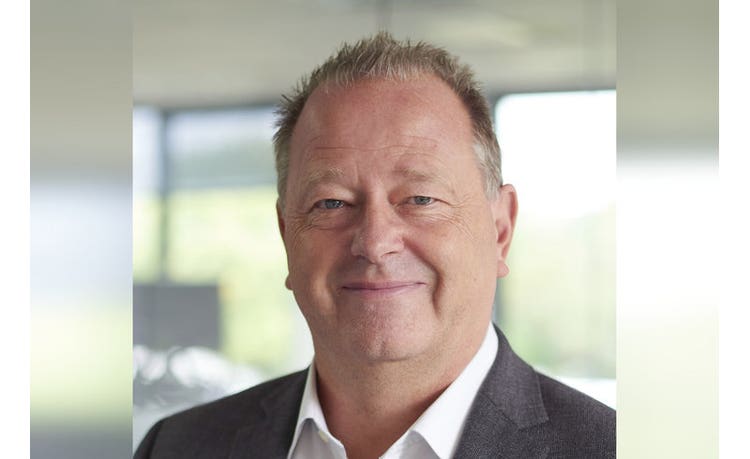
Mike Downing
Part of the IT Leaders 100 - a list of the most influential IT leaders in the UK in 2026.
Mike Downing is CIO at WPA Health Insurance and a senior technology leader with a track record of delivering innovative solutions across financial services. He combines executive leadership with hands-on technical depth, building AI systems in Databricks and Python rather than just directing them.
A regular conference speaker and advisor, he focuses on the practical application of AI to real business problems.
What's the most exciting part of your current role?
Technology is at a pivotal moment. It's the foundation for most organisations, and with the recent acceleration in AI, businesses are well placed to rethink not just how they operate, but what they're capable of.
The most exciting part of my role is sitting right at that intersection: close enough to the technology to genuinely understand what's possible, and close enough to the business to shape where it goes.
What makes it meaningful is that in health insurance, the work touches people at some of the most vulnerable moments of their lives, when they're unwell, worried, or supporting someone they love. The opportunity isn't just efficiency; it's building services that feel more human and genuinely useful when it matters most.
Getting to build that future hands-on, with a talented team who care about the same things, is what makes the role energising.
What do you do in week one of a new project to avoid pain in month six?
Assumptions are the silent assassin of any project, change or initiative. In week one, I get everyone in a room and surface them openly, every stakeholder, every assumption, no exceptions. The ones that sound obvious are usually the most dangerous, because they're the ones nobody thought to question.
Pressure-test each against reality, discard what doesn't hold up, and turn what's left into an explicit agreement the team commits to in writing. That document becomes the reference point when things drift, and they always do.
New issues will inevitably emerge by month six, scope shifts, dependencies change, people move on, but a team that started with this kind of honesty has the trust to flex and respond when they do.
The early discipline pays for itself many times over once the pressure arrives.
What’s the part of your estate you most want to simplify in 2026?
Honestly? The self-built platform that sits at the heart of our operation.
Every CIO with a home-grown system knows the feeling: the platform that got you here is also the one quietly slowing you down. Layers of old and new code, each of which made sense at the time, now combine to make change harder than it should be.
In 2026, I want to use AI to help us genuinely understand what we have: mapping dependencies, surfacing impact analysis, and supporting the day-to-day maintenance that quietly consumes so much engineering time.
The goal isn't to rip and replace, it's to make the platform legible again, so the team can move with confidence rather than caution, and so the next decade of change costs us a fraction of what the last one did.
Excluding smartphones, what piece of technology could you not live without and why?
Excluding my smartphone, it would be my Garmin. It's quietly one of the most powerful pieces of technology I own: GPS, heart rate, sleep, recovery, training load, navigation, all in something I barely think about wearing.
What I like is that it gives me data I actually act on rather than notifications that interrupt me. Over time you start to spot patterns, how a poor night's sleep shows up in the next day's recovery score, how training load creeps up before you feel it, when you genuinely need a rest day rather than just want one. It's a small reminder that the best technology often works in the background, helping you understand yourself a bit better without ever asking for your attention. That feels increasingly rare, and increasingly valuable.
What excites you most about the future of IT?
AI is coming of age, but not as a technology in its own right, it's becoming integral to how we solve business problems, support customers, and deliver outcomes. As it becomes more accessible, entire operating models will change, not just the tools teams use, but the shape of the work itself, the skills that matter, and where human judgement adds the most value.
What excites me most is that this isn't a future reserved for the largest organisations with the deepest pockets. The barrier to meaningful adoption is falling fast, which means the businesses that will thrive are the ones that move thoughtfully and deliberately rather than the ones that simply move first.
That shift, from technology as enabler to technology as a genuine partner in the work, is the most interesting transition I've seen in my career.
What talent are you quietly proud of that would never show up on LinkedIn?
Patience is something I've come to value as one of my most useful qualities as a leader: not passivity, but a quiet discipline. I try to know what I'm waiting for and why.
Rather than push people to conclusions, I give them space to discover the answer themselves, it lasts longer that way and the ownership sits in the right place.
I hold a long-term view when short-term noise gets loud, and trust that the right moment to act usually announces itself if you're listening for it. When pressure rises, patience helps me stay clear-headed and make calls that hold up over time.
It's not the kind of skill anyone lists on a CV, but it's probably done more for the teams I've led than anything else I bring.
What’s your most-used keyboard shortcut or command that you wish everyone knew?
The one I rely on most often is the rescue shortcut: Ctrl (or Cmd) + Shift + T to reopen the tab you just accidentally closed. I do it more than I'd like to admit: you find a useful page, get distracted, close the wrong window, and that small panic sets in. This one keystroke brings it straight back, and it works through several closures if you keep pressing it.
It's saved me more times than I can count, and I'm always slightly surprised by how many people don't know it exists.