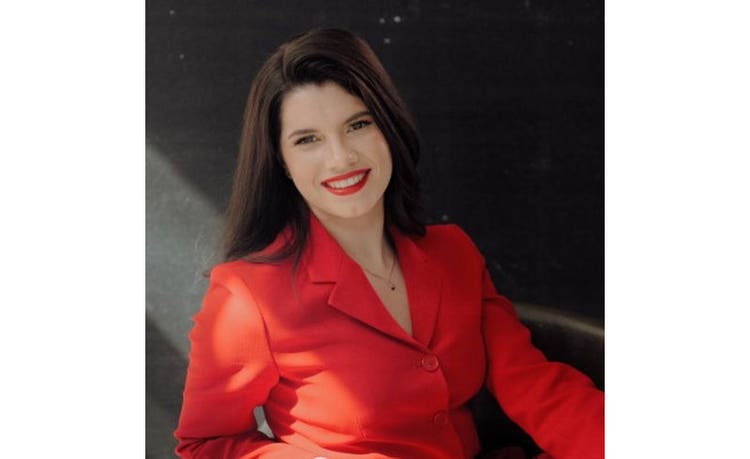
Maryna Rybalko
Part of the IT Leaders 100 - a list of the most influential IT leaders in the UK in 2026.
Maryna Rybalko is a Product and Technology Leader building products for Tier 1 banks, global retailers, and global platforms.
With 4+ years of experience leading teams of 70+ people across multiple continents, Maryna has built expertise in driving high-performance teams and navigating diverse cultures. She has published thought leadership on software development, reaching 175K–4M monthly readers, and spoken at global events including Marketplace Risk Summit, API Conference, and PlatformCon.
Maryna was recognised as Team Leader of the Year – Finance at the Women in Tech Excellence Awards 2025 for driving innovation in fintech. She is also a mentor, having supported 100+ individuals globally, particularly women transitioning into tech from non-traditional backgrounds.
What's the most exciting part of your current role?
The opportunity to solve meaningful problems at a truly global scale.
Every day, I work on products that support the financial lives of hundreds of millions of people around the world. When someone sends money to family abroad, opens a bank account from their phone, or safely pays online, there is an enormous amount of technology and trust behind that experience. I find it inspiring to help build the invisible infrastructure that makes modern financial life possible.
What makes this work especially meaningful is its impact on financial inclusion. In many developing countries, access to traditional banking has historically been limited. Digital banking and modern payment infrastructure can help change that by giving people access to financial services and multiple ways to pay using local payment methods.
Fintech is one of the most complex industries in the world, sitting at the intersection of technology, regulation, security, and human behaviour. The challenge is not only building systems that scale globally, but building systems reliable enough for people to trust with something deeply personal: their money.
For me, technology is most powerful when it creates opportunity.
What do you do in week one of a new project to avoid pain in month six?
Document the decisions that matter. It sounds simple, almost boring, but I've learned the hard way that great documentation is often the difference between a smooth launch and chaos.
I've led complex projects for Tier 1 banks and enterprise retailers generating billions in revenue; projects lasting six months or more, involving 30+ people across engineering, product, compliance, operations, and commercial teams. At the beginning, everyone is aligned, conversations are fresh, and decisions feel obvious. The temptation is always the same: "Let's focus on building first, we'll document later." But six months later, nobody remembers why a decision was made, whether a behaviour is a bug or feature, who approved a trade-off, or what assumptions the team originally aligned on. That's when projects become painful.
So now, I treat documentation as a strategic tool, not an administrative task. I document key decisions, reasoning, ownership, risks, and release requirements from day one. It creates clarity, accountability, and a shared memory for the team.
Especially in fintech and banking, where the cost of mistakes is incredibly high, good documentation is not bureaucracy. It's risk management at scale.
What’s the part of your estate you most want to simplify in 2026?
As a technology enthusiast with a software engineering background, I'm naturally excited by how modern technology can solve real business problems. I work in fintech with Tier 1 banks, where projects are highly complex and involve many stakeholders.
One of the biggest challenges I've seen is not the technology itself, but misalignment. You can spend months building a product, only to hear at the end that it doesn't meet compliance expectations, customer needs, or the intended user experience. At that point, a significant amount of time, cost, and effort has already been invested.
This is the area I most want to simplify in 2026: how we validate and align on product outcomes much earlier in the lifecycle. I see a major opportunity in the adoption of AI-powered prototyping and simulation tools as part of the standard product process.
Instead of waiting months for feedback, teams can use AI to rapidly prototype, test, and demonstrate product behaviour in a realistic way within days. This enables earlier conversations with customers, compliance, and internal stakeholders, helping surface risks and misunderstandings much sooner.
For me, this is a fundamental shift in how we build products, moving from "build first" to continuous, AI-enabled alignment.
Excluding smartphones, what piece of technology could you not live without and why?
If I exclude smartphones, the piece of technology I rely on most is video calling. I'm originally from Ukraine, and before the war my family lived very close to me. We would regularly meet for dinner, celebrate birthdays together, and spend a lot of time as a family in person. That was simply our everyday life.
When the war started, everything changed. We were forced to move to different countries, and since then I haven't been able to see my parents in person. That distance has been one of the most significant personal changes in my life.
What has been remarkable, however, is how technology has transformed what "connection" means. Through video calling, I can still see and speak to my parents every week, stay involved in their lives, and be present in meaningful moments despite being physically apart. It also allows me to understand when they need support and respond immediately, no matter the distance.
For me, this technology is far more than a communication tool. It's a powerful enabler of human connection. It turns distance into presence and ensures that relationships can continue to grow, even across borders.
What excites you most about the future of IT?
I genuinely believe that talent and leadership have no borders and should not be defined by age, gender, nationality, or education. For me, leadership is about the ability to inspire others and help them succeed. It's not about you, it's about the people you work with, the users who benefit from the products you build, and the teammates who grow their skills and careers along the way.
What excites me is that we are gradually removing outdated assumptions and stereotypes, and creating space for more diverse and unconventional journeys in technology.
Even in my own experience, I became a leader at 23, managing people who were more experienced than me, and by 25 I was leading multiple teams and shaping platform vision and strategy. At times, I was the only female engineering manager in the room, and some might have seen me as too young or not traditional enough for the role.
But I've learned that there is no single path to leadership. My journey is not typical, but that is exactly what makes the future of IT exciting. It is becoming a place where unique backgrounds, perspectives, and experiences are not just accepted, but valued.
What talent are you quietly proud of that would never show up on LinkedIn?
I'm quietly very proud of being an excellent baker, even though it would never show up on LinkedIn. Not many people know this, but I love healthy eating, low-fat, high-protein food, and I enjoy experimenting with recipes to make them both nutritious and genuinely enjoyable.
Over time, I've created my own healthier versions of traditional Ukrainian desserts like syrnyky and Easter cottage cheese Paska. I also bake what my friends say is the best lentil bread they've ever tried, although to be fair, my mum would probably say everything I make is the best.
I really enjoy the process of figuring out how to make something both healthy and delicious. It's almost like a small creative lab for me outside of work.
Because of that, I can be useful at organising healthy snacks for gatherings without sugar or unnecessary fats, but still something people actually want to eat, which I consider a small personal victory ;)
What’s your most-used keyboard shortcut or command that you wish everyone knew?
I'm a big fan of private browsing, and I feel more comfortable knowing that my activity isn't being stored in the usual way or influencing my search experience. I use incognito mode in Chrome quite often, especially when I'm researching, exploring ideas, or just switching context quickly.
When I first discovered this shortcut, it genuinely made my life easier. It removed friction from my day-to-day workflow and became one of those small tools that I now use without even thinking.
It's simple, but it creates a sense of control and focus that I really value. I think part of why I like it so much is that it helps me separate different "modes" of thinking. Regular browsing is for ongoing work and memory, while incognito feels more like a clean "page" focused, temporary, and distraction-free.