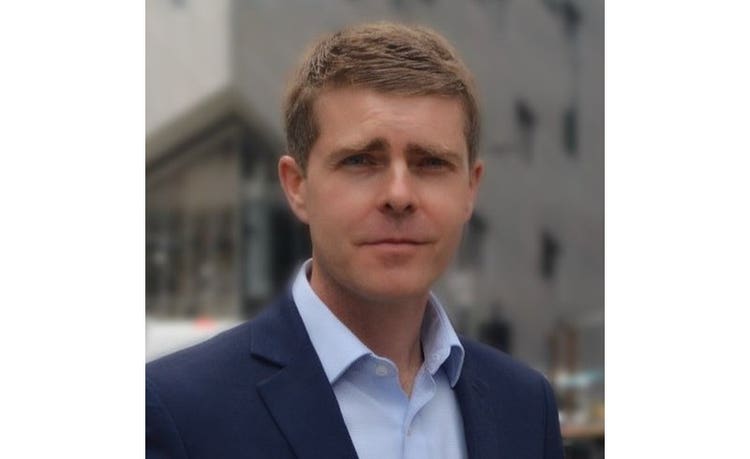
Mark Murray
Part of the IT Leaders 100 - a list of the most influential IT leaders in the UK in 2026.
Mark is the Executive Director of Technology at Frontier Economics, an employee-owned consultancy where evidence-based economic analysis is the product.
In a firm where the people are the value, and where client trust is built on independence and analytical credibility, Mark builds conditions where people can do their best work to ensure they can grow, adapt and remain trusted in an environment where AI is rewriting the rules of what consultancies can, should, and shouldn't do.
Mark’s leadership philosophy starts with people, and he believes that technology strategies should always be grounded in how people think, work and collaborate.
What's the most exciting part of your current role?
That the decisions I make now will shape the future of my organisation and the people's pathways within.
Repositioning technology from a cost centre to a strategic enabler of the firm's growth and competitive position is always a joy. When I joined, technology decisions were largely reactive and fragmented across the business. I initiated and delivered a structured enterprise technology strategy, anchored to the firm's commercial and talent objectives, that brought cloud infrastructure, data governance, AI readiness and security architecture into a coherent, board-visible programme for the first time.
This was achieved through a private to public cloud migration from Germany to Sweden targeting an initial 45% reduction from a £1.2 million overhead p.a, benefiting from sustainability with 100% renewable energy, a 75% reduction of technical debt of 165 servers, and a reduced cybersecurity landscape of attack that enhances the 100% improvement in Microsoft security scores already gained.
We also built £200k around unifying our data and analytics environment onto a single scalable Databricks platform that eliminates fragmented tooling and data quality risk. Benefits are time redirected from elongated reconciling to analysis, accelerated model deployment with full project ecosystems created quickly, and improved FinOps.
What do you do in week one of a new project to avoid pain in month six?
Do we have full change capability to bring everyone along on this journey (people are the biggest hurdle)? Do we have the as-is / to-be position written up in business translatable language to measure success? Are we clear on who is accountable to make sure that scope creep is avoided after sign-off?
All of these are non-negotiable, otherwise we are set up to fail.
What’s the part of your estate you most want to simplify in 2026?
Everything starts and ends with data, and I have instigated the steps needed to mature our information ecosystem with the first ever data maturity benchmark and process understanding assessment built around value creation and meaning.
This has required the coordination and management of 20% of our 500 people across all grades and all 10 UK and European offices to contribute how information is ACTUALLY managed across the firm.
The result is we have a lens on what REALLY is impacting growth and contributing to growth, as well as helping us to prepare towards the inevitable AI orchestration layer of the future. All of this will become ever more critical as agent proliferation takes shape like never before.
Excluding smartphones, what piece of technology could you not live without and why?
My reMarkable. It sounds counterintuitive but the act of handwriting slows down thinking and accelerates me towards a flow state. Strategy, board preparation, complex problem framing and ideation among others all make the cut and help me to better remember key messages.
The fact that it syncs to my Microsoft environment means I don't have to choose between analogue thinking and digital workflow, and it's only a matter of time before I can align this with second brain thinking in the agentic world.
What excites you most about the future of IT?
History tells us that the role of the CIO has morphed from its roots in 1981 to become a player that can operate well within all areas, and has since become an indispensable role within forward thinking businesses, albeit a significantly evolved version.
The CIOs of the future who'll matter most are the ones who can blend governance, data foundations, human capability, and storytelling with a curious mind to absorb that change safely.
The opportunity to lead from the inside is what gets me up early for a role that will always need to operate on the edge of what is possible as we move towards the augmentation of organisational structures that are agent and human in nature.
What talent are you quietly proud of that would never show up on LinkedIn?
I always work to build psychological safety and a place where people can raise concerns, flag problems early, and speak honestly about what is and isn't working.
This includes career pathways, investing in professional development, being explicit about the strategic importance of the team in conversations with firm leadership, introducing Frontier's first ever apprentices; show and tell sessions on how people work in different ways; stand-ups with hidden themes (music, films etc); allowing everyone to chair stand-ups on a cycle; quarterly lean coffee sessions; aligning with fee earners on projects as subject matter experts e.g. Google's acquisition of Wiz (something never done before); and more.
The team is now significantly more gender-balanced and diverse than the one I inherited. Diverse perspectives have improved how we think about problems and build solutions.
The measure I care most about is whether people in my team feel their work matters and that they are growing.
The positive feedback and retainment of individuals is an early indicator of progression. One example being individuals who were re-energised with the apprenticeship model as they remembered how they felt when starting their careers, which shows me they are now starting to learn about the benefits of 'Purpose.'
What’s your most-used keyboard shortcut or command that you wish everyone knew?
I'm always looking for a multiplier, and it has to be Ctrl + Shift + O when in OpenAI's ChatGPT for a new chat to start.