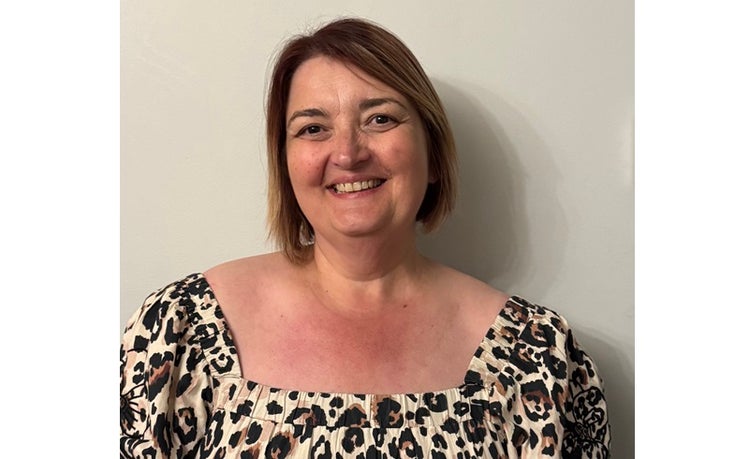
Julie Carson
Part of the IT Leaders 100 - a list of the most influential IT leaders in the UK in 2026.
Julie Carson is Deputy CEO and Director of Education at Woodland Academy Trust, leading digital and organisational transformation across five primary schools.
With over 30 years' experience, Julie specialises in the strategic use of AI, data and system design to improve teaching, learning and operational effectiveness. She has developed a Trust-wide approach to AI-enabled pedagogy, knowledge flow and real-time assessment, alongside a Universal Design for Learning framework supporting inclusive, technology-rich environments.
Julie leads cross-system collaboration and is a recognised voice in responsible AI adoption. She has received national awards for digital innovation and contributes regularly to sector and international forums.
What's the most exciting part of your current role?
Designing how technology reshapes thinking, not just processes, across an entire organisation. Across a multi-school Trust, I work at the intersection of AI, data and professional practice, building systems that enable people to make better decisions in real time. This means moving beyond static tools towards environments where insight is continuous, feedback is immediate and action is informed by live information rather than retrospective analysis.
What I find most compelling is the point at which a system begins to improve itself. When technology, people and processes are aligned, the organisation develops a form of collective intelligence, where learning accelerates across teams rather than remaining isolated within individuals.
Creating the conditions for that to happen, particularly within a complex, highly accountable and resource-constrained sector, is both intellectually demanding and professionally rewarding. It is not simply about deploying technology, but about deliberately redesigning how an organisation learns, adapts and improves at scale, in a way that is sustainable, ethical and genuinely impactful.
What do you do in week one of a new project to avoid pain in month six?
I focus on precision, alignment and constraint. I start by defining the problem with absolute clarity. Many projects drift because they solve something adjacent to the real issue. I spend time understanding where friction genuinely sits, speaking to end users and examining how current systems behave in practice, not just in theory.
I then establish non-negotiables early. These include data integrity, user experience expectations, success measures and how the solution will integrate with existing systems and governance frameworks. Setting these boundaries prevents scope creep, protects quality and avoids difficult compromises later.
Finally, I design for convergence from the outset. I map how the new solution will align with workflows, professional judgement, accountability measures and other technologies already in place. If these elements do not come together, you create parallel processes, increase workload and dilute impact.
This early discipline reduces rework, builds stakeholder confidence and ensures that by month six, the system is coherent, adopted and delivering measurable value.
What’s the part of your estate you most want to simplify in 2026?
The fragmentation between systems that were never designed to operate as a coherent whole. Like many organisations, we have a number of high-performing tools, each effective in isolation but collectively creating complexity for users.
The challenge is not a lack of capability, but a lack of cohesion. Staff are often required to navigate multiple interfaces, duplicate processes and reconcile data across platforms, which introduces inefficiency and increases the risk of inconsistency.
In 2026, the priority is to simplify both the user experience and the underlying data architecture. That means reducing duplication, improving interoperability and ensuring that systems communicate in a structured, meaningful way. It also involves being more intentional about system selection, resisting unnecessary additions and focusing on integration over expansion.
Simplification is not about removing functionality. It is about creating clarity and coherence, so that the right actions are intuitive and friction is minimised. When systems are aligned, people can focus on high-value work rather than managing the technology itself, leading to stronger outcomes and a more sustainable operating model.
Excluding smartphones, what piece of technology could you not live without and why?
A high-performance Mac is the one piece of technology I rely on every day. It is where most of my thinking becomes tangible. Whether I am analysing live data, shaping strategy, designing systems or communicating across the Trust, it provides the stability and capability needed for sustained, high-quality work. It allows me to move between detail and big-picture thinking quickly, which is essential in a role that spans both operational delivery and long-term direction.
It is also central to how I lead. A significant part of my role involves translating complexity into clarity, whether that is structuring ideas, interrogating information or setting direction for others. The Mac is the environment where that synthesis happens most effectively.
While I also use an iPad to support mobility, annotation and more flexible working, it is the Mac that underpins depth, focus and execution. Its reliability and seamless integration remove friction from decision-making, which is critical in a fast-moving, system-wide leadership role.
What excites you most about the future of IT?
The shift from technology as a tool to technology as an active partner in thinking and decision-making. We are moving beyond automation towards systems that can support reasoning, identify patterns and contribute meaningfully to complex judgements. That fundamentally changes how professionals operate, enabling them to focus on higher-value work while routine processes are handled with greater speed and consistency.
The real opportunity lies in redesigning systems around this capability. Rather than layering AI onto existing processes, we can re-engineer workflows entirely, creating environments that are more responsive, adaptive and intelligent by design. This has the potential to unlock significant gains in productivity, consistency and quality across organisations.
At the same time, this evolution brings important responsibilities. Ensuring transparency, maintaining trust, protecting data integrity and defining the boundaries between human judgement and machine support will be critical. The organisations that succeed will be those that combine technical ambition with disciplined leadership, using these technologies to enhance professional expertise and build systems that learn and improve over time.
What talent are you quietly proud of that would never show up on LinkedIn?
I have a strong instinct for recognising when something is not quite working, even when the data initially suggests otherwise. In complex technology environments, there are moments where metrics appear positive, dashboards look strong and delivery milestones are being met, but small signals - in user behaviour, workarounds or inconsistencies - indicate that something is misaligned. Being able to notice that early and explore it constructively often prevents more significant issues developing later.
This usually involves observing how people actually interact with systems, not how they are expected to, and asking direct but simple questions that uncover hidden friction. It also requires a willingness to challenge assumptions, particularly when a solution appears successful on the surface.
It is not a formal or easily measurable skill, but it has been critical in shaping technology decisions, improving adoption and ensuring that systems deliver genuine value rather than just meeting technical or reporting criteria.
What’s your most-used keyboard shortcut or command that you wish everyone knew?
Command + Space for Spotlight search is the shortcut I use most consistently. It allows me to move quickly between applications, files and information without breaking focus. Rather than navigating through folders or menus, I can access what I need almost instantly, which makes a noticeable difference when working across multiple systems and priorities.
What I value about it is not just the speed, but the discipline it encourages. It relies on having a well-structured digital environment, where files are named clearly, systems are organised and information is easy to retrieve. Without that, even the best shortcuts lose their value.
In many ways, it reflects a broader principle in IT. Small efficiencies, when embedded into everyday practice, scale across teams and reduce friction significantly. Encouraging these habits, alongside well-designed systems, helps create working environments where people can focus on meaningful tasks rather than navigating complexity.