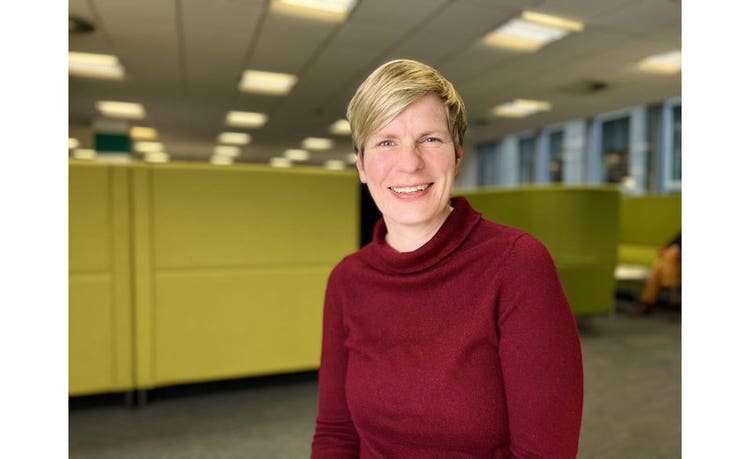
Helen Wylie
Part of the IT Leaders 100 - a list of the most influential IT leaders in the UK in 2026.
Helen Wylie is Director General for Digital and Transformation Group at the Department for Work and Pensions (DWP). She was appointed to this role in June 2025. She is also the DWP’s Chief Digital and Information Officer (CDIO).
Helen joined DWP in 2018 and has held various Digital Director roles within the department, most latterly as Chief Technology Officer. She has played a key role in DWP's service modernisation agenda, helping to shape the organisation for the future. Helen is strongly people focused and passionate about improving the vital public services DWP provides.
What's the most exciting part of your current role?
The ability, as a public sector leader, to deliver meaningful change that directly improves how citizens experience government services. At DWP, we have a clear and urgent purpose to design and deliver modern, user-centred digital services that are easy to access and simple to use. I'm responsible for bringing people, technology and innovation together to create efficient, high-quality services that meet our customers' needs - whenever and however they choose to engage with us.
What excites me about this is that we're improving outcomes at moments that genuinely affect lives. When new technologies are applied thoughtfully, it helps citizens access support sooner, reduce delays, improve consistency and fairness, and frees colleagues to focus on the activities and relationships that matter most.
A recent example is within the Child Maintenance Service, introducing a predictive model that identifies early warning signs of missed payments. This enables proactive intervention from our teams, to keep monies flowing and families receiving the financial support they rely upon. It has supported over 900k children and generated an additional £3.8 million in maintenance payments in the first year.
Leading change like this demonstrates the difference our works makes, a real motivation in my role.
What do you do in week one of a new project to avoid pain in month six?
I focus on creating absolute clarity: of purpose, outcomes and what success looks like. That starts with talking to teams, understanding the problem we are trying to solve, and asking how I can help remove barriers as a leader.
I encourage teams to co-design from day one with operational, policy, legal, and analytical colleagues, so solutions are shaped by real service experience, trust is built early and we avoid siloes. Putting users first from the outset is critical, which means listening carefully in these conversations, testing assumptions early and having honest discussions about constraints, risks and trade-offs.
This was important in our Child Maintenance Service project; operational colleagues were involved throughout to ensure the new predictive analysis tool supported and safeguarded customers. The colleagues who work on services every day understand barriers and the unintended consequences of change. Developing solutions with them, not for them, leads to better outcomes and stronger adoption.
Finally, I establish structured, continuous feedback throughout. I actively encourage open communication, so colleagues feel confident speaking up, challenging assumptions and flagging risks before they become problems.
What’s the part of your estate you most want to simplify in 2026?
I want to simplify how we organise around services and outcomes, rather than around individual systems, functions or organisational boundaries. DWP's Strategy for 2030 sets a clear direction: improving customer service, using public money well and building a modern, skilled workforce while going further and faster with digitisation. To make that ambition real in practice, our structures, governance and technology need to work in a more joined up way.
I've recently introduced Service Groups within DWP, which bring together leadership from within individual areas of expertise across the department, and creates shared ownership for improving services. They are designed to focus on the whole service experience for our customers – not just one part of a process, one system or one function.
This allows us to simplify how decisions are made, reduce duplication, and ensure technology follows the customer journey rather than the other way round. We can then tackle legacy technology more effectively, build more integrated systems, and share capabilities across government where it makes sense.
Excluding smartphones, what piece of technology could you not live without and why?
My digital calendar. It's how I stay organised in a complex, fast moving role. It helps me balance strategic focus with the day-to-day realities of leading large teams and ensures I protect time for the conversations and decisions that matter most. If it's not in the diary, it doesn't happen, and that discipline gives me the headspace to focus on outcomes rather than logistics.
I'm also lucky to have a great team who do a brilliant job managing the calendar, which gives me the space to get on with the doing.
What excites you most about the future of IT?
The ability to drive meaningful improvement in how services are delivered and experienced. The rise of new technologies like generative AI can free colleagues from manual and repetitive processes, enabling them to focus on complex, value driven work that requires human judgment, empathy and expertise. At the same time, customers benefit from simpler journeys, quicker resolution of issues, and better-quality interactions when they need support most.
A good example is DWP Ask, a question and response AI tool that provides quick, reliable access to up to date Universal Credit guidance. Previously, navigating guidance could be time consuming and sometimes led to inconsistent information being shared. DWP Ask reduces that burden and gives Work Coaches more time to focus on supporting customers. It is now being rolled out to over 600 job centres and is the first generative AI tool built in house and used at national scale across DWP.
What excites me most is that this is only the beginning. As technology continues to develop, we can keep building on these foundations and make services more personalised, efficient and user centred. Each advance in IT creates new opportunities to remove friction and design services around real customer needs.
What talent are you quietly proud of that would never show up on LinkedIn?
The work we do is serious, but I try to lead things out with humour and humility. I know that being honest about not knowing something or making mistakes is important, it encourages others to feel comfortable and safe to do the same. Trusting people and being trusted are what I'm proudest of.
What’s your most-used keyboard shortcut or command that you wish everyone knew?
It might not be my most used keyboard shortcut, but it's the one I value most: Ctrl + Shift + M to mute. Knowing when to pause, listen and let others speak is one of the most important leadership skills. Progress depends on listening to my senior leadership team, colleagues, customers and frontline experience. Encouraging diverse voices to be heard in conversations leads to better insight and stronger collaboration. That's where the best ideas come from.
As a leader, I focus on creating an environment where my teams are trusted to do their job, apply their skills and judgement, and feel confident to challenge and experiment. By listening directly to teams about what's working and what isn't, I can remove barriers that get in the way. Setting clear direction and then stepping back creates the space for people to think creatively and take ownership. Actively listening helps me judge when to step in to support and when to get out of the way, ensuring teams feel empowered.
Leadership isn't about having all the answers; it's about knowing when to listen or 'mute' and let others be heard.