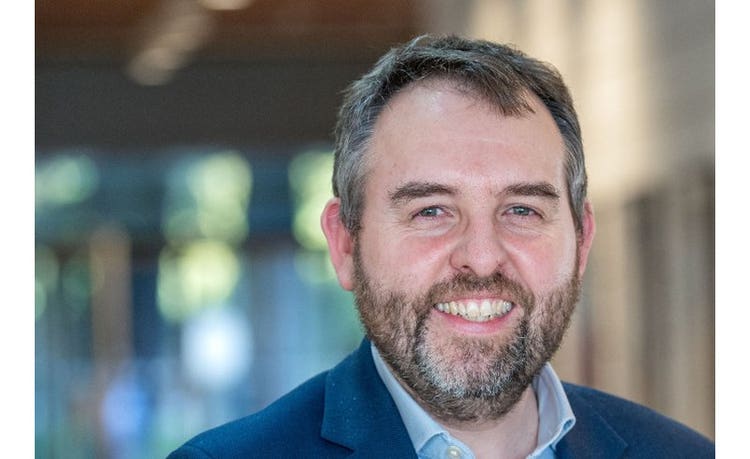
David Hill
Part of the IT Leaders 100 - a list of the most influential IT leaders in the UK in 2026.
David is a Chartered Information Systems Professional (BSc Hons, CEng, CITP, FBCS) with over 25 years' experience leading digital services across the private and public sectors. He began his career as a software engineer with the Natural Environment Research Council and the UK Centre for Ecology and Hydrology, before moving into healthcare with specialising in prosthetics and orthotics.
David has experience in enterprise computing in the NHS and higher education, working with a wide range of partners. He helped shape the digital strategy at University College London Hospitals and most recently, was the Chief Digital Officer at the University of Nottingham where he led a significant period of digital transformation.
What's the most exciting part of your current role?
I have the privilege of leading the design and delivery of the digital strategy and services for the University of Cambridge. My role is the University's first Chief Information Officer with organisation-wide responsibility for improving digital maturity and capability across the enterprise.
Cambridge is a world-leading teaching and research institution that improves lives around the world. Being part of the services that enable that mission motivates me and my team, and it makes this a fantastic place to work.
I am surrounded by talented people, and delivering digital and technology services for such a diverse organisation is genuinely exciting.
What do you do in week one of a new project to avoid pain in month six?
I'm a planner, so in week one I focus on laying the groundwork for success. Making sure the basics are in place - clear sponsorship, effective governance, agreed scope, the right resources and capabilities, and realistic expectations - usually makes month six much easier.
What’s the part of your estate you most want to simplify in 2026?
We have a very complicated application landscape, and my aim is to help the organisation understand the current state and develop strategies to simplify it.
We have over 800 systems, many of which provide duplicate functionality. Our integration and data insight capabilities are limited, resulting in a frustrating user experience. Some issues are masked by the performance of our staff. The student and staff digital experience is fragmented, and there are numerous opportunities to improve it.
Simplification, integration and automation will be key improvement areas for 2026/2027.
Excluding smartphones, what piece of technology could you not live without and why?
I've become dependent on my smartwatch. Using it to track data about my health, sleep, heart rate, and activity has become part of my daily routine. As I get older, I'm more conscious of staying healthy, and my smartwatch is a great tool to support that.
What excites you most about the future of IT?
The use of IT and technology in research is fascinating - seeing how high-performance computing enables faster modelling in medicine and drug design, supports research into nuclear fusion, and how data and AI are accelerating discoveries in healthcare, all supercharged by digital innovation. Being around to witness, and play a small part in this transformation is exciting.
What talent are you quietly proud of that would never show up on LinkedIn?
I'm fairly good at home renovation - living in an old barn conversion in Herefordshire means there are always jobs to do. It's probably best left to the professionals, but I'm always keen to have a go.
What’s your most-used keyboard shortcut or command that you wish everyone knew?
Ctrl+C, Ctrl+V and Ctrl+X (copy, paste, and cut). I'm always surprised how many people don't use them. Alt Tab for moving between windows is another!