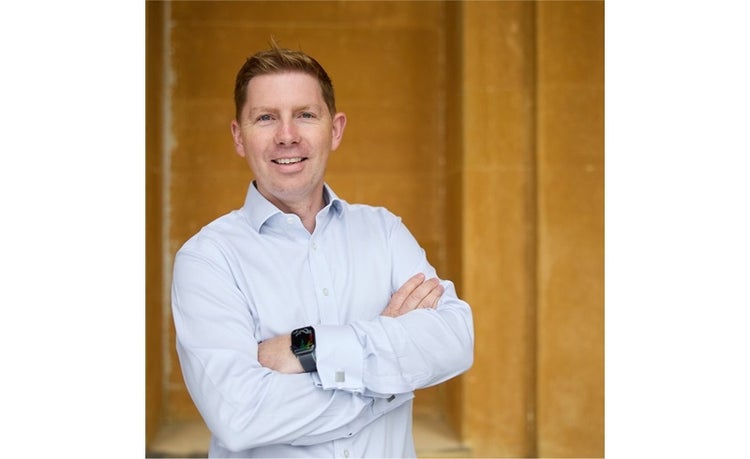
David Green
Part of the IT Leaders 100 - a list of the most influential IT leaders in the UK in 2026.
David Green leads data and AI innovation at Blenheim Palace Heritage Foundation, turning one of Britain's most iconic estates into a living laboratory for conservation technology. From natural language data tools to ecoacoustic biodiversity monitoring across 12,500 acres, his work sits at the intersection of heritage, AI, and environmental science.
David started at Blenheim at sixteen and has spent his career finding unconventional routes to useful answers via a welding torch, a digital agency, and now a large language model.
What's the most exciting part of your current role?
The sheer range of problems I get to work on and the fact that none of them have obvious off-the-shelf answers. On any given week I might be building a natural language interface that lets a non-technical colleague query visitor data just by asking a question, and the next day I'm thinking about how acoustic sensors can monitor biodiversity across a 12,500-acre estate listening, quite literally, for species we'd never spot any other way.
Heritage sites like Blenheim aren't just historic houses; they're living, working landscapes, and that diversity means the technology challenges are genuinely unusual. Everything has to be thought through from first principles. And the stakes feel real when eco acoustics helps us track whether a habitat restoration is working, or a data pipeline informs carbon sequestration decisions. That's not a demo, it's technology with its feet in actual soil.
What do you do in week one of a new project to avoid pain in month six?
The honest answer is that we don't always plan to month six and I think that's the right call. We work in a landscape changing fast enough that a rigid six-month roadmap can become a liability before you've finished writing it.
What we do instead is stay close to the problem, move quickly, and create the conditions for experimentation. At Blenheim we've built a culture where teams with no coding experience are shipping applications, where non-technical colleagues are querying data and producing reports that simply wouldn't have been possible before we embedded AI into how we work. That speed comes from openness, not from having a perfect plan.
Week one of any project is less about protecting yourself from future pain and more about getting something real in front of real people as fast as possible, learning from it, and adjusting. The organisations that are going to struggle in this environment aren't the ones who plan too little - they're the ones who plan too rigidly and mistake a Gantt chart for a strategy.
What’s the part of your estate you most want to simplify in 2026?
The thing I most want to simplify in 2026 is access. Not the technology - we've built pipelines, we've connected systems, we've got data flowing. The gap is that too much of it still sits behind technical knowledge most of our teams don't have and shouldn't need. If the insight exists but only three people can reach it, the insight might as well not exist.
So, the focus this year is less about what we build next and more about making what we've already built genuinely usable clean data, clear access, and the confidence that what people are looking at is accurate.
Get that right and you don't have to keep reinventing the wheel every time someone has a new question. You've built something that scales, and more importantly, something that prepares the organisation for whatever comes next which in this industry, you can guarantee will surprise you.
Excluding smartphones, what piece of technology could you not live without and why?
Probably my wireless headphones, but not for the reason you'd expect. I do my best thinking when I'm moving, and having hours of podcasts, papers, and conversations in my ears while I'm walking the estate has become how I process ideas. Half of what ends up in our AI strategy started as a half-formed thought somewhere between the Great Lake and the Walled Garden.
But if we're talking professional tools, it's genuinely Claude. Not because it's my employer's product but because the shift from searching for information to having a conversation with it has changed how I work more fundamentally than anything since the internet. The ability to think out loud with something that thinks back, at any hour, on any problem from a biodiversity monitoring brief to a board presentation, is something I'd struggle to give up now.
It's less a tool and more a thinking partner.
What excites you most about the future of IT?
We're approaching a point where the gap between having an idea and doing something with it is almost nothing. For most of history, technology has required technical gatekeepers: you had to know how to code, or hire someone who did, or wait for a vendor to build what you needed. That's collapsing.
We already have teams at Blenheim with no coding background shipping applications and querying complex datasets just by describing what they want. That's not a pilot, that's Tuesday. What excites me about where this goes next is the democratisation of capability at scale.
The most valuable people in any organisation have always been the ones who deeply understand the problem: the domain experts, the people with judgment built from years of context. Technology is finally catching up to them rather than asking them to catch up to it. In heritage and conservation that means ecologists who can build their own monitoring tools, estate managers who can interrogate their own data, curators who can surface their own insights.
The future of IT isn't more IT departments. It's everyone else finally getting the tools they deserved all along.
What talent are you quietly proud of that would never show up on LinkedIn?
I can weld. Properly weld - not the kind of thing you pick up in an afternoon. I spent time earlier in my career working with my hands, fabricating things from raw metal, and there's a discipline in that which I think shapes how I approach problems now more than any course or qualification I've collected since. When you're welding, the join either holds or it doesn't. There's no slide deck that covers it up. I think that instinct - build it properly or don't build it at all - has followed me into data architecture and AI systems in ways I don't always articulate but absolutely feel.
The other thing, which is harder to explain, is that I started at Blenheim at sixteen. I've seen this place from almost every angle; not as a strategist parachuted in, but as someone who grew up inside it. That kind of institutional memory doesn't show up on a CV but it's probably the most useful thing I bring to the role.
I know where the bodies are buried, metaphorically speaking. But on a 900-year-old estate, occasionally less metaphorically than you'd hope.
What’s your most-used keyboard shortcut or command that you wish everyone knew?
It's not a keyboard shortcut exactly, but the habit I wish everyone had: learning to talk to their tools rather than click through them. The moment someone discovers they can just describe what they want in plain English to Claude, to Copilot, to whatever's in front of them and get something useful back, their relationship with technology changes permanently.
That said, if we're being literal: Ctrl+Shift+V. Paste without formatting. I cannot overstate how much invisible chaos in shared documents, emails, and reports comes from people pasting text that carries its old font, size, and colour in like a stowaway.
It's a small thing but the number of hours lost to reformatting across every organisation I've ever seen is genuinely staggering. Paste plain. Always paste plain.