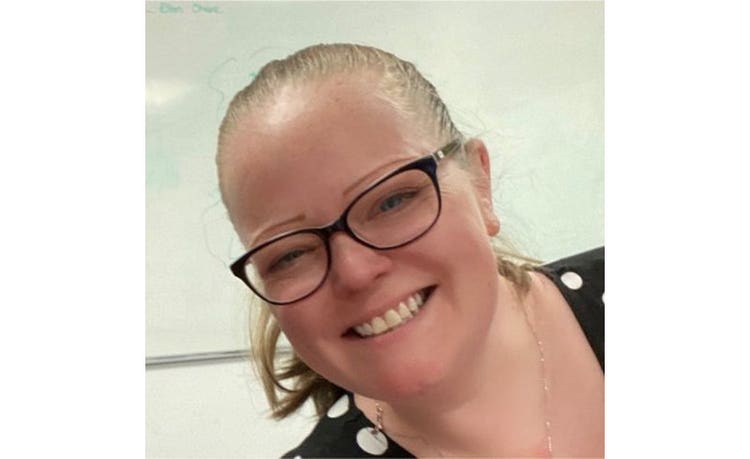
Charlotte Bailey
Part of the IT Leaders 100 - a list of the most influential IT leaders in the UK in 2026.
Charlotte Bailey is CEO of Panintelligence, where she leads with a focus on people, performance, and purposeful technology. With a background spanning delivery, operations, and executive leadership, she is known for building high-performing, accountable teams that turn strategy into action and deliver measurable results.
Her approach centres on creating clarity in complex environments, enabling individuals and teams to move with confidence, make decisions faster, and take ownership of outcomes. She is passionate about developing talent, accelerating progression, and removing barriers that limit potential.
Alongside this, Charlotte champions the responsible use of AI and analytics, ensuring technology is governed, explainable, and delivers meaningful, real-world impact.
What's the most exciting part of your current role?
I get to sit right at the intersection of possibility and reality and spend my time closing that gap.
We are operating in a world where access is no longer the constraint. We have the data, the platforms, and increasingly, the AI capability to build almost anything. The real question now is not "can we?" but "will we actually do something meaningful with it?"
That shift has made the role far more energising. I can move from a boardroom conversation about valuation and strategy, to a product discussion on how we operationalise AI safely, to a customer moment where insight genuinely changes a decision. That translation from idea to impact is the part I find most rewarding.
It has also reframed leadership for me. There is a lot of noise around thought leadership, but when content is easy and ideas are everywhere, that is no longer the differentiator. Execution is. What matters is what I would call “thought do-ership”: taking ideas, making decisions, and following them through to real outcomes.
If I am honest, that is both exciting and slightly uncomfortable, because it removes the excuses. And that is exactly what makes the role so compelling.
What do you do in week one of a new project to avoid pain in month six?
Week one is where month six is won or lost, even if it does not feel like it at the time.
I deliberately slow things down. There is always pressure to start building, but speed without clarity is what creates pain later. I focus first on alignment: what problem we are solving, for who, and what success actually looks like in measurable terms. If that is not clear, everything that follows is guesswork dressed up as progress.
I then get very clear on ownership and decision rights. Not who is in the room, but who decides. Ambiguity here is where projects quietly drift, and by the time you notice, it is expensive to fix.
I challenge assumptions early, particularly around data. Where it comes from, how reliable it is, and what we are taking on trust. Most issues in month six were present in week one, just untested or politely ignored.
Finally, I set cadence and tone. Visible progress, honest conversations, and no surprises. A team that feels able to challenge early will move faster later.
It is rarely about doing more. It is about getting the right things right, early.
What’s the part of your estate you most want to simplify in 2026?
The space between data, decision, and action, because that is where impact is either created or lost.
Most organisations are not short of insight. They are short of outcomes. Data exists, dashboards exist, AI is emerging everywhere, but the connection to consistent, timely action is still fragmented. That is where complexity quietly erodes value.
For me, simplification is about compressing that gap. Defining metrics once so they are trusted everywhere, aligning governance so access is clear rather than negotiated, and reducing the proliferation of tools that create multiple narratives instead of one confident view.
The impact of getting this right is tangible. Decisions happen faster, with less debate about the numbers and more focus on what to do next. Teams spend less time reconciling data and more time acting on it. AI becomes an accelerator of good decisions, not a generator of noise.
Ultimately, simplification is not an operational exercise, it is a commercial one. When you remove friction from how decisions are made, you increase speed, consistency, and confidence. That is what drives measurable impact.
Excluding smartphones, what piece of technology could you not live without and why?
Excluding my coffee machine, the piece of technology I could not live without is my laptop. Not particularly glamorous, but absolutely fundamental to how I operate.
It is where thinking turns into action. Strategy becomes something tangible, whether that is shaping product direction, building a narrative, or making decisions that genuinely move the business forward. It allows for depth, proper analysis, and considered judgement in a way that more reactive tools simply do not.
What makes it indispensable is not just access, it is control. It is the one place where I can connect the dots across teams, customers, and data, and work through complexity without distraction. It is also my gateway to everything else, from data platforms to collaboration tools to the AI capabilities that increasingly augment how we think and deliver.
My calendar plays a supporting role in ensuring that time is spent in the right places, but the real work happens on the laptop.
If I think about impact, most meaningful outputs in my role start there. It is not the technology itself, it is what it enables: clarity, focus, and the ability to turn ideas into outcomes.
What excites you most about the future of IT?
The pace of change, and the fact that we are operating without a clear playbook.
For a long time, technology evolved in relatively predictable steps. Now it feels exponential. Capabilities are emerging faster than organisations can absorb them, and what was considered advanced quickly becomes expected.
That creates ambiguity, but that is where the opportunity sits. The advantage is no longer in having the answer, it is in how quickly you can test, learn, and adapt.
What makes this even more compelling is the impact on people. The barriers to building, contributing, and progressing are lower than they have ever been. Access to tools, data, and capability is no longer the constraint. Mindset is. Curiosity, willingness to challenge, and the confidence to act are becoming the real differentiators.
I find that both exciting and slightly uncomfortable, because it removes the safety of waiting for certainty.
For me, that is the shift. Not just faster technology, but faster people progression. A world where growth is defined less by role or tenure, and more by how quickly you learn, adapt, and move.
What talent are you quietly proud of that would never show up on LinkedIn?
My ability to cook without a recipe and still have it land well. It is not something that shows up on LinkedIn, but it probably says more about how I think than most professional achievements.
I tend to approach cooking the same way I approach business. Start with what you have, understand the fundamentals, and then build something that works in the moment. It is part instinct, part experience, and a willingness to adjust as you go rather than rigidly follow a plan.
There is also a level of calm in it. When something is not quite working, you do not panic; you taste, tweak, and keep moving. That mindset translates more than you might expect.
It is also one of the few places where I switch off properly. No dashboards, no decisions at scale, just a focus on getting something right in a much simpler way.
And if I am honest, I enjoy the challenge of making something that looks effortless but has actually required a bit of thought behind the scenes.
It is not a headline skill, but it is one I value.
What’s your most-used keyboard shortcut or command that you wish everyone knew?
My most-used keyboard shortcut is Ctrl + Z, and I am only half joking when I say it is my leadership philosophy.
Undo is an underrated capability - in technology, in business, and occasionally in conversations that should probably have come with a warning label. The ability to recognise something is not quite right and reverse it quickly is far more valuable than pretending it was a good idea in the first place.
I use it constantly. Not just literally, but mentally. Made a call too early? Undo. Went down the wrong path? Undo. Sent an email that, on reflection, could have benefited from five more minutes of thought? Strong case for undo, although sadly Outlook is less forgiving.
I genuinely think more people should embrace it. There is a tendency to double down rather than course correct, when in reality, small, early corrections save a lot of pain later.
If we could normalise "that was not quite right, let's fix it" rather than defend it into the ground, things would move a lot faster.
So yes, Ctrl + Z. Not the flashiest shortcut, but probably the one that has saved me the most time, effort, and occasional embarrassment.