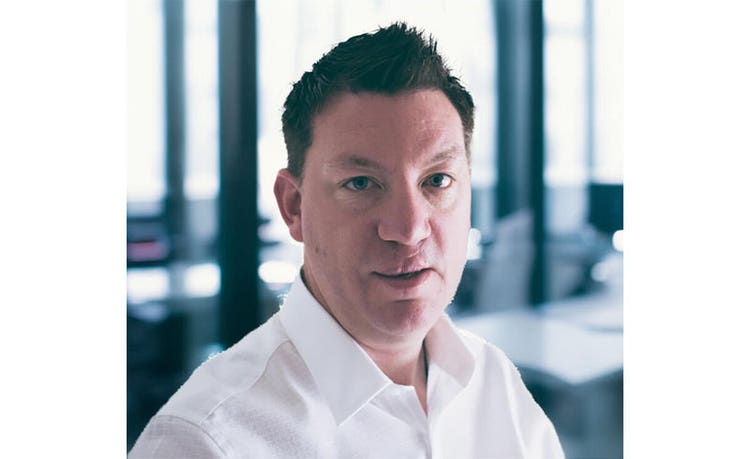
Benjamin Rowe
Part of the IT Leaders 100 - a list of the most influential IT leaders in the UK in 2026.
Benjamin Rowe, CITP MBCS is VP of IT and MIS at AIR - Automated Industrial Robotics; Director at BDRowe Consulting; an IT executive, business strategist and author of A to I: The Journey of AI from Arrival to Implementation.
With three decades of experience across robotics, energy, retail, FMCG, transportation and technology, Ben specialises in turning complex technology shifts into practical, people-centred outcomes. He is currently building IT capability from scratch in a fast-growing business.
What's the most exciting part of your current role?
The blank canvas. Joining a growing business where IT isn't weighed down by decades of legacy thinking means every decision actually matters. There is very little "we've always done it this way," so plenty of opportunity to set the direction and build something that genuinely fits where the business is heading.
As VP of IT and MIS in a company in real growth mode, I'm part of conversations that go well beyond IT, including commercial decisions, people strategy, how the organisation scales. The role has no hard edges, and that's exactly how I like it.
What do you do in week one of a new project to avoid pain in month six?
Align on what success actually looks like. I spend week one making sure everyone involved, from the sponsor to the people doing the work, has the same answer to one question: how will we know this has worked? It means that when something changes mid-project - and something always changes - there's a shared reference point to judge decisions against.
Most project pain at month six comes from ambiguity that existed at week one and nobody addressed. I'd rather have an uncomfortable conversation early than an expensive one later.
What’s the part of your estate you most want to simplify in 2026?
The joiner, mover, leaver process. It sounds unglamorous but it's one of the highest-impact things IT touches. When someone joins and their kit isn't ready or their access is wrong, that's a first impression that can take weeks to recover from. When someone leaves and access isn't revoked promptly we’re creating problems for ourselves that can easily be rectified.
We're a growing business, so this process runs constantly across multiple regions. Getting it right - trying to automate it, integrating it with HR, making it invisible to the people going through it - will free up meaningful time and materially reduce risk.
Excluding smartphones, what piece of technology could you not live without and why?
Bluetooth headphones. First, they're my communication layer, so every Teams call, every stakeholder conversation, every catch-up with the team. Second, they're my focus tool: the right music helps me get into deep work mode when I'm buried in a document or a complex problem. Third, they're my learning channel for podcasts and long-form content I'd never find time to sit down and read.
For something with no screen and no keyboard, they deliver a significant proportion of my working day.
What excites you most about the future of IT?
Capability in the hands of the end user - we're at a point where hardware, software and connectivity are converging in a way that's genuinely unprecedented, and for the first time, the bottleneck isn't the device or the platform but more the understanding of the end user to get the best out what they have.
What talent are you quietly proud of that would never show up on LinkedIn?
I surf. It has nothing to do with IT and everything to do with my approach to life. Surfing teaches me focus, to read conditions out of my control, to wait for the right moment rather than forcing it, and to accept that sometimes I don't win. It's a very effective reset button as I'm not thinking about work when I'm trying to stay on a board in cold water.
What’s your most-used keyboard shortcut or command that you wish everyone knew?
Windows key + L to lock your machine. Everyone knows it; not enough people do it. I've worked in offices where people wander away from their desks for twenty minutes with everything open. One keystroke is the simplest security habit an organisation can build, and it costs nothing.