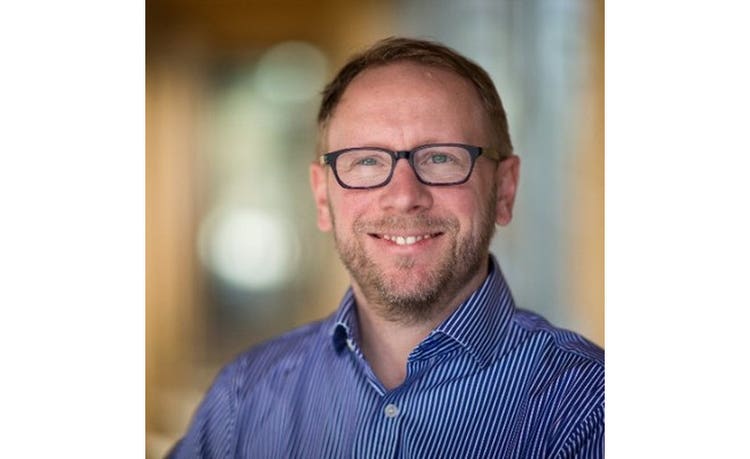
Asa Cooke
Part of the IT Leaders 100 - a list of the most influential IT leaders in the UK in 2026.
Asa Cooke is Associate Director of Service Delivery and Operations at Saïd Business School, University of Oxford. An ITIL 4 Managing Professional, Asa specialises in service improvement, automation, and sustainable operating models across complex digital estates.
With extensive experience in higher education IT, Asa focuses on value‑driven service design, integration strategy, and enabling teams to deliver reliable, user‑centred services through continual improvement.
What's the most exciting part of your current role?
The ability to translate strategy into sustainable, day‑to‑day service improvement. At Saïd Business School, I sit at the intersection of people, process, and technology, which allows me to shape how services actually feel to students, academics, and staff.
Using an ITIL 4 lens, I particularly enjoy improving value streams through automation and self‑service - removing friction, reducing manual effort, and making services more intuitive.
Seeing measurable improvements in reliability, user satisfaction, and team capacity as a result of incremental, well‑governed change is highly motivating.
What do you do in week one of a new project to avoid pain in month six?
I focus heavily on alignment and clarity. That means agreeing outcomes rather than just outputs, defining success measures early, and ensuring service ownership is explicit. I invest time upfront in understanding the end‑to‑end value stream, identifying dependencies, and challenging unnecessary complexity.
From an ITIL 4 perspective, I prioritise practices like change enablement, service design, and continual improvement from the outset, rather than treating them as downstream activities. Early engagement with operational teams and clear assumptions documentation significantly reduces rework, risk, and disappointment later in the project.
What’s the part of your estate you most want to simplify in 2026?
Integration and orchestration between systems. Like many organisations, parts of our estate have accumulated point‑to‑point integrations and manual workarounds over time. In 2026, my focus is on consolidating this into clearer, API‑led integration patterns with stronger governance, monitoring, and automation.
Simplification here directly supports resilience, faster change, and improved self‑service capabilities, while reducing support overhead and operational risk.
Excluding smartphones, what piece of technology could you not live without and why?
Outside of my professional life, I try not to rely on technology too much. If it counts, I could not live without my HiFi turntable and the ability to be able to relax and listen to a vinyl record.
What excites you most about the future of IT?
The maturation of automation, AI, and platform thinking in service management. Used well, these technologies allow IT teams to focus less on transaction processing and more on value creation and experience design.
The future of IT, for me, is not about more tools, but about better‑integrated services, smarter self‑service, predictive insight, and a stronger partnership between IT and the business - fully aligned with ITIL 4's emphasis on co‑creation of value and continual improvement.
What talent are you quietly proud of that would never show up on LinkedIn?
I am reasonably good at the boardgame RallyMan GT ;-)
What’s your most-used keyboard shortcut or command that you wish everyone knew?
Definitely Windows-L to lock my screen before I leave my desk