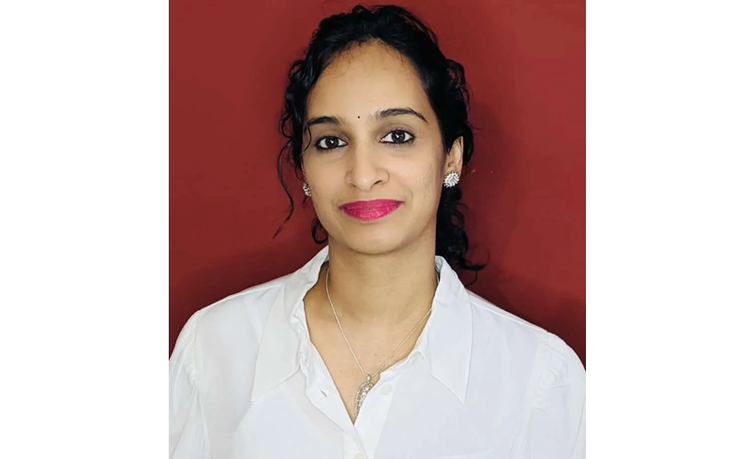
Anupama Hatti
Part of the IT Leaders 100 - a list of the most influential IT leaders in the UK in 2026.
Anupama Hatti is Head of Programme Delivery for Digital, Data and Technology Services at NHS Blood and Transplant, where she leads large scale digital transformation programmes supporting the UK's critical blood and transplant services. With over 24 years of experience across technology, aerospace, defence, telecom, and healthcare, she specialises in delivering complex, high impact programmes that improve resilience, safety, and operational efficiency.
Anupama is also a strong advocate for diversity in technology, serving as Co-Chair of the Women's Network and actively supporting STEM outreach, mentoring, and inclusive leadership.
What's the most exciting part of your current role?
The opportunity to lead large-scale digital transformation that directly impacts patient safety and national healthcare resilience.
I oversee complex programmes modernising critical blood and transplant technology platforms, enabling safer, more reliable systems that support the end-to-end blood supply chain - from donor recruitment to hospital transfusion services. What makes this work particularly meaningful is that every improvement in technology, data, or operational efficiency ultimately contributes to saving and improving lives across the UK.
Equally exciting is building and empowering multidisciplinary teams to deliver these transformations. By bringing together engineering, data, product, clinical, and operational expertise, we are creating a culture where innovation, collaboration, and inclusion drive better outcomes.
For me, the most rewarding aspect is seeing how strategic digital leadership can translate into real-world impact for patients, donors, and the NHS.
What do you do in week one of a new project to avoid pain in month six?
I focus on creating clarity, alignment, and strong delivery foundations so that challenges do not emerge later. Early discipline in how a programme is set up often determines whether delivery will be smooth or problematic six months later.
The first priority is confirming the purpose and expected outcomes. I work with stakeholders to clearly define the problem we are solving, the value the project is expected to deliver, and how success will be measured. This ensures the entire team is aligned on the same objectives from the outset.
I then establish governance and accountability. Clear roles, decision making structures, and escalation routes help ensure that risks and issues are surfaced early and addressed quickly rather than delaying progress.
Another critical step is understanding the stakeholder landscape and key dependencies across teams, suppliers, and operational areas. Many delivery challenges arise from misalignment between groups rather than from the technology itself.
Finally, I focus on delivery readiness. This includes confirming architecture principles, data and integration considerations, testing strategy, and team capability. Creating an open culture where teams feel comfortable raising concerns early helps identify risks quickly and prevents small issues becoming major problems later.
What’s the part of your estate you most want to simplify in 2026?
The technology delivery ecosystem that underpins how we build, test, and release digital services. In large, complex organisations, delivery environments often evolve over time into fragmented toolsets, manual processes, and siloed ways of working. Simplifying this landscape is critical to improving speed, reliability, and resilience.
A key priority is accelerating our transition toward cloud enabled platforms. Moving workloads and development environments to modern cloud infrastructure allows us to reduce legacy complexity, scale services more effectively, and improve operational resilience.
I am focused on strengthening DevOps practices so that development, testing, and operations operate as a single continuous delivery pipeline rather than separate stages. Introducing automated testing, integrated deployment pipelines, and modern engineering toolchains significantly reduces risk while increasing delivery velocity.
Equally important is embedding more agile ways of working across teams. Simplifying governance, empowering product focused teams, and improving visibility of delivery through modern collaboration and planning tools helps ensure quick response.
Ultimately, the goal is a simpler, more streamlined technology estate where cloud platforms, DevOps practices, and agile delivery models work together to enable faster innovation, stronger reliability, and better outcomes for the organisation and the people it serves.
Excluding smartphones, what piece of technology could you not live without and why?
Artificial intelligence. AI has rapidly become an essential tool in both my professional and personal life because of the efficiency and insight it brings to everyday activities.
In my role leading large digital transformation programmes, AI enables faster analysis of complex information, helps synthesise large volumes of data, and supports more informed decision making. It can accelerate research, structure ideas, and assist with drafting communications or strategic thinking, allowing me to focus more time on leadership, problem solving, and stakeholder engagement.
Beyond work, AI has also become a powerful productivity partner. It helps streamline daily tasks, organise information, and generate creative ideas, whether I am preparing for speaking engagements, exploring new concepts, or working on creative projects such as art and design.
What makes AI particularly valuable is not just the speed it provides, but the way it augments human capability. It acts as a collaborative tool that supports learning, creativity, and efficiency across many areas of life. As AI continues to evolve, its ability to help individuals and organisations work smarter, innovate faster, and solve complex problems will only become more significant.
What excites you most about the future of IT?
Its growing ability to solve complex, real-world problems at scale. Technology is no longer just about systems and infrastructure. It is becoming a powerful enabler of societal impact, particularly in sectors such as healthcare, life sciences, and public services.
Advances in artificial intelligence, cloud computing, and data platforms are transforming how organisations operate and make decisions. These technologies allow analysis of vast amounts of information, automate complex processes, and build intelligent, resilient digital services. This creates enormous potential to improve outcomes, whether that is enhancing patient safety, strengthening critical national infrastructure, or delivering more responsive public services.
Another exciting shift is the move toward modern engineering practices such as cloud-native platforms, DevOps, and agile product delivery. These approaches enable organisations to innovate faster, reduce risk, and continuously improve services rather than relying on large, infrequent transformation programmes.
What inspires me most is the human side of this transformation. Diverse teams, inclusive leadership, and collaboration across disciplines are increasingly recognised as essential to building responsible, effective technology. The future is not about more advanced technology, but about using it thoughtfully to create systems that are more resilient, inclusive, impactful for society
What talent are you quietly proud of that would never show up on LinkedIn?
My ability to express ideas and emotions through art. Painting has always been a creative outlet for me and a way to slow down and observe the world differently. While much of my professional life is focused on structure, strategy, and technology delivery, art allows me to work with intuition, colour, and storytelling.
I enjoy experimenting with different styles and materials, from acrylic and mandala art to mixed media pieces and shadow box creations. The process of creating something from a blank canvas is incredibly grounding and often gives me the same sense of problem solving and creativity that I experience in my professional work, but in a much more reflective way.
What I value most about this talent is that it provides balance. Leadership roles can be intense and fast paced, and having a creative practice helps me reset, think differently, and return to work with fresh perspective. It is a reminder that creativity exists in many forms, whether designing technology solutions or creating something visual and expressive.
What’s your most-used keyboard shortcut or command that you wish everyone knew?
Ctrl + Shift + V, which pastes text without formatting. It sounds simple, but it saves an enormous amount of time and frustration when working across documents, presentations, emails, and collaboration tools.
In a typical day I move content between many different platforms such as documents, slide decks, project tools, and messaging applications. When text is pasted with existing formatting, it often brings inconsistent fonts, colours, spacing, and styles that then need to be manually corrected. Using paste without formatting keeps everything clean and consistent from the start.
It is a small habit, but it significantly improves productivity and keeps documents professional and readable, particularly when preparing presentations, reports, or stakeholder communications.
I often tell teams that productivity improvements do not always come from large tools or complex systems. Sometimes it is small practices like this that quietly remove friction from daily work and make collaboration smoother for everyone.